Guides
Hair Tools for a Holiday Party: The Timeline That Works
The most common party-hair mistake is washing your hair the same day. Everything else on this page follows from fixing that one.
Updated October 2026 · Sawyer V.
Wash the day before, not the day of. Freshly washed hair is slick and holds a shape worst; a day of natural oils gives the fiber grip and makes a curl or a wave last hours longer. Then style early, let every section cool completely before you touch it, and carry one small tool rather than a can of product. A fixed-temperature tool is an advantage on a night out, because there is no dial to get wrong when you are rushing.
We earn a commission if you buy through the links on this page, at no extra cost to you. It never changes which tool we pick or which one we tell you to skip. How this site is funded.
Why day-two hair holds better
This is the whole page in one idea, and it is free. A curl or a wave is a shape held by friction between strands and by the fiber’s own stiffness. Freshly washed hair has neither working in its favor: it is clean, slick, and at its most flexible, so sections slide past each other and the shape relaxes under its own weight.
A day of natural sebum changes that. The strands grip each other, the shape has something to hold against, and the same curl made with the same tool at the same temperature lasts measurably longer. Professional stylists work this way routinely and it is the single most useful thing to know before an event.
There is a second reason, and it is the one this site cares about most: styling dry hair is safer than styling hair that is not quite dry. A heated tool applied to wet hair produced markedly more damage than the same treatment on dry hair Ruetsch and Kamath, Journal of Cosmetic Science, and washing on the day is exactly how people end up ironing not-quite-dry hair against the clock. Washing the day before removes the time pressure that creates the risk.
The timeline
A party-hair schedule that holds
| When | What you do | Why |
|---|---|---|
| The night before | Wash and dry completely. Do not style | Gives the fiber a day of grip, and removes any chance of styling damp hair tomorrow |
| 3-4 hours before | Heat protectant on dry hair, then style | Leaves time for every section to cool fully set, which is where the hold comes from |
| While styling | Pin or clip each curl and leave it | Hair sets as it cools, not while it is hot. This is the step people skip |
| 1 hour before | Drop the pins, shake out with fingers | Fingers separate without re-stretching. A brush undoes the set |
| Going out | Carry one narrow tool and nothing else | Touch-ups are two or three sections, not a restyle |
| Next morning | Do not restyle. Pin or tie it | A second full heat session the next day is the expensive part, not the party |
Our reading of the published physics plus standard practice, not a manufacturer claim.
The third row is the one that decides whether the style survives. Hair takes its shape as it cools, so a curl dropped out of the barrel and immediately brushed through has been set into nothing. Pin it, leave it, and unpin cold. The physics is in full at why your curls drop, and what actually holds — which is the page to read if your problem is specifically that curls fall out, rather than the event timeline.
Which tool for which look
Party styling is where a fixed-temperature tool stops being a compromise. You are usually rushing, often in unfamiliar light, and the dial is what people reach for when a section does not take. A tool with no dial removes the one decision that can go badly.
- Defined, uniform curls: the ghd Chronos Curve Classic. A 1 in barrel at a fixed 365°F with a published 20-minute sleep mode, so the same section gets the same treatment every time. Sheet at the review.
- Tight curls and short-hair detail: the ghd Curve Thin, a 0.5 in wand with a published 30-second heat-up and a cool tip. The narrowest barrel here, which is also what you want for touch-ups around the face.
- Curls without the technique: the T3 CurlWrap. The barrel rotates itself and publishes a 5 or 8 second timer, which turns “how long do I hold it” into a constant on the one night you do not want to be judging it. See the CurlWrap review.
- A smooth blow-out rather than curls: this is a technique question more than a tool one — how to get a blowout that lasts more than a day.
- Loose, undone waves: the best curling irons for beach waves has the barrel sizes, and how to get waves with a flat iron does it with a tool you probably already own.
What to carry, and what to leave
A touch-up at a party is two or three sections near the face. It is not a restyle, and packing for a restyle is how people end up carrying things they never use.
- Take: the narrowest barrel you own, if you are going somewhere with a socket and twenty minutes. The ghd Curve Thin’s published 30-second heat-up is the relevant specification here — a tool that takes four minutes to come up is a tool you will not use.
- Take: a few pins. The most common evening failure is one section dropping, and pinning it up reads as intentional.
- Leave: the flat iron. It is the slowest tool per section and the least forgiving in bad light.
- Leave: anything you have not used before today. A party is the worst possible time to learn a tool.
If the party is away from home, the voltage question arrives with it: only one dryer and a handful of irons in this registry publish dual voltage. The hair tool packing list and which tools are genuinely dual voltage cover it.
Back-to-back events, and the honest warning
December is the one month people heat-style on consecutive days, and it is worth saying plainly what that costs. The damage evidence is cumulative: repeated thermal cycling measurably degrades the fiber’s mechanical properties Evans and Park, Journal of Cosmetic Science, and hair that has been colored for the season starts with less margin to spend Dyer et al., International Journal of Cosmetic Science.
The useful response is not a different tool, it is fewer sessions. Three parties in a week on one styling session is a smaller total than three sessions, and the techniques for making a style survive a second and third day are the same ones that make it survive the first evening — see second-day hair. If you do style repeatedly, the frequency question is answered honestly at how often you can use heat, and the protectant question at should you use a heat protectant.
What we could not compare
Hold duration, on every tool here. No maker publishes how long a curl made with its tool lasts, and there is no standard test for it, so nothing on this page is ranked on longevity claims — the timeline above is the published physics of cooling plus standard practice. Heat-up time is published by only two curling tools in this registry, which is why it appears as an argument for the Curve Thin and nowhere else. And temperature: ghd publishes a fixed 365°F on its curling tools, while T3 publishes a step count with no degrees attached, so the two cannot be compared on the number that matters most.
The tools on this page
Prices come from the live price layer. Where none is available the button says so rather than showing a number we cannot stand behind.
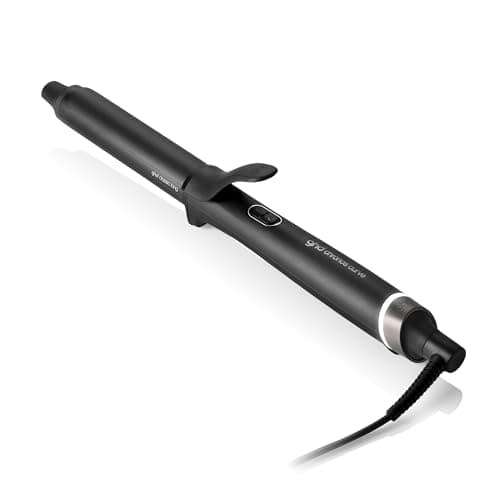
ghd Chronos Curve Classic curling iron (1 inch barrel)
A curling iron with no temperature dial at all — 365°F fixed, and a 20-minute sleep mode, which is unusual restraint in this category.
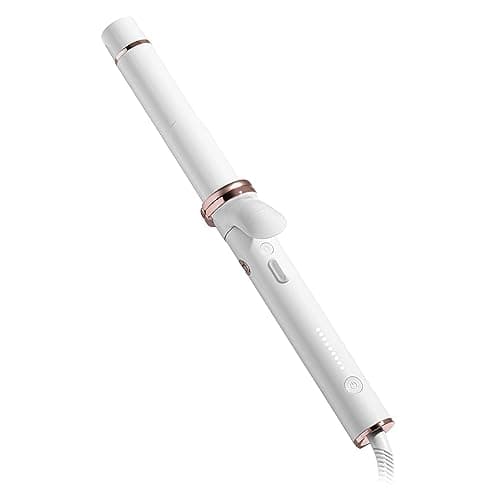
T3 CurlWrap automatic rotating curling iron
The barrel turns itself, which removes the wrist technique entirely — nine heat settings and genuine dual voltage alongside it.
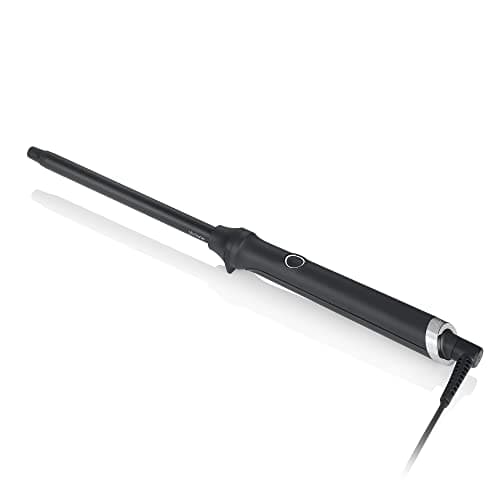
ghd Curve Thin curling wand (0.5 inch barrel)
A 0.5 inch barrel is the smallest in this registry and the one that holds a curl on short hair, with a 30-second heat-up and universal voltage.
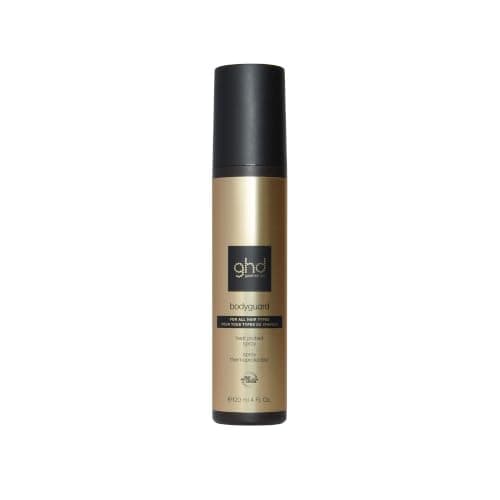
ghd Bodyguard heat protect spray
The heat protectant from a brand that fixes every tool it makes at 365°F — the same company arguing for restraint, selling the thing that buys you some.
Questions people actually ask
Should I wash my hair before a party?
Not the same day. Wash the day before. Freshly washed hair is slick and at its most flexible, so curls and waves slide out under their own weight. A day of natural oils gives the strands grip and the same style lasts hours longer.
How far before an event should I style my hair?
Three to four hours. Hair sets its shape as it cools, not while it is hot, so the hold comes from the time between styling and leaving. Pin each curl, leave it, and unpin cold — then separate with fingers rather than a brush.
What hair tool should I take to a party for touch-ups?
The narrowest barrel you own, and only if you will have a socket and twenty minutes. A touch-up is two or three sections near the face. The ghd Curve Thin publishes a 30-second heat-up, which is the specification that decides whether you will actually use it.
Is a fixed-temperature curling iron good for party styling?
Yes, and this is one of the few cases where no dial is a clear advantage. You are usually rushing and often in unfamiliar light, and the dial is what people reach for when a section does not take. ghd's curling tools are fixed at 365 degrees Fahrenheit, so every section gets identical treatment.
How do I make a party style last two days?
Do not restyle on day two. Pin or tie it instead, and treat the second day as the same set rather than a new one. The techniques are the same ones that make a style survive the first evening, and a second full heat session is the expensive part — not the party.