Shop by Hair Type
Hair Porosity: What It Actually Changes About Your Tools
The property that explains why the same routine works for someone else and not for you — and the one the marketing gets furthest from the evidence.
Updated September 2026 · Sawyer V.
Porosity is how readily hair takes up and gives off water. High-porosity hair dries faster and reverts faster; low-porosity hair takes longer to wet and longer to dry. It should change your drying strategy rather than which tool you buy — with one exception.
We earn a commission if you buy through the links on this page, at no extra cost to you. It never changes which tool we pick or which one we tell you to skip. How this site is funded.
What porosity actually is
How readily the hair fiber takes up water and gives it back. That is governed largely by the cuticle — the overlapping outer scales — and by the lipid layer on their surface.
Low porosity: scales lie flat and tight. Water is slow to get in, and slow to leave. Hair takes a long time to wet properly and a long time to dry, and product tends to sit on top.
High porosity: scales are lifted or worn. Water goes in fast and leaves fast. Hair wets instantly, dries quickly, and reverts to its natural state at the first hint of humidity.
The measured part
This is unusually well studied for a hair-care concept, and the findings are more specific than the marketing.
Work on moisture sorption by hair identifies a glass transition at around 60 to 70 percent relative humidity, with a second, less-examined transition at around 30 percent — and notes that both are reflected by corresponding changes in the fiber’s mechanical behavior — Breakspear et al., International Journal of Cosmetic Science. Later work separated the sorption happening in the cuticle from that in the cortex — Breakspear et al., 2025.
Two things that matters for. Above that transition, hair is measurably a different material from the one you styled — which is what a humid day does to a set. And the same research found that bleaching produced a larger change in sorption behavior than perming did, which is the measured basis for saying porosity is something that happens to hair rather than only something it is born with.
How to judge yours, honestly
The float test — a clean strand in a glass of water — is the common one, and it is indicative rather than diagnostic. Product residue skews it, and a single strand is not a sample.
More reliable everyday signals:
Signals, and what they point to
| What you notice | Points to |
|---|---|
| Hair takes ages to get properly wet in the shower | Low porosity |
| Still damp long after everyone else's would be dry | Low porosity |
| Product sits on top and never absorbs | Low porosity |
| Soaks through instantly, dries fast | High porosity |
| Style reverts at the first sign of humidity | High porosity |
| Feels rough or straw-like when dry | High porosity, usually from processing |
And the honest caveat: porosity is not evenly distributed. Your roots are newer than your ends, so most people are low-porosity at the scalp and higher-porosity at the tips. That is the same gradient behind split ends.
What it should change — and what it should not
It should change your drying strategy
- Low porosity: the towel-and-wait step matters most of anyone. Water is slow to leave, so mechanical removal before any heat saves the most time — the arithmetic. Warmth helps the cuticle open; the mistake is reaching for maximum heat rather than patience.
- High porosity: you will be dry sooner than you think, and the risk is over-drying past the point of usefulness. Stop earlier, and finish cool — the cool step is doing more work for you than for anyone else.
It should not usually change which tool you buy
With the one exception in the picks above. Porosity mostly changes how you use a tool rather than which one is correct, and we would rather say that than invent a porosity-specific product category.
The exception is high porosity caused by processing, which needs a tool with a genuine floor below 365°F — and there is exactly one iron in our registry that has one. The full case is on the bleached hair page.
The humidity connection
If your style reverts, porosity and humidity are the same story told from two ends. Hair that takes up water readily reaches that 60 to 70 percent transition sooner, and above it the fiber is softer and less inclined to hold a shape you imposed.
No tool changes the physics of water uptake. What helps is drying completely, finishing every section cool, and styling closer to your natural texture on bad days — the full page.
Price per use, at 5 uses a week over 5 years
| What you pay | Cost per use | Cost per year |
|---|---|---|
| $30 | $0.02 | $6.00 |
| $60 | $0.05 | $12.00 |
| $100 | $0.08 | $20.00 |
| $150 | $0.12 | $30.00 |
| $200 | $0.15 | $40.00 |
| $300 | $0.23 | $60.00 |
| $400 | $0.31 | $80.00 |
| $500 | $0.38 | $100.00 |
5 uses a week for 5 years is 1300 uses. Both figures are stated assumptions, not measurements — halve the life and every cost per use doubles. We publish the ladder rather than a worked example for one specific product because a price we typed into a sentence would be wrong within a week.
What we would not tell you
That a particular tool “seals the cuticle”, or that any appliance changes your porosity for the better. Porosity is a property of the cuticle, and the things that measurably alter it — bleaching, alkaline treatment — alter it in the wrong direction.
What is supported is modest: conditioning treatments were measured to considerably retard breakage in repeated-grooming experiments, and low-molecular-weight conditioners that penetrate the fiber improved characteristic life under repeated curling. That is a real claim and a small one — what a protectant does.
Quick picks
Tap any row to jump to the full write-up. Prices come from the live price layer; where none is available the button says so rather than showing a number we cannot stand behind.
| # | Product | Best for | Price |
|---|---|---|---|
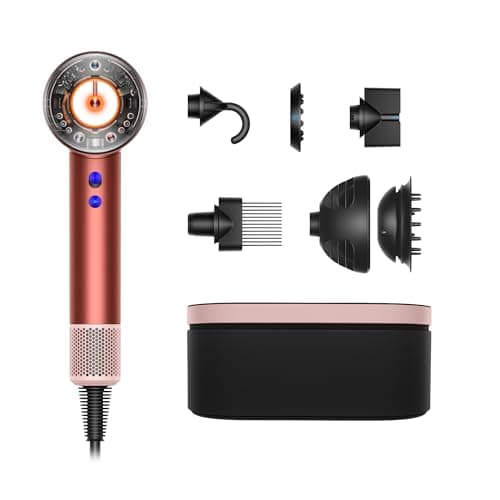
| 1 | Dyson Supersonic hair dryer Four heat settings with a cold shot and three speeds — twelve combinations plus a genuine cool option. | Low-porosity hair that takes forever to dry | |
| 2 | 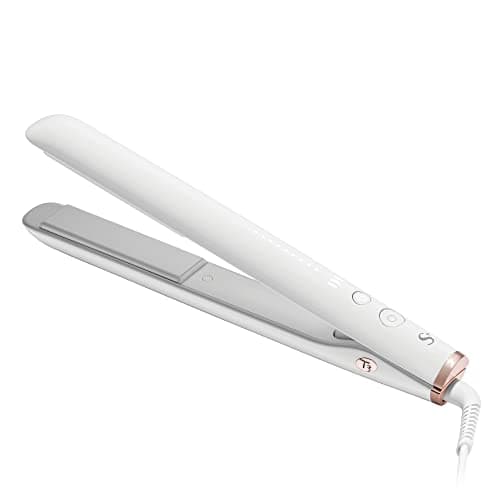 T3 SinglePass StyleMax 1 inch flat iron Nine heat settings — the only iron in our registry with a genuine floor below 365°F. | High-porosity hair, which is usually processed hair | |
| 3 | 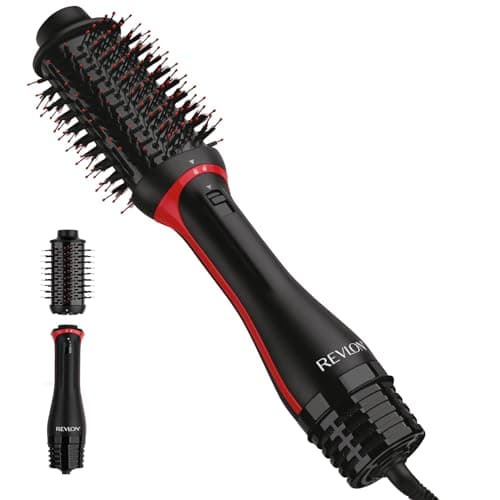 Revlon One-Step Volumizer Plus hair dryer and hot air brush Four heat settings including a dedicated cool, plus a detachable head and a four-year warranty. | High-porosity hair that reverts by mid-morning | |
| — | 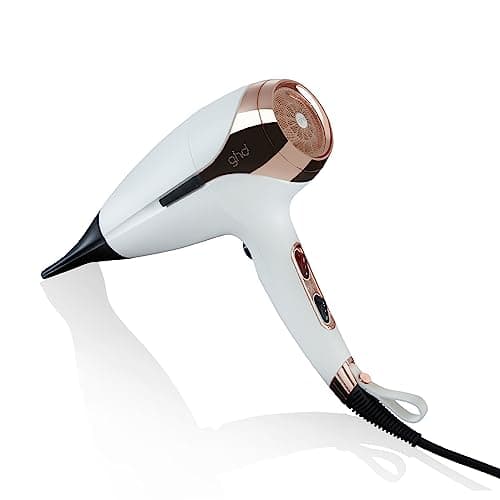 ghd Helios 1875W advanced professional hair dryer The joint most powerful dryer here, publishing the word “variable” rather than a settings count. We’d skip this | Not porous hair |
1. Most control over the drying stage
Dyson Supersonic hair dryer
Best for: Low-porosity hair that takes forever to dry
Four heat settings with a cold shot and three speeds — twelve combinations plus a genuine cool option.
Low-porosity hair resists water going in and coming out, which makes the drying stage the whole problem. What helps is airflow you can actually direct and a range you can work within, rather than raw heat.
The cold shot matters for the opposite case. High-porosity hair gives up water fast and then reverts fast, and a style only holds if it cools in position — the last seconds of every section.
Three published attachments, an 8.6 ft cable, two-year warranty.
What’s wrong with it
The heaviest dryer we list at a published 1.8 lb, which on low-porosity hair — where sessions are long by definition — is the wrong end of the scale.
Published specifications — Dyson Supersonic hair dryer
| Wattage | 1,600 W |
|---|---|
| Heat settings | 4 heat settings, including a cold shot |
| Speed settings | 3 speed settings |
| Weight | 1.8 lb |
| Cord length | 8.6 ft |
| Noise (dB) | Not published |
| Attachments | 3 — styling concentrator, diffuser, wide-tooth comb |
| Plate / barrel | Air-multiplier body; no heated styling surface |
| Dual voltage | No — 120 V |
| Warranty | 2-year limited warranty |
Every figure above is taken from Dyson — Supersonic hair dryer product page. “Not published” means the figure does not appear on that page — it is not an estimate withheld, it is a number the manufacturer does not state. How we compile these.
What it costs to run for a year
$19.07 a year
1,600 W × 65 hours a year = 104.0 kWh, at 18.34 cents per kilowatt-hour. The hours assume 15 minutes a session, 5 days a week — that is an assumption, not a measurement, so swap in your own if it is wrong.
2. The only iron that goes below 365°F
T3 SinglePass StyleMax 1 inch flat iron
Best for: High-porosity hair, which is usually processed hair
Nine heat settings — the only iron in our registry with a genuine floor below 365°F.
This is the exception where porosity should change the purchase rather than the routine. High porosity is very often the result of a worn cuticle from bleaching or coloring, and that hair needs a lower setting than any fixed-temperature tool offers.
Both ghd irons are fixed at 365°F and the Dyson Corrale starts there. Nine settings is the entire field for anyone who needs less.
11.1 oz without the cord, CeraGloss ceramic plates, genuine 100–240 V auto world voltage, two-year warranty.
What’s wrong with it
Nine settings is nine chances to choose a hotter one, and T3 publishes no wattage, no cord length and no wide-plate option.
Published specifications — T3 SinglePass StyleMax 1 inch flat iron
| Wattage | Not published |
|---|---|
| Heat settings | 9 heat settings |
| Speed settings | Not applicable |
| Weight | 11.1 oz (cord not included) |
| Cord length | 360-degree swivel cord — length not published |
| Noise (dB) | Not applicable |
| Attachments | None supplied |
| Plate / barrel | CeraGloss ceramic plates, 1 in |
| Dual voltage | Yes — auto world voltage, 100–240 V |
| Warranty | 2-year warranty |
Every figure above is taken from T3 Micro — SinglePass StyleMax 1 inch flat iron product page. “Not published” means the figure does not appear on that page — it is not an estimate withheld, it is a number the manufacturer does not state. How we compile these.
What it costs to run for a year
T3 does not publish a wattage for this tool, so there is nothing honest to compute. The formula is watts ÷ 1,000 × hours a year × your rate per kWh; if you find a rating plate on the handle, 65 hours a year and 18.34 cents per kilowatt-hour will get you the rest of the way.
3. Best cool finish
Revlon One-Step Volumizer Plus hair dryer and hot air brush
Best for: High-porosity hair that reverts by mid-morning
Four heat settings including a dedicated cool, plus a detachable head and a four-year warranty.
A dedicated cool setting is the highest-value feature for porous hair, because reverting is the complaint and setting-as-it-cools is the mechanism that prevents it.
T3’s more expensive brush publishes three heat settings with no cool among them, which on this page is the deciding row.
The detachable head keeps it working — these brushes clog, and a clogged intake runs the element hotter than the setting you chose.
What’s wrong with it
Revlon publishes no wattage, weight, cord length, speed count or voltage, so how gently it runs is unverifiable.
Published specifications — Revlon One-Step Volumizer Plus hair dryer and hot air brush
| Wattage | Not published |
|---|---|
| Heat settings | 4 heat settings — low, medium, high, cool |
| Speed settings | Not published |
| Weight | Not published |
| Cord length | Not published |
| Noise (dB) | Not published |
| Attachments | Detachable brush head |
| Plate / barrel | Ceramic titanium barrel; tourmaline ionic |
| Dual voltage | Not published |
| Warranty | 4-year limited warranty |
Every figure above is taken from Revlon Hair Tools — One-Step Volumizer Plus product page. “Not published” means the figure does not appear on that page — it is not an estimate withheld, it is a number the manufacturer does not state. How we compile these.
What it costs to run for a year
Revlon does not publish a wattage for this tool, so there is nothing honest to compute. The formula is watts ÷ 1,000 × hours a year × your rate per kWh; if you find a rating plate on the handle, 65 hours a year and 18.34 cents per kilowatt-hour will get you the rest of the way.
The one we'd skip
ghd Helios 1875W advanced professional hair dryer
Best for: Not porous hair
The joint most powerful dryer here, publishing the word “variable” rather than a settings count.
1,875 W is the joint highest published wattage in our registry, and on dense virgin hair that is a feature — it wins the professional page.
High-porosity hair is usually hair that has already lost cuticle, and pairing the most power here with a settings count published as a word rather than a number is the wrong combination.
ghd publishes “variable temperature control”. That might mean a continuous dial, which would be excellent, or three positions. From the product page you cannot tell, and porous hair is the case with the least margin for finding out the hard way.
What’s wrong with it
No published settings count on the joint most powerful element here, and no published weight either.
Published specifications — ghd Helios 1875W advanced professional hair dryer
| Wattage | 1,875 W |
|---|---|
| Heat settings | Variable temperature control, including a cool shot |
| Speed settings | Variable power control |
| Weight | Not published |
| Cord length | 9 ft power cable |
| Noise (dB) | Not published |
| Attachments | Not published |
| Plate / barrel | Aeroprecis airflow; no heated styling surface |
| Dual voltage | No — ghd states it is not universal voltage |
| Warranty | 2-year consumer warranty (1-year professional) |
Every figure above is taken from ghd — Helios 1875W professional hair dryer product page. “Not published” means the figure does not appear on that page — it is not an estimate withheld, it is a number the manufacturer does not state. How we compile these.
What it costs to run for a year
$22.35 a year
1,875 W × 65 hours a year = 121.9 kWh, at 18.34 cents per kilowatt-hour. The hours assume 15 minutes a session, 5 days a week — that is an assumption, not a measurement, so swap in your own if it is wrong.
Questions people actually ask
What is hair porosity?
How readily the fiber takes up water and gives it back, governed largely by the cuticle. Low-porosity hair is slow to wet and slow to dry; high-porosity hair soaks through instantly and reverts at the first hint of humidity.
How do I test my hair porosity?
The float test is common but indicative rather than diagnostic — product residue skews it and one strand is not a sample. Drying time relative to people with similar density is the more reliable everyday signal.
Does porosity change which hair tool I should buy?
Mostly it changes how you use one rather than which is correct. The exception is high porosity caused by bleaching, which needs a tool with a genuine floor below 365°F — and only one iron in our registry has one.
Can you change your hair's porosity?
Not for the better with an appliance. The things measured to change sorption behavior — bleaching in particular — change it in the wrong direction. Conditioning has modest measured support for reducing breakage, not for altering porosity.