Guides
What Hair Type Do I Have? A Buyer's Version
The letter-number systems tell you what your curls look like. They do not tell you what to buy, because three other properties decide that.
Updated September 2026 · Sawyer V.
Four properties decide which tool suits you, and curl pattern is the least useful: density (how much hair), texture (how thick each strand is), porosity (how readily it takes up water) and pattern. Density and texture decide the purchase; pattern decides the attachment.
We earn a commission if you buy through the links on this page, at no extra cost to you. It never changes which tool we pick or which one we tell you to skip. How this site is funded.
Why the curl-pattern systems are not enough
Almost every “what hair type do I have” result gives you a letter and a number describing your curl pattern. That is genuinely useful for choosing products and for knowing what a diffuser will do for you.
It is close to useless for choosing a dryer. Two people with the same curl pattern can have wildly different amounts of hair, strands of wildly different thickness, and completely different drying times. The tool follows from those, not from the pattern.
So this page runs the four properties in the order that actually changes what you should buy.
1. Density — how much hair you have
The single most important property for tool choice, and the one most often confused with texture.
How to check: part your hair in the middle and look at how easily you can see your scalp along the part. Easily visible is low density; visible only when you press the hair apart is medium; hard to see at all is high. A second check: gather it into a ponytail and note the circumference.
What density changes about the purchase
| Density | What it means for drying | What to buy |
|---|---|---|
| Low | Dries fast; power is wasted | A hot air brush may be your only tool |
| Medium | A normal blow-dry | Most tools work; buy on other properties |
| High | Session length is the whole complaint | Published wattage and airflow; plate or barrel width |
Density is why the thick-hair dryers page ranks on power while the fine-hair page ranks on the opposite.
2. Texture — how thick each individual strand is
Different from density and constantly mixed up with it. You can have a lot of fine hair or a little coarse hair.
How to check: take a single strand and roll it between your fingers. If you can barely feel it, it is fine. If it feels like a thread, medium. If you can clearly feel its width, coarse. Compare it against a sewing thread if you want a reference.
- Fine: reaches temperature fast and is damaged fast. Buy for the lowest available heat setting, not the highest — the fine hair router.
- Medium: the default most tools are designed around.
- Coarse: resists shaping, so a fixed 365°F may not be enough and repeat passes become the risk — what to buy instead.
The combination that trips people up most is fine and dense — a lot of thin strands. It feels thick, dries slowly, and still burns at settings a coarse head would shrug off. If that is you, buy for density and set the temperature for texture.
3. Porosity — how readily it takes up water
The property nobody checks and the one that explains most “why does this not work on my hair” complaints.
How to check: the float test is the common one — a clean strand in a glass of water, sinking quickly suggests high porosity. It is indicative rather than diagnostic, and product residue skews it. The more reliable everyday signal is drying time relative to other people with similar density, and whether your hair feels wet long after it should be dry.
There is a measured mechanism underneath. Work on moisture sorption by hair identifies a glass transition at around 60 to 70 percent relative humidity, with the fiber’s mechanical behavior changing across it — Breakspear et al., International Journal of Cosmetic Science. Hair that takes up water readily is hair that reaches that transition sooner in a humid room.
Porosity is also not fixed. Bleaching and dyeing wear the cuticle and measurably change how hair binds water, which is why colored hair behaves differently from the hair it used to be — the full page.
4. Pattern — what your hair does untouched
Last, because by the time you know your density, texture and porosity, the pattern mostly decides the attachment rather than the tool.
Pattern against the attachment that suits it
| Pattern | What it needs | Where to start |
|---|---|---|
| Straight | A concentrator, and tension from a brush | Blow-dry technique |
| Wavy | Both a concentrator and a diffuser — it uses both | Wavy hair dryers |
| Curly | A diffuser and a genuinely low speed | Best diffusers |
| Coily / 4C | A diffuser or a wide-tooth comb attachment, for stretch | Coily and 4C dryers |
Links for each of those: straight, wavy, curly, coily.
Putting the four together
The practical shortcut, once you have checked all four:
- Density picks the category. Low density often needs one tool; high density usually needs a real dryer.
- Texture picks the temperature. Fine hair needs a tool with steps below the middle; coarse hair needs headroom above it.
- Porosity picks the expectations. It explains drying time and why styles drop, more than it changes the purchase.
- Pattern picks the attachment. Which is why a published attachment list matters as much as wattage — the table.
One thing that overrides all four
Whether your hair has been chemically processed. Bleaching produces molecular changes normally associated with thermal treatment before you apply any heat, so processed hair arrives at the tool with part of its damage budget already spent.
If that is you, the specification that matters is how far down a tool goes rather than any of the four properties above. Only one iron in our registry works meaningfully below 365°F. The case is on the bleached-hair page and the picks on the color-treated router.
Price per use, at 5 uses a week over 5 years
| What you pay | Cost per use | Cost per year |
|---|---|---|
| $30 | $0.02 | $6.00 |
| $60 | $0.05 | $12.00 |
| $100 | $0.08 | $20.00 |
| $150 | $0.12 | $30.00 |
| $200 | $0.15 | $40.00 |
| $300 | $0.23 | $60.00 |
| $400 | $0.31 | $80.00 |
| $500 | $0.38 | $100.00 |
5 uses a week for 5 years is 1300 uses. Both figures are stated assumptions, not measurements — halve the life and every cost per use doubles. We publish the ladder rather than a worked example for one specific product because a price we typed into a sentence would be wrong within a week.
Where to go next
Every hair type has its own router page with one pick per tool category: fine, thick, wavy, curly, coily and 4C, frizzy, short, long and color-treated.
The tools on this page
Prices come from the live price layer. Where none is available the button says so rather than showing a number we cannot stand behind.
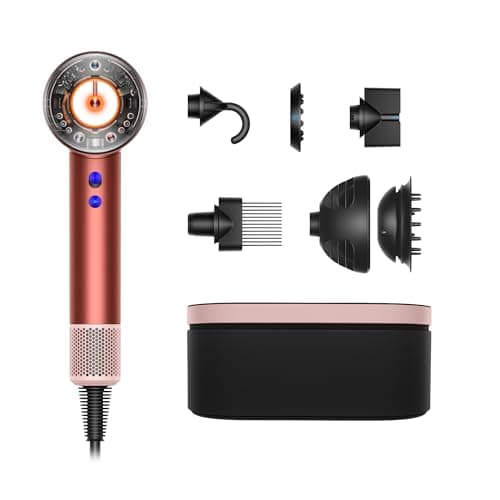
Dyson Supersonic hair dryer
1,600 W is less power than a drugstore dryer draws, and Dyson publishes that openly — the pitch is airflow and heat control, not wattage.
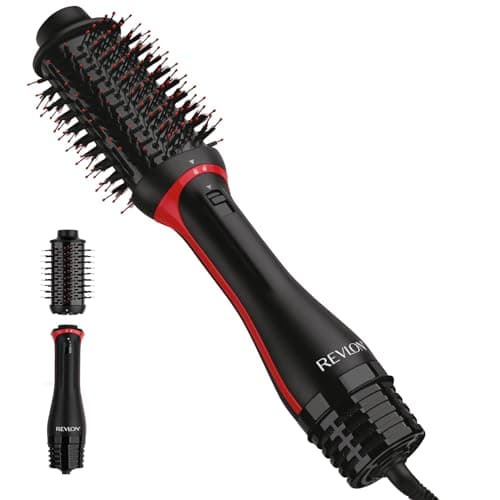
Revlon One-Step Volumizer Plus hair dryer and hot air brush
A 4-year limited warranty, the longest in this registry, on the cheapest kind of tool in it. Worth noticing before paying six times more elsewhere.
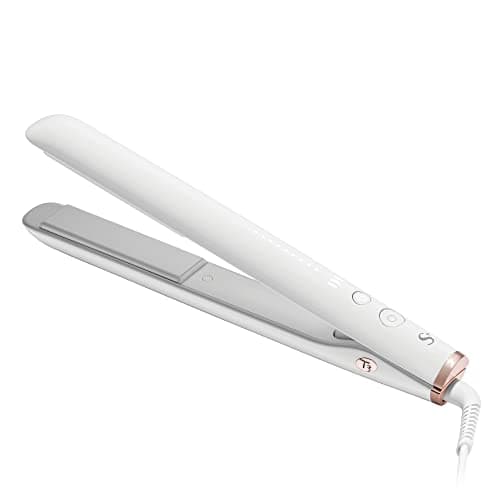
T3 SinglePass StyleMax 1 inch flat iron
Nine heat settings and genuine 100–240 V dual voltage: the most adjustable iron here and the only one you can pack for Europe without a thought.
Questions people actually ask
What hair type do I have?
Four properties matter for choosing tools: density (how much hair), texture (how thick each strand is), porosity (how readily it takes up water) and curl pattern. Density and texture decide the purchase; pattern decides the attachment.
What is the difference between fine hair and thin hair?
Fine describes the thickness of each individual strand; thin usually means low density, or not much hair. You can have a lot of fine hair, which feels thick, dries slowly, and still burns at settings coarse hair would shrug off.
How do I test my hair porosity?
The float test is common but indicative rather than diagnostic, and product residue skews it. The more reliable everyday signal is how long your hair takes to dry relative to people with similar density.
Does hair type change?
Pattern and texture are largely fixed, but porosity is not. Bleaching and dyeing wear the cuticle and measurably change how hair binds water, which is why colored hair behaves differently from the hair it used to be.