Guides
How to Stop Static and Flyaway Hair
Static appears the week the heating goes on and disappears in spring. That timing is the entire explanation, and it points at the fixes.
Updated October 2026 · Sawyer V.
Static is a dry-air problem. Hair holds an electrical charge only when there is too little moisture in the air to carry it away, which is why it starts the week indoor heating comes on and stops in spring. The fixes that work are, in order: raise the humidity in the room, stop over-drying the hair, finish with cool air, and switch what you comb it with. Buying a different dryer is the least effective of the five.
We earn a commission if you buy through the links on this page, at no extra cost to you. It never changes which tool we pick or which one we tell you to skip. How this site is funded.
Why it is a winter problem
Static electricity needs an insulator. When air is humid, a thin film of moisture on every surface — including every strand of hair — conducts charge away as fast as friction creates it, so nothing builds up. When air is dry, that film is gone, charge accumulates, and strands carrying the same charge push each other apart. That is a flyaway: not damage, not dirt, just two strands repelling.
Indoor heating is what makes winter air dry. Heating cold outside air does not add any water to it, but it raises the amount the air could hold, so the relative humidity collapses. A heated room in January is often drier than desert air, and that is the condition static needs.
Hair participates directly in this, because it exchanges moisture with the air around it continuously. Hair takes up moisture readily and releases it slowly Breakspear et al., International Journal of Cosmetic Science, and the uptake happens at different rates in the cuticle and the cortex Breakspear et al., 2025. In a dry room the fiber gives up water it does not get back, and a drier fiber is a better insulator — so it holds more charge.
This is the exact inverse of the summer problem. In humid weather hair takes on water and swells, which lifts the cuticle and produces frizz. Same mechanism, opposite direction — styling for humidity is the warm-weather half of this page. Static and frizz are not the same thing and they do not have the same fix, which is why advice that treats them together usually fails at one of them.
Static or damage? A quick test
Worth settling first, because the two look similar in a mirror and need completely different responses.
Telling static from damage
| Sign | Static | Damage |
|---|---|---|
| Timing | Seasonal - starts with the heating, ends in spring | Persistent, and gets worse over months |
| What the hair does | Lifts and separates, repelling nearby strands | Frays, splits and will not hold a shape |
| After a shower | Gone, then returns as it dries indoors | Unchanged |
| Where on the strand | The whole length, especially the top layer | Concentrated at the ends |
| Fixes in seconds | Yes - touch something metal, or add moisture to the air | No |
| The right response | Change the environment and the finishing step | Change the heat you are applying, and cut the ends |
Our reading, not a manufacturer claim. If both are present, treat the damage first.
If the honest answer is damage, this is the wrong page — start at the signs of heat damage and what repair actually means. Static on top of damage is common, because damaged hair holds less moisture to begin with.
The four fixes, in order of how much they do
- Raise the humidity in the room. This addresses the cause rather than the symptom and nothing else on this list comes close. A humidifier in the room you dry your hair in removes the condition static requires. It is also the one fix that is not a hair product, which is probably why it is the one least often recommended.
- Stop drying past the point of dryness. Over-drying is how you get a fiber with less moisture than the season already gave it. Dry each section until it is dry and then move on — the mechanism, and why the last ten seconds cost the most, is at how to blow-dry without frizz.
- Finish cool, on the brush. Cool air sets the cuticle flat as the section cools, and a flat cuticle has less surface area standing away from the strand to lift. Two or three seconds per section. Who publishes a cool setting is in the table below.
- Change what you comb with. Friction is what creates the charge in the first place, and a plastic comb dragged through dry hair is close to the textbook demonstration of the effect. A brush designed to pass through with less force does measurably less of it — combing force rises steeply on hair that is already compromised Bloch et al., JEADV. See the detangling brushes and the wide-tooth combs.
A fifth that helps and is worth naming: a leave-in product adds a moisture-holding layer the dry room cannot strip as fast. A heat protectant does this as a side effect of its actual job — should you use a heat protectant covers where it goes and why the timing matters.
Which tools publish a cool setting
This is the one hardware row that genuinely bears on static, because the cool finish is fix number three. It is also a row several makers leave ambiguous by publishing a settings count without saying whether one of the settings is cool.
Published cool settings across this registry
| Tool | What the maker publishes |
|---|---|
| L'ange Le Volume brush dryer | A cool setting with a stated temperature - 95.4°F. The only actual cool-air figure on this site |
| L'ange Axia dryer | A cool shot, within a stated 140-230°F range |
| Dyson Supersonic | A cold shot, alongside 4 heat and 3 speed settings |
| ghd Helios | A cool shot, with variable temperature and power |
| Revlon One-Step Volumizer Plus | Cool as one of 4 published heat settings |
| Calista EliteAir Gen 2 | Six published temperatures from 85°F - the lowest stated figure of any styler here |
| Shark SpeedStyle Pro and FlexStyle | No heat or speed count published, so no cool setting can be confirmed |
| T3 dryers | 5 heat and 3 speed settings published as counts, with no temperatures and no cool step named |
Quoted from each maker's own product page.
The L’ange Le Volume figure is the useful one. 95.4°F is near room temperature, which is what a cool finish should be, and it is the only product in this registry whose maker states the number rather than the word. Full sheet at the L’ange Le Volume review.
What the ionic claim is actually about
Static is the one hair problem the ionic claim is genuinely aimed at, so it deserves a straight answer here rather than a dismissal.
The claim is that the dryer emits negatively charged ions into the airflow, which neutralize the positive charge sitting on dry strands. As a physical story that is coherent — neutralizing charge is exactly what would stop two strands repelling. The problem is not the mechanism, it is that no maker in this registry publishes an ion count, an output unit, or any measurement method, so there is no figure you could compare between two dryers.
The practical consequence is that ionic is a poor way to choose between two tools rather than a reason to buy one, because it is now printed on almost everything in the category including drugstore models. Which products state the claim, and what it rests on, is at are ionic hair dryers worth it and the best ionic hair dryers. We would not pay a premium for the word, and we would not avoid a tool that has it.
If you want the tool that leans hardest on the claim, the Revlon SmoothStay publishes a triple-coated ceramic grill with tourmaline ionic technology at the lowest price of any dryer here — which is itself the argument against paying extra for ionic elsewhere. Sheet at the Revlon SmoothStay review.
What does not work
- Washing more often. Static is not dirt. Washing more in a dry season usually makes it worse, because you are stripping and re-drying the fiber more often.
- More heat. The instinct is the same one frizz triggers and it is wrong for the same reason — you are removing more moisture from a fiber that is already short of it. Heat is cumulative and the fiber does not recover Evans and Park, Journal of Cosmetic Science.
- A dryer bought specifically for its ionic badge. See above. The claim is unmeasured and near-universal.
- Brushing it down when it lifts. Brushing is friction, friction is the charge source, and a dry-hair brush-through in a heated room is the most reliable way to produce the problem you are trying to fix.
What we could not compare
Ion output, on every tool here — not one maker publishes a figure, a unit or a test method, so the central claim of this category cannot be ranked. Humidity performance, likewise: no maker states how its tool behaves at a given relative humidity, which is the variable this page is actually about. And noise, as everywhere on this site. The hair-type routing for the hair static affects most is at every tool for fine hair, since fine hair carries the least mass per strand and lifts at the smallest charge.
The tools on this page
Prices come from the live price layer. Where none is available the button says so rather than showing a number we cannot stand behind.
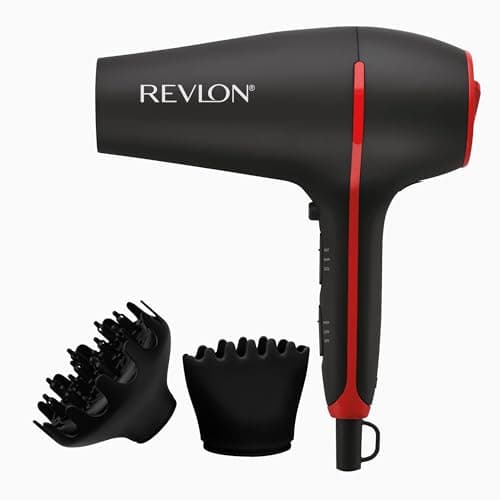
Revlon SmoothStay Coconut Oil-Infused hair dryer
The highest published wattage in this registry attached to the thinnest published spec sheet — Revlon states the watts and almost nothing else.
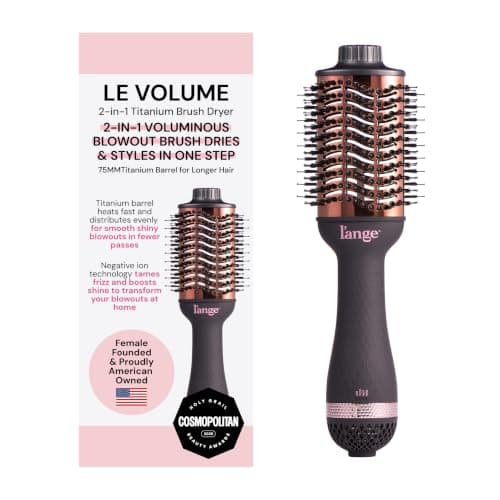
L'ange Le Volume Brush Dryer
The only hot air brush in this registry that publishes an actual temperature for every setting — and the highest of the three is 225.7°F, well under any flat iron here.
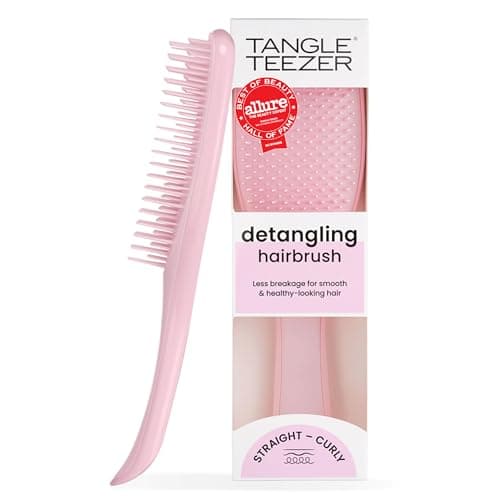
Tangle Teezer The Ultimate Detangler
Three published sizes and a two-tier bristle design, on the one tool in this registry whose whole job is reducing the force you pull with.
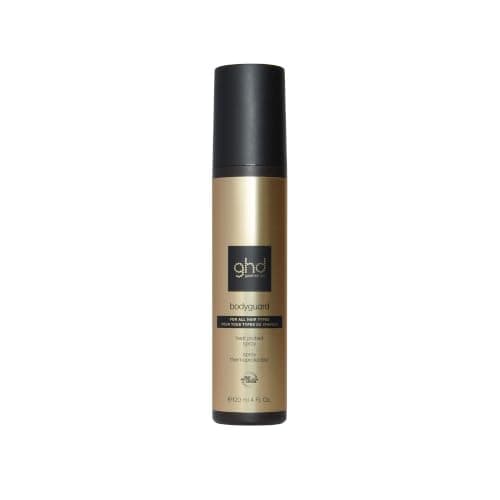
ghd Bodyguard heat protect spray
The heat protectant from a brand that fixes every tool it makes at 365°F — the same company arguing for restraint, selling the thing that buys you some.
Questions people actually ask
Why is my hair so static in the winter?
Because indoor heating collapses the relative humidity of the air. Heating cold air adds no water to it but raises how much it could hold, so a heated room in January is often drier than desert air. Dry air cannot carry charge away, so friction builds it up and strands with the same charge repel each other.
How do I get rid of static hair?
In order of effect: raise the humidity in the room, stop drying past the point of dryness, finish each section with cool air while it is still on the brush, and switch to a brush or wide-tooth comb that passes through with less friction. Buying a different dryer is the least effective change.
Do ionic hair dryers stop static?
The mechanism is coherent — negatively charged ions would neutralize the positive charge on dry strands. The problem is that no maker in this registry publishes an ion count, output unit or test method, so there is no figure to compare between dryers, and the claim now appears on almost everything including drugstore models.
Is static hair a sign of damage?
Not on its own. Static is seasonal, affects the whole length, disappears after a shower and returns as hair dries indoors. Damage is persistent, concentrated at the ends, and does not resolve when you change the room. Damaged hair does hold less moisture, so the two often appear together.
Does a cool shot help with static?
Yes, and it is the third most effective fix. Hair sets its shape as it cools, so a cool finish while the section is still held flat leaves less cuticle standing away from the strand. The L'ange Le Volume is the only tool in this registry whose maker publishes an actual cool-setting temperature, at 95.4 degrees Fahrenheit.
Is static the same as frizz?
No, and they have opposite causes. Static is dry air: the fiber loses moisture and holds a charge. Frizz is humid air: the fiber takes on water and swells, lifting the cuticle. Advice that treats them as one problem usually fails at one of them.
Sources
- Breakspear et al. - moisture sorption in keratin
- Breakspear et al., 2025 - cuticle versus cortex sorption
- Bloch et al. - combing force on Afro-ethnic hair
- Evans and Park - thermal cycling and mechanical properties
- L'ange — Le Volume Brush Dryer product page
- Revlon Hair Tools — SmoothStay Coconut Oil-Infused hair dryer