Guides
How to Blow-Dry Hair Without Frizz
Almost all dryer frizz comes from one of three mistakes, and the biggest one is drying for too long rather than at too high a temperature.
Updated October 2026 · Sawyer V.
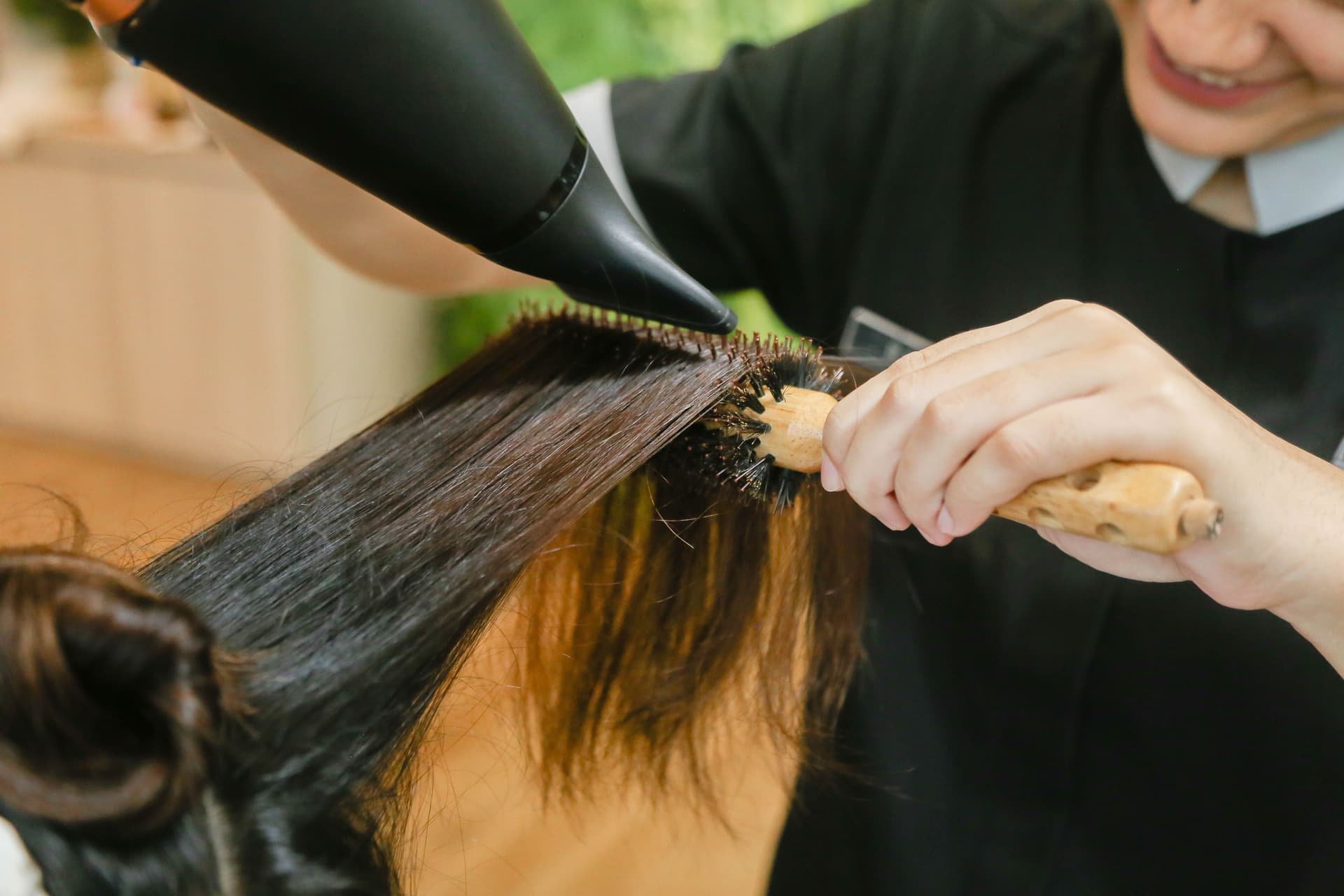
Three changes fix almost all of it. Point the airflow down the hair rather than up into it, so the cuticle is pushed flat instead of being lifted. Stop drying the moment a section is dry rather than carrying on — over-drying is the single biggest cause. And finish each section with the cool setting while it is still under tension, because a cuticle sets as it cools, and one that cools loose lifts again.
We earn a commission if you buy through the links on this page, at no extra cost to you. It never changes which tool we pick or which one we tell you to skip. How this site is funded.
What frizz is, so the fixes make sense
Each strand is wrapped in overlapping cuticle scales that point from root to tip, like roof tiles. When they lie flat the strand is smooth and sits against its neighbours. When they lift, the strand catches on everything around it and stands away from the mass. That is frizz: lifted cuticle, plus water moving in and out of the fiber underneath.
Both halves are things a dryer can make worse, and neither is mainly about temperature. The scales lift mechanically, from airflow and brushing in the wrong direction. The water half is about when you stop.
This is also why the fix is largely free. You can spend six hundred dollars on a dryer and still produce frizz by aiming it upward, and you can get a smooth result from a drugstore dryer by aiming it down.
Cause one: the airflow is going the wrong way
Airflow pointed up into a section lifts every scale it meets, which is mechanically the same thing as rubbing a cat backwards. Airflow pointed down the length pushes them flat.
The practical version: the nozzle should sit above the section, angled down toward the ends, following the brush. Not underneath pointing up, which is what you naturally do when drying the back of your own head, and not perpendicular, which is what you do when you are in a hurry.
This is what a concentrator nozzle is for. It narrows the stream so the air goes where you aimed it instead of spreading across three sections at once, and it is the single most useful attachment for a smooth finish. In this registry the Dyson Supersonic publishes three attachments, the Shark SpeedStyle Pro publishes six including a turbo concentrator, and the L’ange Axia publishes a magnetic concentrator nozzle. Two dryers here publish no attachment list at all, which means you cannot confirm a concentrator is in the box before buying. Diffuser vs concentrator covers which one your hair wants, and the best hair dryers for frizzy hair ranks on exactly this row.
One exception, and it is important: if your hair is curly or wavy and you want to keep the pattern, this whole section does not apply. A concentrator and brush tension straightens; a diffuser is the attachment, and the method is different — see how to blow-dry curly hair.
Cause two: you did not stop when it was dry
This is the big one, and it is the opposite of what most advice says. Over-drying produces more frizz than high heat does.
Hair holds water in two places — loosely at the cuticle surface and more slowly in the cortex — and the two release at different rates Breakspear et al., 2025. Once the surface water is gone, hair feels dry while the interior is still releasing. Keep the dryer on it and you are heating a fiber with no water left to evaporate, which is the condition in which heat damages rather than dries.
The published mechanism for what happens next is specific. Heating hair that still has water trapped inside produces bubble hair, where steam expands inside the shaft and blows cavities into the cortex — a failure documented repeatedly from heated styling tools Albers et al., International Journal of Trichology. And heat applied to wet hair produced markedly more damage than the same treatment on dry hair Ruetsch and Kamath, Journal of Cosmetic Science. Damaged hair is frizzier hair, which is why over-drying shows up as frizz tomorrow as well as today.
The rule: dry each section until it is dry and then move on, even though another ten seconds feels safer. If one section is still damp when you have finished the rest, go back to that section rather than giving the whole head another pass. Hair also takes moisture back out of the air afterwards Breakspear et al., International Journal of Cosmetic Science, so the bone-dry state you are chasing does not persist anyway.
Cause three: you skipped the cool shot
A cuticle smoothed by heat sets its shape as it cools. If the section cools while it is loose in your hand, it sets loose. If it cools while it is still held under tension on the brush, it sets flat.
So the last thing that happens to every section is cool air while the brush is still in it. Two to three seconds is enough. This is the step most people skip and it is the one that decides whether the result survives the walk to the car.
Who publishes one: the Dyson Supersonic publishes a cold shot, the ghd Helios publishes a cool shot, the L’ange Axia publishes a cool shot within a stated 140–230°F range, and the L’ange Le Volume publishes an actual cool-setting temperature of 95.4°F — the only figure of its kind on this site. Several dryers here publish a settings count without saying whether one of the settings is cool, which is a row worth checking before you buy.
The method, in order
- Rough-dry to about 80 percent with no attachment. No brush, no sections, fingers only, airflow still pointed downward. There is no point in precision work on hair this wet, and the fiber is at its most fragile here.
- Then section. Thin enough that the air reaches the middle of the section, which is thinner than feels efficient. How to section properly has the sizes. Oversized sections are why people go back over the same hair twice.
- Nozzle on, pointed down. Concentrator above the section, angled toward the ends, following the brush rather than fighting it.
- One direction, with tension. Tension is what holds the cuticle flat while the heat sets it. Tension is not force — combing force rises steeply on hair that is already compromised Bloch et al., JEADV, so if the brush is catching, the answer is a smaller section rather than a harder pull.
- Stop at dry. Then cool, on the brush. Two or three seconds of cool air before the brush comes out.
- Do not touch it for ten minutes. The fiber is still equalising. Hands on warm hair put the frizz back.
If the goal is poker-straight rather than smooth, the full method is at how to blow-dry hair straight without an iron. If a brush in one hand and a dryer in the other is the part you cannot manage, a hot air brush combines them — blow-dry brushes for frizzy hair.
Where the heat protectant goes
On damp hair, before the rough-dry, and this is where our advice differs from the usual instruction. The reason is the water: applying a protectant and then immediately applying contact heat to still-wet hair is the combination that causes the most damage, which is why the protectant question and the drying question have to be answered together.
Before a dryer it is straightforwardly useful. Before an iron it is more complicated, and should you use a heat protectant sets out the distinction. Which sprays publish what is at the heat protectant sprays.
When it is not the technique
Three cases where none of the above will be enough.
- Humidity. Hair takes moisture back from the air at a rate set by the hair rather than the tool, so a perfect blow-dry can frizz within the hour on a wet day. Nothing in a specification sheet prevents that — styling for humidity covers what helps.
- Existing damage. If frizz comes with rough ends, breakage and hair that will not hold any shape, you are looking at damage rather than technique. The signs of heat damage is the page, and what repair actually means is the honest answer about fixing it.
- Frequency. The damage evidence is cumulative, so the same routine costs more the more often you do it. The cheapest reduction available is not restyling — second-day hair and how often you can use heat.
The tools on this page
Prices come from the live price layer. Where none is available the button says so rather than showing a number we cannot stand behind.
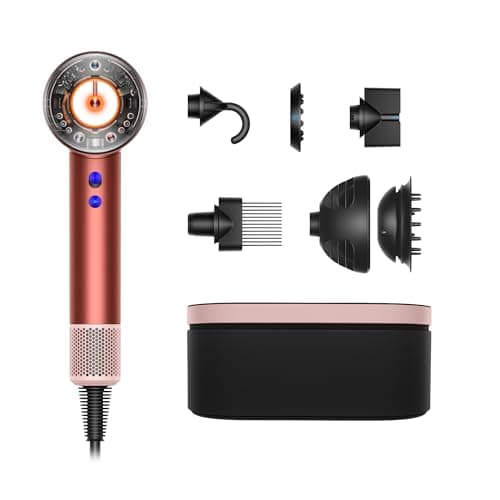
Dyson Supersonic hair dryer
1,600 W is less power than a drugstore dryer draws, and Dyson publishes that openly — the pitch is airflow and heat control, not wattage.
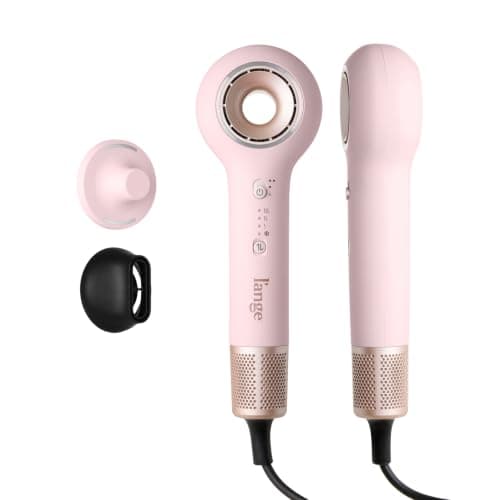
L'ange Axia HaloRing Hair Dryer
0.7 lb without the cord makes this the lightest dryer in the registry, and 140–230°F is a published temperature range almost nobody in the category gives you.
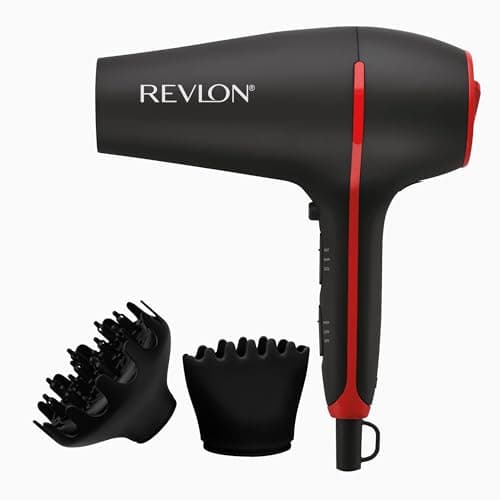
Revlon SmoothStay Coconut Oil-Infused hair dryer
The highest published wattage in this registry attached to the thinnest published spec sheet — Revlon states the watts and almost nothing else.
Questions people actually ask
How do I blow-dry my hair without frizz?
Point the airflow down the hair rather than up into it, stop the moment each section is dry rather than carrying on, and finish each section with cool air while the brush is still holding it under tension. Those three changes fix almost all dryer frizz, and none of them requires a different dryer.
Does blow-drying cause frizz?
Badly aimed blow-drying does. Airflow pointed up into a section lifts the cuticle scales mechanically, and drying past the point of dryness heats a fiber with no water left to evaporate. Airflow pointed down the length with a concentrator does the opposite.
Is it better to let hair air dry to avoid frizz?
Not necessarily, and it is not a damage-free alternative either. Hair left wet for long periods swells and stays in its most fragile state for longer. The comparison is genuinely closer than most advice admits.
What temperature should I blow-dry at to avoid frizz?
Lower than you think, but temperature is the third most important factor here, behind airflow direction and when you stop. Only two dryers in this registry publish an actual temperature at all: the L'ange Axia at a stated 140 to 230 degrees Fahrenheit and the ghd flight+ at 149 degrees.
Why does the cool shot matter?
A cuticle smoothed by heat sets its shape as it cools. If the section cools loose in your hand it sets loose; if it cools while still held under tension on the brush it sets flat. Two to three seconds of cool air before the brush comes out is the whole step.
Do I need an expensive dryer to avoid frizz?
No. The three things that cause dryer frizz are all technique. The one piece of hardware that genuinely helps is a concentrator nozzle, and two dryers in this registry publish no attachment list at all, so check that row rather than the price.
Sources
- Breakspear et al., 2025 - cuticle versus cortex sorption
- Breakspear et al. - moisture sorption in keratin
- Albers et al. — Blowing Bubbles: Dermoscopy of Bubble Hair, Int J Trichol 2017
- Ruetsch and Kamath - heated tools on wet versus dry hair
- Bloch et al. - combing force on Afro-ethnic hair
- L'ange — Axia HaloRing Hair Dryer product page
- Dyson — Supersonic hair dryer product page