Flat Irons & Straighteners
The Best Professional Flat Irons in 2026
The word is unregulated, so it tells you nothing on its own. What the spec sheets show is a longer cord, a hanging ring, floating plates and, on one iron, lifetime cover.
Updated October 2026 · Sawyer V.
Buy the ghd Platinum+. “Professional” is an unregulated word on a box, so rank on the rows that actually change: cord length, plate construction, warranty and voltage. ghd publishes precision-milled floating plates at a fixed 365°F, a 9 ft cable, universal voltage and a three-year warranty — the longest cover of any iron here apart from one lifetime policy. For a working stylist, the Hot Tools wins on warranty and the hanging ring.
We earn a commission if you buy through the links on this page, at no extra cost to you. It never changes which tool we pick or which one we tell you to skip. How this site is funded.
Quick picks
Tap any row to jump to the full write-up. Prices come from the live price layer; where none is available the button says so rather than showing a number we cannot stand behind.
| # | Product | Best for | Price |
|---|---|---|---|
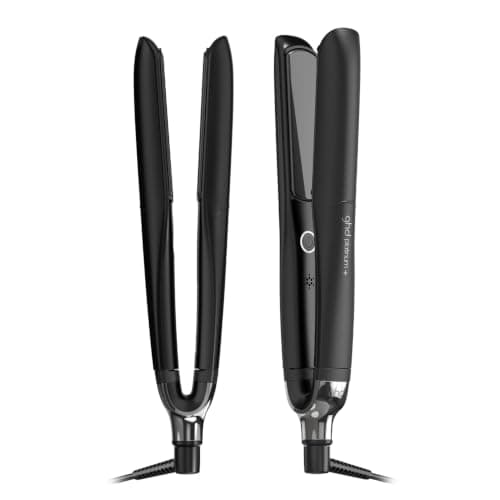
| 1 | ghd Platinum+ flat iron (1 inch plate) Precision-milled floating plates at a fixed 365°F, a 9 ft cable, universal voltage and a 3-year warranty. | Repeatable results on anyone's hair, all day | |
| 2 | 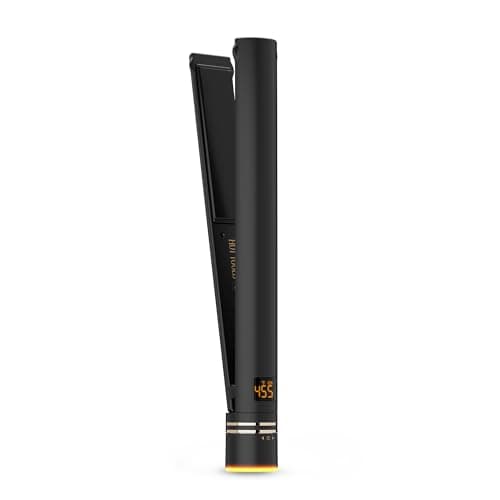 Hot Tools Black Gold Evolve Ionic Salon Flat Iron Lifetime limited cover, a 9 ft swivel cord with a hanging ring, ceramic-titanium floating plates in two widths, and variable heat to 455°F. | Back-to-back clients, coarse hair, and a tool that has to outlive the chair | |
| 3 | 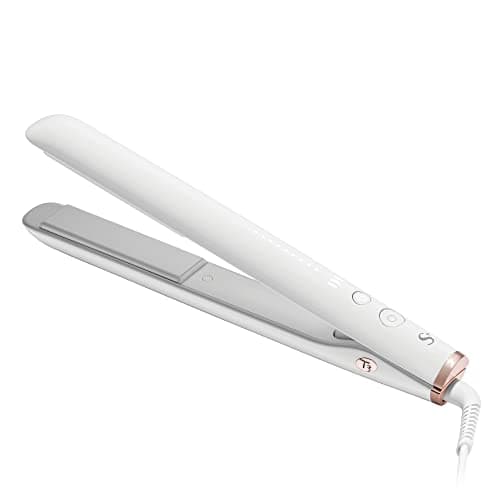 T3 SinglePass StyleMax 1 inch flat iron Nine heat settings and genuine 100-240 V auto world voltage at 11.1 oz - the lightest iron here by a wide margin. | A mobile stylist, and anyone who needs a verifiable low setting | |
| — | 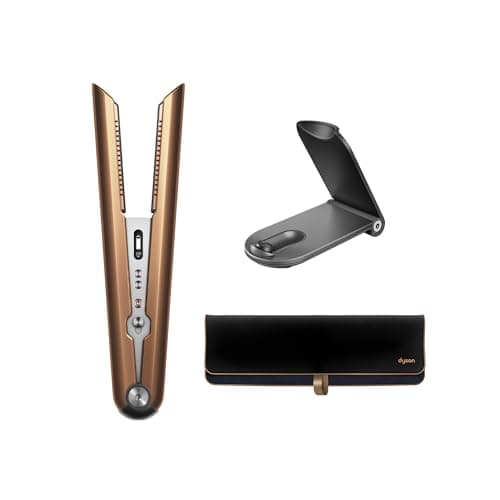 Dyson Corrale straightener The most interesting iron here and the wrong one for professional use: it runs on a battery, and a battery runs out. We’d skip this | A cordless home user - not a day of back-to-back clients |
1. Best professional flat iron
ghd Platinum+ flat iron (1 inch plate)
Best for: Repeatable results on anyone's hair, all day
Precision-milled floating plates at a fixed 365°F, a 9 ft cable, universal voltage and a 3-year warranty.
Four published rows make this the pick, and three of them are the rows the word “professional” should mean.
A fixed 365°F. In a salon context this is a feature rather than a limitation: it is the lowest fixed temperature published by any iron here, and it means every client gets the same treatment regardless of who picks the tool up or how rushed they are. The dial is what people reach for when a pass does not work, and removing it leaves only the fixes that actually help — thinner sections, drier hair, slower travel.
Precision-milled floating plates. Floating is the row that changes the styling: a plate that pivots stays flat against an uneven section instead of pinching at one edge, which is what lets a thicker section go through in a single pass. Fewer passes is the whole game on a day of back-to-back heads.
A 9 ft cable and universal voltage. Reach matters at a station where the socket is not beside the chair, and a long cable takes less tension at the handle — the failure most warranties exclude. Three-year warranty. Sheet at the ghd Platinum+ review.
What’s wrong with it
You cannot go below 365°F, which fine or freshly bleached hair may want, and ghd publishes neither a weight nor a wattage for it - so it cannot be costed and you cannot check what you will be holding through a full day. It also supplies no attachments.
Published specifications — ghd Platinum+ flat iron (1 inch plate)
| Wattage | Not published |
|---|---|
| Heat settings | One fixed temperature — 365°F |
| Speed settings | Not applicable |
| Weight | Not published |
| Cord length | 9 ft power cable |
| Noise (dB) | Not applicable |
| Attachments | None supplied |
| Plate / barrel | Precision-milled floating high-gloss plates, 1 in |
| Dual voltage | Yes — universal voltage |
| Warranty | 3-year warranty |
Every figure above is taken from ghd — Platinum+ flat iron (1 inch plate) product page. “Not published” means the figure does not appear on that page — it is not an estimate withheld, it is a number the manufacturer does not state. How we compile these.
What it costs to run for a year
ghd does not publish a wattage for this tool, so there is nothing honest to compute. The formula is watts ÷ 1,000 × hours a year × your rate per kWh; if you find a rating plate on the handle, 65 hours a year and 18.34 cents per kilowatt-hour will get you the rest of the way.
2. Best for a working stylist, and the only lifetime warranty here
Hot Tools Black Gold Evolve Ionic Salon Flat Iron
Best for: Back-to-back clients, coarse hair, and a tool that has to outlive the chair
Lifetime limited cover, a 9 ft swivel cord with a hanging ring, ceramic-titanium floating plates in two widths, and variable heat to 455°F.
This is the one iron here actually sold as a salon tool, and two published rows back the claim up rather than decorate it.
Lifetime limited cover is the only lifetime warranty on this entire site. For somebody using an iron forty hours a week rather than four, that is the row that matters most, and it is the strongest argument any tool here makes. Read “limited” carefully: defect cover typically excludes the cord wear that actually kills heated tools, and no maker publishes its claim criteria.
A 9 ft swivel cord with a hanging ring. The swivel stops the cable twisting as you rotate the iron through a section, which is the specific motion that kills a cord at the handle, and the hanging ring is a station fitting rather than a consumer one. Ceramic-titanium floating plates come in 1 in and 1¼ in, so you can carry both widths.
Variable heat to 455°F is the highest ceiling published here, which on coarse resistant client hair is headroom you will occasionally use. Sheet at the Hot Tools Black Gold Evolve review.
What’s wrong with it
No published floor temperature, no step count, no published weight and no published voltage. The missing floor is the real cost in a salon: a dial with an unmarked low end is the wrong instrument for a client whose hair you have just been told is bleached, and the blank voltage means it cannot be packed for a job abroad.
Published specifications — Hot Tools Black Gold Evolve Ionic Salon Flat Iron
| Wattage | Not published |
|---|---|
| Heat settings | Variable, up to 455°F |
| Speed settings | Not applicable |
| Weight | Not published |
| Cord length | 9 ft professional swivel cord with a hanging ring |
| Noise (dB) | Not applicable |
| Attachments | Not published |
| Plate / barrel | Black Gold ceramic-titanium floating plates, 1 in and 1¼ in |
| Dual voltage | Not published |
| Warranty | Lifetime limited warranty |
Every figure above is taken from Hot Tools — Black Gold Evolve Ionic Salon Flat Iron product page. “Not published” means the figure does not appear on that page — it is not an estimate withheld, it is a number the manufacturer does not state. How we compile these.
What it costs to run for a year
Hot Tools does not publish a wattage for this tool, so there is nothing honest to compute. The formula is watts ÷ 1,000 × hours a year × your rate per kWh; if you find a rating plate on the handle, 65 hours a year and 18.34 cents per kilowatt-hour will get you the rest of the way.
3. Most adjustable, and the only one you can take anywhere
T3 SinglePass StyleMax 1 inch flat iron
Best for: A mobile stylist, and anyone who needs a verifiable low setting
Nine heat settings and genuine 100-240 V auto world voltage at 11.1 oz - the lightest iron here by a wide margin.
Nine settings is the most adjustment published by any iron in this registry, and in a professional context the argument for it is client variety rather than personal preference: a fixed 365°F serves most hair and the wrong hair badly, while nine positions lets you drop for a freshly lifted blonde and raise for coarse virgin hair.
100–240 V auto world voltage makes it the mobile option. For anyone working on location, at weddings or abroad, it is the only iron here that publishes a range that covers both mains standards without a converter — adapter vs converterexplains why that distinction destroys tools.
11.1 oz without the cord is the lightest published weight of any iron here, roughly a third of the heaviest, which over a day of raised-arm work is the row your wrist notices. CeraGloss ceramic plates at 1 in, two-year warranty. Sheet at the T3 SinglePass StyleMax review.
What’s wrong with it
The nine settings are positions, not temperatures - T3 publishes no degrees for any of them, so you cannot document a setting for a client record or check it against guidance. T3 also publishes no wattage and does not publish the cord length, only that it swivels, which for station work is the row you would want.
Published specifications — T3 SinglePass StyleMax 1 inch flat iron
| Wattage | Not published |
|---|---|
| Heat settings | 9 heat settings |
| Speed settings | Not applicable |
| Weight | 11.1 oz (cord not included) |
| Cord length | 360-degree swivel cord — length not published |
| Noise (dB) | Not applicable |
| Attachments | None supplied |
| Plate / barrel | CeraGloss ceramic plates, 1 in |
| Dual voltage | Yes — auto world voltage, 100–240 V |
| Warranty | 2-year warranty |
Every figure above is taken from T3 Micro — SinglePass StyleMax 1 inch flat iron product page. “Not published” means the figure does not appear on that page — it is not an estimate withheld, it is a number the manufacturer does not state. How we compile these.
What it costs to run for a year
T3 does not publish a wattage for this tool, so there is nothing honest to compute. The formula is watts ÷ 1,000 × hours a year × your rate per kWh; if you find a rating plate on the handle, 65 hours a year and 18.34 cents per kilowatt-hour will get you the rest of the way.
The one we'd skip
Dyson Corrale straightener
Best for: A cordless home user - not a day of back-to-back clients
The most interesting iron here and the wrong one for professional use: it runs on a battery, and a battery runs out.
Nothing here is a criticism of the Corrale as a tool. Flexing plates are genuinely unique in this registry — they shape to the section and apply pressure more evenly — and cordless working is a real convenience. The review is positive about it.
The published specification that rules it out is the power source. Dyson publishes a 200 W battery rating and a 10.9 ft charging cable; that 200 W figure is a battery rating and is not comparable to a corded iron’s draw. A battery-powered heating tool is sized for a session, not a shift. For somebody styling one head a day it is freedom; for somebody styling eight it is a planning problem, and the honest answer is that corded is the right architecture for that work.
It also publishes three heat settings with a stated starting point of 365°F, 1.23 lb, and a two-year limited warranty — the shortest cover of the four irons here, on the most expensive one. For salon use that combination is the wrong way round.
What’s wrong with it
Battery-powered, so runtime is a constraint no corded iron has, and the published 200 W is a battery rating that cannot be compared with a corded draw. The most expensive iron on this page with the shortest warranty of the four, at 1.23 lb.
Published specifications — Dyson Corrale straightener
| Wattage | 200 W |
|---|---|
| Heat settings | 3 heat settings; Dyson's stated starting point is 365°F |
| Speed settings | Not applicable |
| Weight | 1.23 lb |
| Cord length | 10.9 ft charging cable |
| Noise (dB) | Not applicable |
| Attachments | Charging dock and travel pouch |
| Plate / barrel | Flexing manganese-copper alloy plates |
| Dual voltage | Battery — 10.8 V–16.8 V cell |
| Warranty | 2-year limited warranty |
Every figure above is taken from Dyson — Corrale straightener product page. “Not published” means the figure does not appear on that page — it is not an estimate withheld, it is a number the manufacturer does not state. How we compile these.
What it costs to run for a year
$2.38 a year
200 W × 65 hours a year = 13.0 kWh, at 18.34 cents per kilowatt-hour. The hours assume 15 minutes a session, 5 days a week — that is an assumption, not a measurement, so swap in your own if it is wrong.
The word is unregulated. Here is what changes
Nothing stops any manufacturer printing “professional,” “salon” or “pro” on a box, and several of the irons in this registry carry one of those words without publishing anything a salon would actually need. So instead of taking the label, here are the rows that genuinely differ on the irons sold into professional use.
What the professional label actually corresponds to, on published specs
| Published row | Why a salon needs it | Who publishes the best figure |
|---|---|---|
| Cord length | The socket is not beside the chair, and a taut cable dies at the handle | CHI — 11 ft. ghd Platinum+ and Hot Tools — 9 ft |
| Swivel cord | The iron rotates through every section; a fixed cord twists and fails | Hot Tools — 9 ft swivel with a hanging ring. T3 — 360-degree swivel |
| Floating plates | Stays flat on an uneven section, so one pass does the job | ghd, CHI, Hot Tools and L'ange all publish floating plates |
| Warranty | Forty hours a week, not four | Hot Tools — lifetime limited. ghd — 3 years |
| Plate width options | Carrying both widths covers every client | Hot Tools — 1 in and 1¼ in. ghd Chronos — 1 in and a wide-plate version |
| Published temperature | A documented setting you can repeat on a client | ghd — a fixed 365°F. Nobody publishes a floor for a variable iron |
Quoted from each maker's own product page. No maker publishes a duty cycle, which is the row a salon would most want.
The note under that table is the honest headline. The specification a working stylist would actually ask for — how long the tool can run continuously before it needs to cool, or how many hours a day it is rated for — is published by nobody in this registry. “Professional” is therefore a word about the sales channel, not a documented capability, and this page ranks on the rows that are published instead.
If you are not a stylist, read this first
Most people landing here are not working in a salon; they are trying to work out whether the professional version is better. The short answer on published specifications is: slightly, in specific ways, and not always worth it.
- What you genuinely gain: cord length and a swivel, floating plates, usually a longer warranty, and sometimes a choice of plate width. Those are real.
- What you do not gain: a documented temperature, a published weight, or a duty cycle, because almost nobody publishes those at any price.
- What can get worse: the ceiling. The salon-channel iron here publishes the highest maximum temperature on the site and no floor, which is a capability in trained hands and a hazard in untrained ones.
The full version of that argument, across every category rather than just irons, is at professional against consumer tools, and the dryer equivalent of this page is at the best professional hair dryers, where the trade-offs come out differently — including one brand publishing a shorter warranty on its professional line.
The row a salon should care about most
A documented, repeatable temperature. In a professional setting you are working on hair whose history you have been told about rather than hair you own, and the client in the chair may have been bleached last week.
Bleached and chemically treated hair starts with measurably less protein to spend Dyer et al., International Journal of Cosmetic Science, and combining services compounds it — dye plus a sodium hydroxide relaxer produced a 356 percent increase in protein loss over virgin hair França-Stefoni et al., Journal of Cosmetic Dermatology. Repeated thermal cycling degrades the fiber whatever it started as Evans and Park, Journal of Cosmetic Science.
Against that, a variable dial with an unmarked low end is a worse instrument than a fixed 365°F, because the fixed number is at least documented. That is the reasoning behind the ranking above, and it is why the iron with the highest ceiling is second rather than first. Guidance by hair type is at what temperature is actually safe, and what unlabelled dial positions mean at what the numbers on a flat iron dial mean.
Which one, by how you work
- Salon station, mixed clients: the ghd Platinum+. A documented temperature and three years of cover.
- Forty hours a week, coarse client base: the Hot Tools Black Gold Evolve. Lifetime cover, a swivel cord with a hanging ring and both plate widths.
- Mobile, on location or abroad: the T3 SinglePass StyleMax. The only iron here with 100–240 V auto world voltage, and the lightest.
- Mostly textured hair and silk presses: start at the best flat irons for a silk press and flat irons for 4C and coily hair, where plate width and stretch come before warranty.
- Mostly colored clients: flat irons for color-treated hair, which ranks on the published low end rather than on the label.
- You want the longest cord, full stop: the CHI Original publishes 11 ft, the longest here — the review.
What we could not compare
Duty cycle and continuous-use rating, on every iron in this registry. Nobody publishes how long a tool can run before it needs to cool, which is the single specification that would separate a professional iron from a consumer one, and we are not going to estimate it. Weight on two of the four picks: ghd and Hot Tools publish none. Wattage on three of four, so running costs can only be computed for the Corrale, and its 200 W is a battery rating that is not comparable anyway. Heat-up and recovery time on all four, which on back-to-back clients is the figure that would decide between them. And noise — not applicable on an iron, and blank on everything else here.
Questions people actually ask
What is the best professional flat iron?
The ghd Platinum+, on published specifications: precision-milled floating plates at a fixed 365 degrees Fahrenheit, a 9 ft cable, universal voltage and a three-year warranty. For a stylist working full time the Hot Tools Black Gold Evolve wins on warranty, with lifetime limited cover and a swivel cord with a hanging ring.
Does professional actually mean anything on a flat iron?
Not as a label — nothing stops a maker printing it. What does change on the irons sold into professional use is cord length, a swivel cord, floating plates, warranty length and sometimes a choice of plate width. The row a salon would most want, a duty cycle or continuous-use rating, is published by nobody in this registry.
What flat iron do hairdressers use?
We cannot tell you what any individual salon buys, and we are not going to guess. What the published specs show is that the irons sold into that channel differ on four rows: cord length and swivel, floating plates, warranty, and plate width options. Only one iron in this registry carries lifetime cover.
Is a professional flat iron worth it for home use?
Slightly, in specific ways. You gain cord length, a swivel, floating plates and usually a longer warranty. You do not gain a documented temperature or a published weight, because almost nobody publishes those at any price — and the salon-channel iron here has the highest maximum temperature on the site with no published floor.
Why is the Dyson Corrale the skip on this page?
Because it runs on a battery, and a battery is sized for a session rather than a shift. Dyson publishes a 200 W battery rating, which is not comparable to a corded iron's draw. It is also the most expensive iron on this page with the shortest warranty of the four. For a cordless home user it is a genuinely interesting tool.
Which flat iron has the longest warranty?
The Hot Tools Black Gold Evolve, with lifetime limited cover — the only lifetime warranty on this site. ghd is next with three years on its flat irons. Dyson, T3, CHI and L'ange publish two years or less.
Sources
- ghd — Platinum+ flat iron (1 inch plate) product page
- Hot Tools — Black Gold Evolve Ionic Salon Flat Iron product page
- T3 Micro — SinglePass StyleMax 1 inch flat iron product page
- Dyson — Corrale straightener product page
- Dyer et al. - bleaching and the hair fiber
- França-Stefoni et al. - protein loss after treatment
- Evans and Park - thermal cycling and mechanical properties