Flat Irons & Straighteners
The Best Flat Irons for Color-Treated Hair in 2026
Nine irons here. Exactly one publishes a temperature you can set below 365 degrees, which makes this a short list for an honest reason.
Updated October 2026 · Sawyer V.
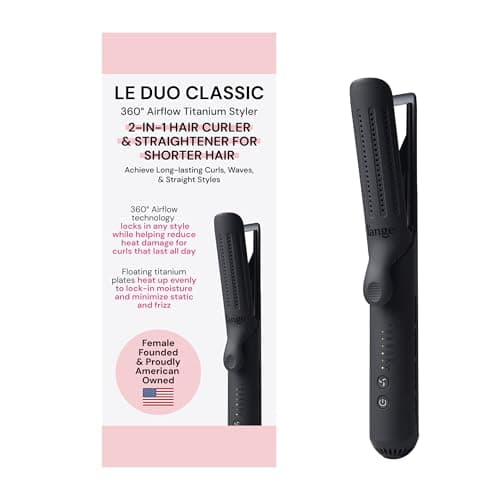
Buy the L’ange Le Duo. It is the only flat iron in this registry whose maker publishes a floor temperature — five settings across a stated 280–430°F — and on color-treated hair the low end is the entire specification. Every other iron here publishes a fixed preset at 365°F or above, or a ceiling with no floor. Colored hair starts with measurably less protein to spend.
We earn a commission if you buy through the links on this page, at no extra cost to you. It never changes which tool we pick or which one we tell you to skip. How this site is funded.
Quick picks
Tap any row to jump to the full write-up. Prices come from the live price layer; where none is available the button says so rather than showing a number we cannot stand behind.
| # | Product | Best for | Price |
|---|---|---|---|
| 1 | L'ange Le Duo 360° Airflow Styler (Standard) Five settings across a stated 280-430°F - the only published temperature floor in the category - at 0.8 lb and 36 W. | Setting a number below 365°F and repeating it | |
| 2 | 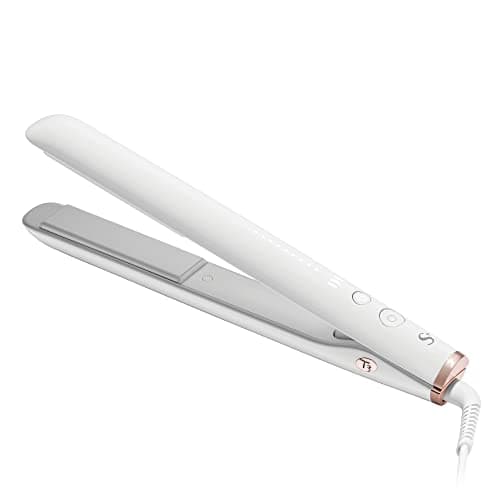 T3 SinglePass StyleMax 1 inch flat iron Nine heat settings, the most adjustment published by any iron here, at 11.1 oz with genuine 100-240 V dual voltage. | Working down to the lowest step that still holds | |
| 3 | 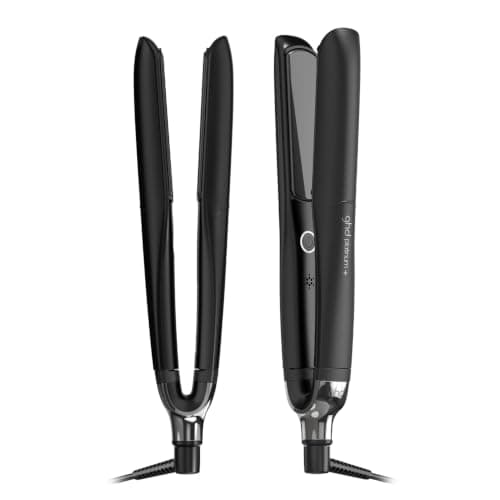 ghd Platinum+ flat iron (1 inch plate) A fixed 365°F - the lowest fixed temperature in the category - with floating precision-milled plates and three years of cover. | Anyone who does not trust their own hand on a dial | |
| — | 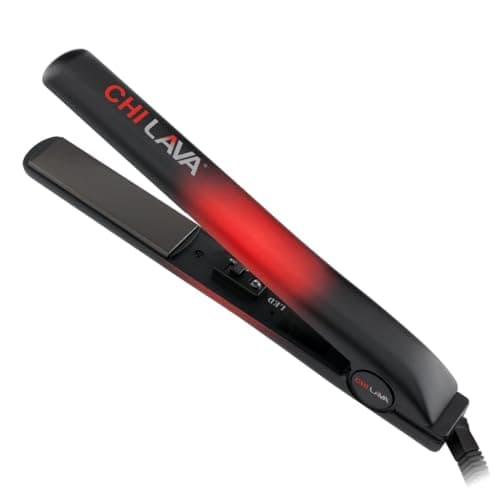 CHI Lava 1" Volcanic Ceramic Hairstyling Iron (GF8269) A fixed 395°F with no adjustment, at 2.08 lb - the highest unavoidable temperature and the heaviest body in this registry. We’d skip this | Coarse, resistant, uncolored hair |
1. Lowest published floor
L'ange Le Duo 360° Airflow Styler (Standard)
Best for: Setting a number below 365°F and repeating it
Five settings across a stated 280-430°F - the only published temperature floor in the category - at 0.8 lb and 36 W.
One published row wins this and it is not close. L’ange states five settings spanning 280–430°F. No other iron here publishes a floor at all: ghd fixes at 365°F, CHI at 392°F and 395°F, Dyson states 365°F as its starting point, Hot Tools publishes only a 455°F ceiling, and T3 publishes nine positions with no degrees attached to any of them.
280°F is 85 degrees below the lowest fixed setting in the category. On hair that has been lifted, toned or dyed, that is not a marginal difference — it is the difference between a temperature the guidance supports and one it does not.
The second argument is the airflow. L’ange states that the Le Duo moves air through the barrel as it styles, so the section cools into shape as the plates leave it. On colored hair, cooling under tension rather than relaxing hot is how you get the result at a lower temperature instead of a higher one.
Published 3.5 in × 1 in titanium floating plates with rounded edges, 0.8 lb, 36 W — the lowest draw of any styling tool here by a factor of roughly fifty — an 8.2 ft cord, 100–240 V and a 60-minute auto shut-off. Full sheet at the L’ange Le Duo review.
What’s wrong with it
A one-year warranty, the shortest of any iron here and a third of ghd's - on hair that is already expensive to maintain, that is the wrong row to be weakest on. It is also a multi-purpose styler rather than a dedicated straightener.
Published specifications — L'ange Le Duo 360° Airflow Styler (Standard)
| Wattage | 36 W (Standard); 50 W (Grande) |
|---|---|
| Heat settings | 5 settings, 280–430°F |
| Speed settings | Not published |
| Weight | 0.8 lb / 358 g (Standard); 0.9 lb / 400 g (Grande) |
| Cord length | 8.2 ft (2.5 m) |
| Noise (dB) | Not published |
| Attachments | Not published |
| Plate / barrel | Titanium floating plates with rounded edges, 3.5 in × 1 in |
| Dual voltage | Yes — 100–240 V, 50/60 Hz |
| Warranty | 1-year warranty |
Every figure above is taken from L'ange — Le Duo 360° Airflow Styler product page. “Not published” means the figure does not appear on that page — it is not an estimate withheld, it is a number the manufacturer does not state. How we compile these.
What it costs to run for a year
$0.43 a year
36 W (Standard); 50 W (Grande) × 65 hours a year = 2.3 kWh, at 18.34 cents per kilowatt-hour. The hours assume 15 minutes a session, 5 days a week — that is an assumption, not a measurement, so swap in your own if it is wrong.
2. Most positions on the dial
T3 SinglePass StyleMax 1 inch flat iron
Best for: Working down to the lowest step that still holds
Nine heat settings, the most adjustment published by any iron here, at 11.1 oz with genuine 100-240 V dual voltage.
Nine settings is the most granular control published in this category, and granularity is exactly what colored hair needs: the useful instruction is to spend as little heat as the style allows, and a three-step dial forces you up a step you did not want.
The method is the same one we give everywhere. Start at the lowest setting, raise one position at a time until a single slow pass holds the section, and then never go above it. Nine positions means the step you land on is close to your actual requirement rather than the nearest coarse approximation.
At 11.1 oz without the cord it is the lightest iron in this registry by a wide margin, which matters on long colored hair for a practical reason: the last sections are where passes get rushed, and rushed passes on processed hair are what cost you the color and the condition together.
CeraGloss ceramic plates at 1 in, 100–240 V auto world voltage, two-year warranty. See the full sheet.
What’s wrong with it
The nine settings are positions, not temperatures - T3 publishes no degrees for any of them, so you cannot check a setting against the guidance for colored hair the way you can with the L'ange. T3 also publishes no wattage and no cord length.
Published specifications — T3 SinglePass StyleMax 1 inch flat iron
| Wattage | Not published |
|---|---|
| Heat settings | 9 heat settings |
| Speed settings | Not applicable |
| Weight | 11.1 oz (cord not included) |
| Cord length | 360-degree swivel cord — length not published |
| Noise (dB) | Not applicable |
| Attachments | None supplied |
| Plate / barrel | CeraGloss ceramic plates, 1 in |
| Dual voltage | Yes — auto world voltage, 100–240 V |
| Warranty | 2-year warranty |
Every figure above is taken from T3 Micro — SinglePass StyleMax 1 inch flat iron product page. “Not published” means the figure does not appear on that page — it is not an estimate withheld, it is a number the manufacturer does not state. How we compile these.
What it costs to run for a year
T3 does not publish a wattage for this tool, so there is nothing honest to compute. The formula is watts ÷ 1,000 × hours a year × your rate per kWh; if you find a rating plate on the handle, 65 hours a year and 18.34 cents per kilowatt-hour will get you the rest of the way.
3. Best fixed setting for colored hair
ghd Platinum+ flat iron (1 inch plate)
Best for: Anyone who does not trust their own hand on a dial
A fixed 365°F - the lowest fixed temperature in the category - with floating precision-milled plates and three years of cover.
This is the pick for a different kind of buyer, and the argument is behavioural rather than thermal. ghd gives you one temperature, 365°F, and nothing to turn.
On colored hair that is a real safeguard. The dial is what people reach for when a pass does not hold, and on processed hair the honest fixes are thinner sections, drier hair and slower travel — none of which involve the dial. Removing it removes the one move that does permanent harm.
365°F is also the lowest fixed point anyone publishes here, 27 degrees below CHI’s Original and 30 below the Lava. Combined with precision-milled floating plates that finish a section in one pass, the total heat the fiber sees is lower than the number alone suggests.
Three years is the longest warranty of any iron here apart from Hot Tools’ lifetime cover, alongside a 9 ft cable and universal voltage. Full sheet at the ghd Platinum+ review.
What’s wrong with it
365°F is still above where the guidance puts freshly bleached or very fine colored hair, and there is no way to go lower. ghd also publishes neither a weight nor a wattage for it.
Published specifications — ghd Platinum+ flat iron (1 inch plate)
| Wattage | Not published |
|---|---|
| Heat settings | One fixed temperature — 365°F |
| Speed settings | Not applicable |
| Weight | Not published |
| Cord length | 9 ft power cable |
| Noise (dB) | Not applicable |
| Attachments | None supplied |
| Plate / barrel | Precision-milled floating high-gloss plates, 1 in |
| Dual voltage | Yes — universal voltage |
| Warranty | 3-year warranty |
Every figure above is taken from ghd — Platinum+ flat iron (1 inch plate) product page. “Not published” means the figure does not appear on that page — it is not an estimate withheld, it is a number the manufacturer does not state. How we compile these.
What it costs to run for a year
ghd does not publish a wattage for this tool, so there is nothing honest to compute. The formula is watts ÷ 1,000 × hours a year × your rate per kWh; if you find a rating plate on the handle, 65 hours a year and 18.34 cents per kilowatt-hour will get you the rest of the way.
The one we'd skip
CHI Lava 1" Volcanic Ceramic Hairstyling Iron (GF8269)
Best for: Coarse, resistant, uncolored hair
A fixed 395°F with no adjustment, at 2.08 lb - the highest unavoidable temperature and the heaviest body in this registry.
The Lava is a competent iron and we say so at length in its own review: floating volcanic lava ceramic plates, an 11 ft cord, dual voltage, two years of cover. Two published rows rule it out here.
The first is the preset. 395°F is the highest fixed temperature published by any iron on this site, and there is no setting to lower. CHI’s own page says the lava ceramic lets you use lower temperature settings; this model does not have settings. Whatever the material permits, you get 395°F.
The second is the weight. At a published 2.08 lb it is the heaviest tool in this registry — heavier than the Dyson Supersonic, and roughly three times the T3 SinglePass StyleMax. You hold an iron at head height, and weight is why the last sections get rushed. Rushed sections mean more passes, and more passes at 395°F on colored hair is the exact compounding you are trying to avoid.
If you want a fixed setting on colored hair, the same no-dial discipline is available 30 degrees lower from ghd. If you want adjustment, the L’ange publishes a 280°F floor.
What’s wrong with it
No temperature adjustment at all at a 395°F preset, the heaviest published body here at 2.08 lb, and no published wattage. The one row it leads on - an 11 ft cord - does not help colored hair.
Published specifications — CHI Lava 1" Volcanic Ceramic Hairstyling Iron (GF8269)
| Wattage | Not published |
|---|---|
| Heat settings | One — a single preset 395°F (202°C) |
| Speed settings | Not applicable |
| Weight | 2.08 lb |
| Cord length | 11 ft cord |
| Noise (dB) | Not applicable |
| Attachments | Not published |
| Plate / barrel | 1 in floating volcanic lava ceramic plates |
| Dual voltage | Yes — dual voltage |
| Warranty | 2-year limited warranty |
Every figure above is taken from CHI — Lava 1" Volcanic Ceramic Hairstyling Iron product page. “Not published” means the figure does not appear on that page — it is not an estimate withheld, it is a number the manufacturer does not state. How we compile these.
What it costs to run for a year
CHI does not publish a wattage for this tool, so there is nothing honest to compute. The formula is watts ÷ 1,000 × hours a year × your rate per kWh; if you find a rating plate on the handle, 65 hours a year and 18.34 cents per kilowatt-hour will get you the rest of the way.
Why colored hair has less to spend
This is not a softer claim about condition, it is a measured one. Redox proteomic work on virgin, bleached and relaxed hair found that peroxide bleaching produced significantly increased oxidative damage at the molecular level Dyer et al., International Journal of Cosmetic Science. Combining services compounds it: dye plus a sodium hydroxide relaxer produced a 356 percent increase in protein loss over virgin hair França-Stefoni et al., Journal of Cosmetic Dermatology.
Heat then arrives on top of that. Repeated thermal cycling measurably degrades the fiber’s mechanical properties Evans and Park, Journal of Cosmetic Science, and the two costs are additive rather than alternative. That is the whole argument of this page: colored hair is not a different kind of hair that needs a special coating, it is the same hair with a smaller budget, and the only published row that lets you spend less is the temperature you can set.
If your hair is bleached rather than deposited-color, the margin is smaller again — styling bleached hair is the narrower page, and every tool for color-treated hair routes across the whole site.
The published low end, iron by iron
What each iron in this registry publishes about its lowest setting
| Iron | Lowest temperature you can set | Adjustable? |
|---|---|---|
| L'ange Le Duo | 280°F (stated range 280–430°F) | Yes — 5 settings |
| T3 SinglePass StyleMax | Not published — 9 positions, no degrees | Yes — 9 settings |
| Dyson Corrale | Not published — 365°F stated as the starting point | Yes — 3 settings |
| Hot Tools Black Gold Evolve | Not published — only a 455°F ceiling | Yes — variable, no step count |
| ghd Platinum+ | 365°F — fixed | No |
| ghd Chronos | 365°F — fixed | No |
| CHI 1 in Original | 392°F — fixed | No |
| CHI Lava 1 in | 395°F — fixed | No |
Quoted from each maker's own product page. One figure out of eight is a published floor.
One usable floor in eight irons is a poor showing for the single row that decides this purchase, and it is why this page is short. Four of the eight remove the question entirely with a fixed preset; three publish adjustment without publishing what you are adjusting to. The practical consequence is that for most irons in this category you cannot verify, before buying, whether the tool can be operated at a temperature the guidance supports.
What the guidance actually is, by hair type and condition, is at what temperature is actually safe, and what an unlabelled dial position means is at what the numbers on a flat iron dial mean.
What heat does to the color itself
Worth separating from fiber damage, because people conflate them and the tools are sold against the wrong one.
Heat accelerates the loss of deposited color, and it does so most on direct dyes and toners sitting in the cuticle rather than on permanent color bonded deeper. That is why a toner lifts after two weeks of daily ironing and a permanent dye does not visibly move. No maker on this site publishes a figure for color retention at a given temperature, and we are not going to invent one — what we can say is that the mechanism runs the same direction as the fiber-damage argument, so there is no trade-off to manage. Lower is better for both.
The one claim to be sceptical of is the coating. “Titanium,” “tourmaline” and “volcanic lava ceramic” are surface descriptions, not measurements, and none of the makers here publishes a figure for heat evenness that would let you compare them — see ceramic vs titanium. A coating is not a substitute for a lower number.
Frequency is the row you control for free
Nothing on this page matters as much as how often you do it. The damage evidence is cumulative, which means the same iron at the same temperature costs three times as much used three times as often, and that is the one variable no purchase changes.
- Stretch the interval before lowering the temperature. Two sessions a week at 365°F is a smaller total than five at 300°F. How often you can use heat sets out what the answer actually depends on.
- Make the second day work. The cheapest reduction in heat exposure is not restyling — second-day hair.
- Use a protectant, and apply it to dry hair. Where it goes is counter-intuitive and the reason involves water — should you use a heat protectant.
What we could not compare
Temperature accuracy, on all four. No maker publishes how closely the plate holds the number on the dial, which matters more on colored hair than on any other hair and is absent from every product page in this category. Color retention, on all four: no figure exists. Weight on one of the three picks — ghd publishes none for the Platinum+ — and wattage on three of the four, so running costs can only be computed for the L’ange, at a published 36 W. The formula is at running costs.
Questions people actually ask
What is the best flat iron for color-treated hair?
The L'ange Le Duo, on published specifications. It is the only iron in this registry whose maker publishes a floor temperature — five settings across a stated 280 to 430 degrees Fahrenheit. On colored hair the lowest temperature you can set and repeat is the whole specification.
What temperature should I straighten color-treated hair at?
Lower than the fixed presets most irons give you, and found by experiment rather than from a chart: start at the lowest setting and raise one step at a time until a single slow pass holds. Only one iron in this registry publishes a floor you can actually set, at 280 degrees Fahrenheit.
Does using a flat iron make colored hair fade faster?
Heat accelerates the loss of deposited color, most on toners and direct dyes sitting in the cuticle and least on permanent color bonded deeper. No maker publishes a color-retention figure at a given temperature, so there is no number to quote — but the mechanism runs the same direction as fiber damage, so lower is better for both.
Is a titanium or ceramic plate better for colored hair?
Neither description is a measurement. No maker in this registry publishes a figure for heat evenness or recovery that would let you compare coatings, so a coating is not a substitute for a lower temperature. Choose on the published temperature range instead.
Why is the CHI Lava the skip for color-treated hair?
Two published rows. Its preset is a fixed 395 degrees Fahrenheit with no adjustment — the highest unavoidable temperature of any iron here — and at 2.08 lb it is the heaviest tool in this registry, which is why the last sections get rushed and take extra passes.
Is a fixed-temperature iron safe for colored hair?
It depends on where it is fixed. ghd's 365 degrees is the lowest fixed point in this category and removes the dial you would otherwise turn up, which is a genuine safeguard. CHI's 392 and 395 degree presets are above where the guidance puts processed hair, with no way to compensate.
Sources
- L'ange — Le Duo 360° Airflow Styler product page
- T3 Micro — SinglePass StyleMax 1 inch flat iron product page
- ghd — Platinum+ flat iron (1 inch plate) product page
- CHI — Lava 1" Volcanic Ceramic Hairstyling Iron product page
- Dyer et al. - bleaching and the hair fiber
- França-Stefoni et al. - protein loss after treatment
- Evans and Park - thermal cycling and mechanical properties