Hair Dryers
Dyson Supersonic vs Revlon SmoothStay: The Premium Question
The cheaper dryer publishes the bigger number. What the expensive one publishes is everything else.
Updated September 2026 · Sawyer V.
Revlon publishes 1,875 W against Dyson’s 1,600 W, and then stops: no weight, no cord length, no voltage, no warranty and no attachment list. Dyson publishes all of them. If you buy on raw power, Revlon wins the only row it enters.

We earn a commission if you buy through the links on this page, at no extra cost to you. It never changes which tool we pick or which one we tell you to skip. How this site is funded.
Side by side, published only
Dyson Supersonic vs Revlon SmoothStay, as each maker states it
| Row | Dyson Supersonic | Revlon SmoothStay |
|---|---|---|
| Wattage | 1,600 W | 1,875 W |
| Heat settings | 4, including a cold shot | 3 |
| Speed settings | 3 | 2 |
| Weight | 1.8 lb | Not published |
| Cord length | 8.6 ft | Not published |
| Attachments | 3 - concentrator, diffuser, wide-tooth comb | Not published |
| Voltage | 120 V | Not published |
| Warranty | 2-year limited | Not published |
Six of the eight rows are blank on one side. That asymmetry is the comparison.
More watts, and why that is not the answer
1,875 W against 1,600 W is a real difference and Revlon is entitled to it. What it does not tell you is drying speed: airflow design, nozzle geometry and heat control all matter at least as much, and none of them is published by Revlon at all.
What wattage does decide precisely is the bill. At 18.34 cents per kilowatt-hour and 65 hours a year, 1,875 W costs about $22.35 and 1,600 W about $19.07. The cheaper dryer costs about three dollars a year more to run, which is not a reason to buy either one.
The deeper point is at what hair dryer wattage actually means: the figure is the easiest number to print and among the least useful for choosing.
What the blank rows cost you
- No weight. You cannot know what you will be holding up for fifteen minutes, which is the specification people complain about most after the fact.
- No attachments listed. If you have a curl pattern you need a diffuser, and no page tells you whether one is in the box.
- No voltage. It cannot be packed for a trip on the strength of its own page.
- No warranty. On the category with the shortest real-world life, because motors die, that is the row we would most want.
None of this means the tool is bad. It means the tool cannot be compared, and a spec-first site has to say so rather than fill the gaps with adjectives.
Is the premium real?
On this pairing, partly. What the Dyson demonstrably buys you is published control (four heat settings with a genuine cold shot against three), a published attachment set, a published weight, a published cord length and a two-year warranty. What it does not buy you is more power.
Whether that package is worth several times the money is a judgement this site refuses to make for you — but it is the judgement, and it is not about airflow claims. Are expensive hair dryers worth it works the arithmetic, and why Dyson costs what it does takes the brand question directly.
What to check on the cheaper tool
Buying on a blank spec sheet is not irrational - it is just uninformed, and there are two things you can check yourself once the tool is in the room.
First, whether the filter comes off. A dryer whose filter cannot be cleaned is a dryer with an expiry date, because lint is what kills the motor. Second, whether the heat settings are labeled in a way somebody else in the house can follow; a dryer with unmarked positions gets left on whatever the last person used.
Neither of those appears on a product page, and both matter more over three years than the wattage difference does. If the answer to the first is no, the running-cost gap of about three dollars a year is irrelevant - you will be buying another dryer sooner. See cleaning and maintenance.
One more thing the blank rows cost: resale and hand-me-down value. A tool with a published warranty and a documented attachment set is one somebody else can evaluate; a tool with six blank rows is one they have to take on trust. That matters in a household where dryers migrate between people, and it is another reason the published sheet is worth something beyond the first purchase.
Who should buy which
Buy the Revlon SmoothStay if the budget is the constraint and your hair is straight to wavy, dries quickly and does not need a diffuser. It publishes the most power here and a sensible three-heat, two-speed layout, and a dryer you own beats a dryer you are saving for.
Buy the Dyson Supersonic if you share a bathroom with another hair type, want the attachments included, or want to know what you are buying before it arrives.
Consider the Shark SpeedStyle Pro instead if the honest answer is “most of the Dyson, less of the money”: it publishes 1,750 W, 1.65 lb and six attachments including a comb and a diffuser. See Supersonic vs SpeedStyle.
The tools on this page
Prices come from the live price layer. Where none is available the button says so rather than showing a number we cannot stand behind.
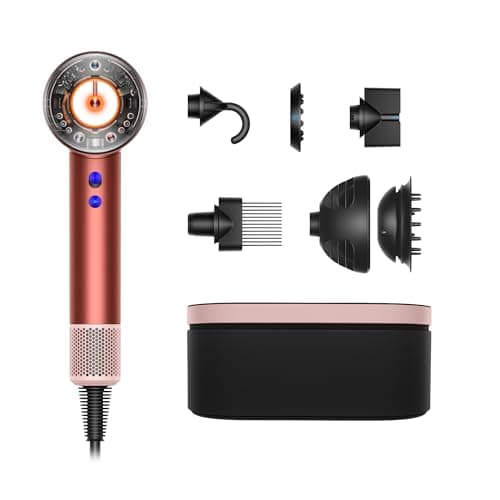
Dyson Supersonic hair dryer
1,600 W is less power than a drugstore dryer draws, and Dyson publishes that openly — the pitch is airflow and heat control, not wattage.
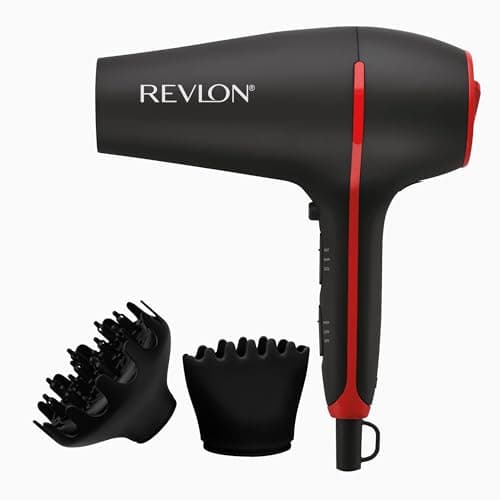
Revlon SmoothStay Coconut Oil-Infused hair dryer
The highest published wattage in this registry attached to the thinnest published spec sheet — Revlon states the watts and almost nothing else.
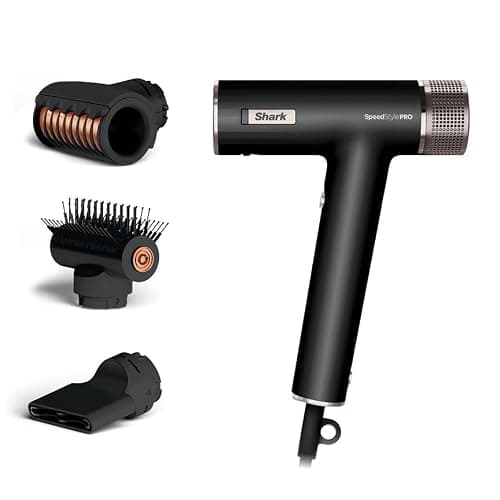
Shark SpeedStyle Pro hair dryer
The highest published wattage of the premium dryers here and the most attachments in the box, at a fraction of Dyson's asking price.
Questions people actually ask
Is the Revlon SmoothStay more powerful than the Dyson Supersonic?
On published wattage, yes - 1,875 W against 1,600 W. Wattage is not drying speed though, and Revlon publishes nothing about airflow, weight or attachments, so no broader comparison is possible.
Does the Revlon SmoothStay come with a diffuser?
Revlon does not publish an attachment list for it, so we cannot say. If you need a diffuser, buy a dryer that states one is included.
Which is cheaper to run?
The Dyson, marginally. At the U.S. average rate and 65 hours a year, 1,600 W costs about $19.07 against about $22.35 for 1,875 W - roughly three dollars a year apart.
Is a premium hair dryer worth it?
It buys published control, a stated attachment set and a warranty rather than more power. Whether that is worth the difference depends on whether those rows matter to your hair and your household.