Hair Dryers
Blow Dryer vs Hooded Dryer: Which Damages Less
One dries your hair for you. The other lets you shape it. They are not competing for the same job.
Updated September 2026 · Sawyer V.
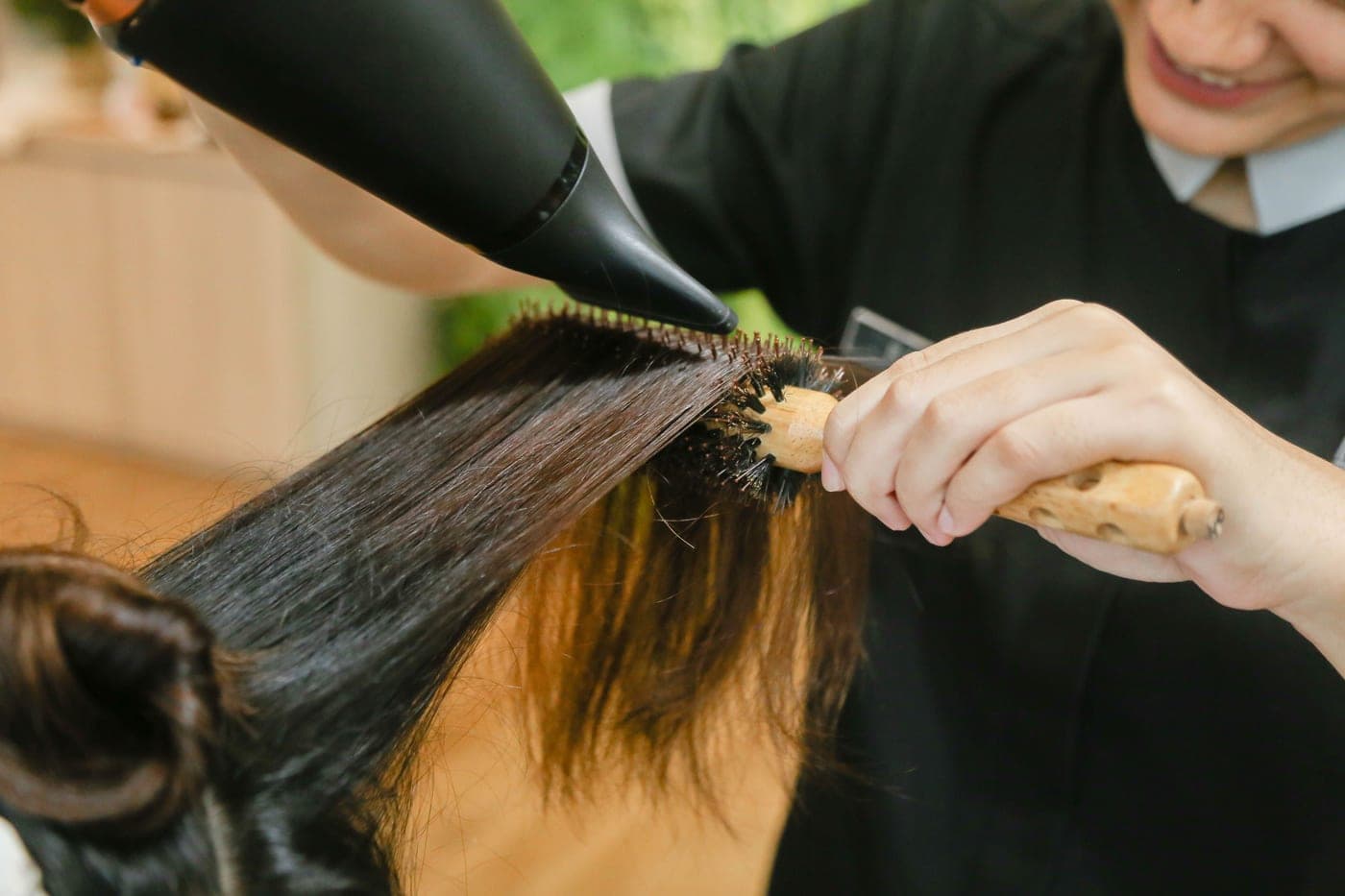
A hooded dryer surrounds the head with low-temperature air and no directional force, so it dries set hair without disturbing it. A blow dryer applies higher heat with airflow you aim, so it can stretch and shape. Neither is a substitute for the other.
We earn a commission if you buy through the links on this page, at no extra cost to you. It never changes which tool we pick or which one we tell you to skip. How this site is funded.
They are not the same tool
The comparison is usually framed as which one is gentler, and that framing hides the real difference. A hooded dryer applies heat without force. A blow dryer applies heat with a direction. Almost everything else follows from that.
The structural difference
| Hooded dryer | Blow dryer | |
|---|---|---|
| Airflow force | Low, all around the head | High, aimed by you |
| Typical air temperature | Lower, sustained | Higher, in bursts |
| Session length | 20-45 minutes | 5-20 minutes |
| Hands free | Yes | No |
| Can stretch or straighten | No | Yes |
| Disturbs a set or rollers | No | Yes |
| Works with a diffuser | Not applicable | Yes |
“Hands free” is the row that decides most purchases, and it is a legitimate reason to own one. Roller sets, wet sets, deep conditioning treatments and curl-defining routines all want heat applied to hair that must not be touched, and a blow dryer cannot do that.
Which damages less
Lower temperature is genuinely better for the fiber, and the hooded dryer wins that row. But the comparison is not temperature against temperature; it is temperature multiplied by time, plus mechanical force.
- Hooded: lower heat, much longer exposure, almost no mechanical stress. Total thermal load can still be significant over forty minutes.
- Blow dryer: higher heat, shorter exposure, and real mechanical stress from brushing and tension.
Repeated thermal cycling degrades mechanical properties measurably Evans and Park, Journal of Cosmetic Science, and mechanical handling is itself a load, particularly on textured hair Bloch et al., International Journal of Dermatology. The hooded dryer removes the second of those entirely, which is its strongest honest claim.
What neither avoids is the worst case: applying heat to hair that is soaking. See heat on wet hair.
Why we do not rank a hooded dryer
This site compares published specifications, and the hooded and bonnet dryer market does not supply them in a comparable form. The makers we checked publish a wattage and a temperature-setting count, and stop — no air temperature, no weight, no noise figure, no dryer-side cord length in many cases.
Rather than invent a ranking from marketing copy, we are saying plainly that we have nothing to rank. This is the same position we take on heat-resistant mats and wide-tooth combs. If a maker starts publishing a spec block we can read, this page will get a table.
What we can tell you is what to look for: a stated maximum air temperature, an adjustable thermostat rather than a two-position switch, a hood large enough to clear rollers without crushing them, and a documented timer.
Who needs which
Buy a hooded dryer if
- You do roller sets, wet sets or flexi-rod sets.
- You deep condition with heat regularly.
- You want defined curls dried without any airflow disturbance — though a diffuser gets close. See diffusers.
- Holding a dryer for twenty minutes is not physically comfortable.
Buy a blow dryer if
- You want to stretch, smooth or straighten while drying.
- You need to be dry in under ten minutes.
- You travel, or have no room for a standing hood.
- You are drying before a flat iron — the stretch is the point. See dryers for a silk press.
The treatment case, which only a hood serves
One job belongs to the hooded dryer outright, and it is the reason most people who own one bought it. Applying gentle heat to a conditioning treatment for twenty or thirty minutes, hands free, with nothing touching the hair, is not something a blow dryer can do at all.
The mechanism is straightforward and does not require any claim about products opening or closing anything: warm hair is more pliable, and a treatment left in contact for a sustained period is in contact for longer than one rinsed out after five minutes. A hood supplies warmth and time without supplying force.
The same logic covers roller sets and flexi-rod sets. The hair is already in the shape you want, and the only requirement is to dry it without disturbing it. Directed airflow is actively unhelpful there, which is the one situation where a blow dryer’s main strength is a liability.
If none of those jobs describes your routine, the hood is solving a problem you do not have, and a dryer with a diffuser covers everything else. See what heat protectant actually does for the other half of a treatment routine.
Owning both
It is a common answer for textured hair and a reasonable one: the hood for treatment and set days, the dryer for stretching and shaping. If that sounds like two purchases too many, how many hair tools you actually need works through where the duplication is justified and where it is not.
On cost, a blow dryer used 65 hours a year at 1,875 W runs about $22.35 in electricity. A hooded dryer typically draws less but runs far longer per session, so the two land closer together than the wattage labels suggest. The running-cost page holds the formula if you want to do the arithmetic for a specific model.
The tools on this page
Prices come from the live price layer. Where none is available the button says so rather than showing a number we cannot stand behind.
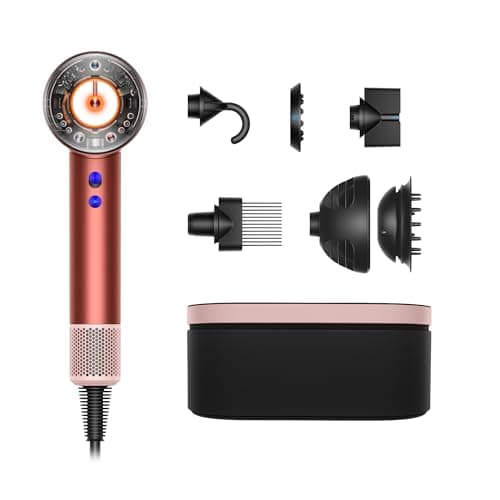
Dyson Supersonic hair dryer
1,600 W is less power than a drugstore dryer draws, and Dyson publishes that openly — the pitch is airflow and heat control, not wattage.
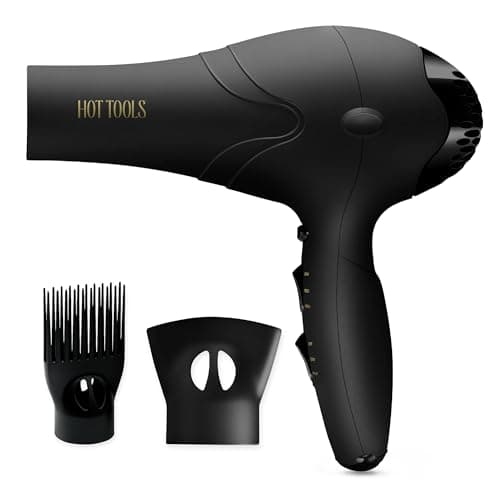
Hot Tools Pro Artist Infrared Ionic Salon Dryer 1875W
1,875 W ties the highest published draw on this site — the ghd Helios and Revlon SmoothStay state the same figure — on the only one of the three that publishes both attachments in the box and never expires.
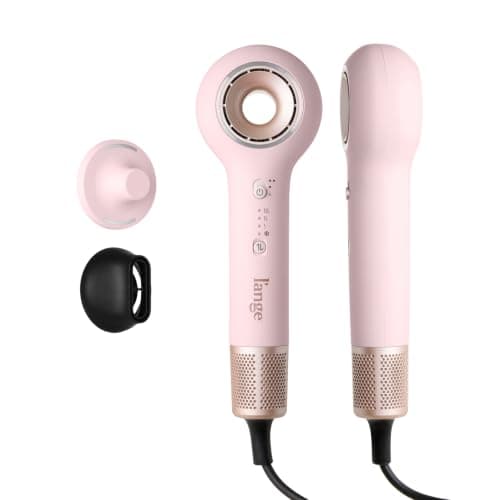
L'ange Axia HaloRing Hair Dryer
0.7 lb without the cord makes this the lightest dryer in the registry, and 140–230°F is a published temperature range almost nobody in the category gives you.
Questions people actually ask
Is a hooded dryer less damaging than a blow dryer?
On mechanical stress, clearly yes - there is no brushing, tension or directed force. On thermal load it is less clear cut, because a lower temperature applied for forty minutes is not automatically gentler than a higher one applied for ten.
Can a hooded dryer straighten hair?
No. Straightening requires tension applied while the hair dries, and a hooded dryer applies no directional force at all. It dries hair in whatever shape you set it in, which is exactly why it suits roller sets.
Why don't you recommend a specific hooded dryer?
Because the makers we checked do not publish specifications in a comparable form - no stated air temperature, weight or noise figure in most cases. We rank on published figures and decline to rank when there are none.
Which is faster, a hooded dryer or a blow dryer?
A blow dryer, substantially. A typical hood session runs twenty to forty-five minutes against five to twenty for a blow dryer, because the hood works at a lower temperature with much less airflow force.