Shop by Hair Type
The Best Hair Tools for Damaged Hair in 2026
On damaged hair the cheapest intervention is not a tool at all. Here is the order that actually helps, and the tools worth buying once you have done the free parts.
Updated September 2026 · Sawyer V.
Buy for two things: a genuine floor below 365°F, and fewer passes per section. Only one iron in our registry does the first. But the highest value changes are free — detangle from the ends up, dry completely before contact heat, and cut the number of sessions.
We earn a commission if you buy through the links on this page, at no extra cost to you. It never changes which tool we pick or which one we tell you to skip. How this site is funded.
The order that actually helps
Worth putting before the tools, because the first three items cost nothing and outperform any purchase on this page.
Interventions for damaged hair, ranked by effect per dollar
| Change | What supports it | Cost |
|---|---|---|
| Detangle from the ends up, never yank | Impact loading breaks hair at lower forces than steady tension | Free |
| Style only completely dry hair with contact tools | Wet thermal treatment adds steam bubbling to the usual cracking | Free |
| Cut the number of sessions | Total exposure is temperature multiplied by contact time | Free |
| Condition before combing and before heat | Measured to considerably retard breakage | A product you own |
| Fewer passes per section | Pass count dominates exposure on a whole head | A wider plate, or technique |
| A tool with a floor below 365°F | Processed hair arrives carrying heat-type damage | A new iron |
Only the last two involve buying anything. If you are here because your hair is breaking, do the first four before you spend.
What "damaged" actually means
Two mechanisms, and they need different responses.
Thermal
Published microscopy of hair treated with a curling iron shows radial and axial cracking with scale edge fusion even in dry conditions, and severe damage plus bubbling and buckling of the cuticle when the same treatment is applied wet — Ruetsch and Kamath, Journal of Cosmetic Science. The response is fewer, cooler, drier applications.
Mechanical
Repeated brushing and combing behaves as a fatigue process — flaws propagate through a fiber until it fails — Evans and Park, Journal of Cosmetic Science. And longer breaks occur mostly through impact loading, which snaps hair at lower forces than steady tension — Robbins, Journal of Cosmetic Science. The response is how you detangle, not what you dry with.
Most people arriving at this page have both, and the mechanical half is the one they have not addressed — which is why the cheapest pick above is a brush.
If the damage is chemical
Bleached and double-processed hair is a distinct case, because it arrives at the tool already carrying molecular changes normally associated with thermal treatment. On that hair the specification to buy for is how far down the tool goes, and the field is one iron wide.
The full case is on the bleached hair page, and the whole-toolkit view on the color-treated router.
What cannot be fixed
Split ends. A split is a structural separation of the fiber and nothing rejoins it — products coat and smooth the appearance temporarily, and the only fix is cutting the split off before it travels further up the shaft.
We would rather say that plainly than sell you a serum. The honest version is on the repair page, and it is not the answer most sites give.
Price per use, at 5 uses a week over 5 years
| What you pay | Cost per use | Cost per year |
|---|---|---|
| $30 | $0.02 | $6.00 |
| $60 | $0.05 | $12.00 |
| $100 | $0.08 | $20.00 |
| $150 | $0.12 | $30.00 |
| $200 | $0.15 | $40.00 |
| $300 | $0.23 | $60.00 |
| $400 | $0.31 | $80.00 |
| $500 | $0.38 | $100.00 |
5 uses a week for 5 years is 1300 uses. Both figures are stated assumptions, not measurements — halve the life and every cost per use doubles. We publish the ladder rather than a worked example for one specific product because a price we typed into a sentence would be wrong within a week.
The month-off option
If your hair is actively breaking, the highest-value thing available is no heat at all for a while. That is not a moralizing line — it is the only intervention here with no cost and no trade-off.
Heat-free ways to get shape are on the heat-free page, rollers are the zero-thermal way to curl on their own page, and how to judge a sustainable weekly pattern is on the how-often page.
Quick picks
Tap any row to jump to the full write-up. Prices come from the live price layer; where none is available the button says so rather than showing a number we cannot stand behind.
| # | Product | Best for | Price |
|---|---|---|---|
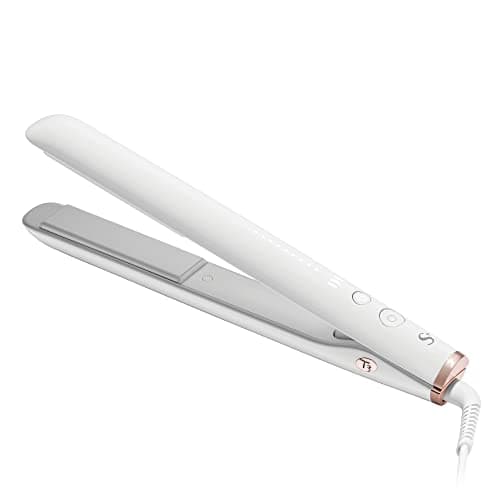
| 1 | T3 SinglePass StyleMax 1 inch flat iron Nine heat settings — the only iron in our registry that works meaningfully below 365°F. | Bleached, highlighted or over-processed lengths | |
| 2 | 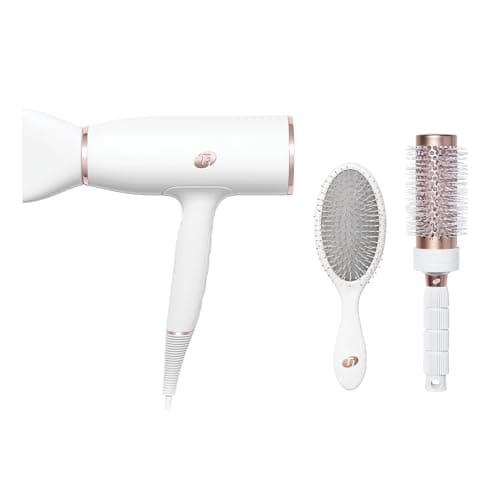 T3 AireLuxe professional hair dryer Five heat settings and three speeds — fifteen combinations, the most granular published control of any dryer we list. | Drying compromised hair without defaulting to the middle | |
| 3 | 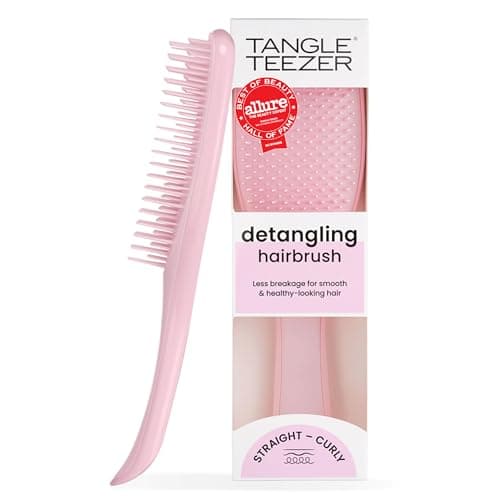 Tangle Teezer The Ultimate Detangler A two-tier flexible bristle design that spreads the load across the stroke rather than delivering it all at once. | Hair that breaks when you brush it out wet | |
| 4 | 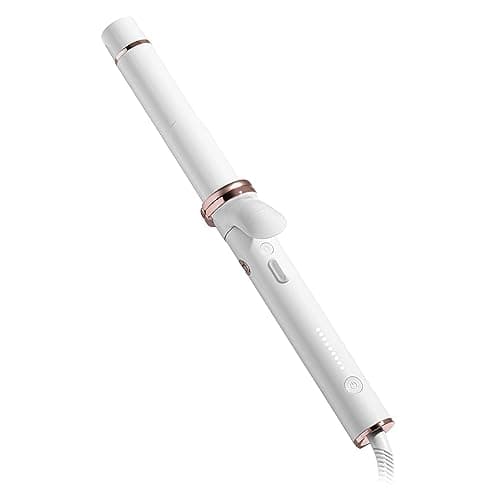 T3 CurlWrap automatic rotating curling iron A self-rotating barrel with two published rotation speeds and nine heat settings. | Fragile lengths that break when you wrap them by hand | |
| — | 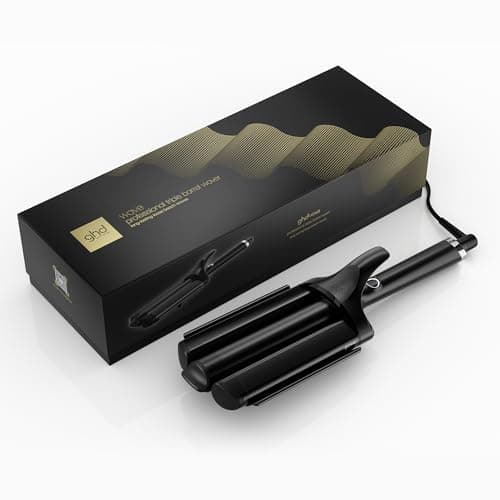 ghd Wave triple barrel hair waver Three heated barrels clamped onto a section at a fixed 365°F, with no adjustment. We’d skip this | Not compromised hair |
1. The only iron with a floor below 365°F
T3 SinglePass StyleMax 1 inch flat iron
Best for: Bleached, highlighted or over-processed lengths
Nine heat settings — the only iron in our registry that works meaningfully below 365°F.
Both ghd irons are fixed at 365°F and the Dyson Corrale starts there. On hair that needs less, this is the entire field, and that is a category-level gap rather than a preference of ours.
Bleaching produces dehydroalanine and dehydration products — modifications normally associated with alkali or thermal treatment — before you apply any heat, so processed hair arrives already carrying heat-type damage.
Nine settings also lets you treat a head as the mixed surface it usually is: healthier regrowth at the root, weaker processed hair through the lengths.
What’s wrong with it
Nine settings is nine chances to pick a hotter one, and T3 publishes no wattage, no cord length and no wide-plate option.
Published specifications — T3 SinglePass StyleMax 1 inch flat iron
| Wattage | Not published |
|---|---|
| Heat settings | 9 heat settings |
| Speed settings | Not applicable |
| Weight | 11.1 oz (cord not included) |
| Cord length | 360-degree swivel cord — length not published |
| Noise (dB) | Not applicable |
| Attachments | None supplied |
| Plate / barrel | CeraGloss ceramic plates, 1 in |
| Dual voltage | Yes — auto world voltage, 100–240 V |
| Warranty | 2-year warranty |
Every figure above is taken from T3 Micro — SinglePass StyleMax 1 inch flat iron product page. “Not published” means the figure does not appear on that page — it is not an estimate withheld, it is a number the manufacturer does not state. How we compile these.
What it costs to run for a year
T3 does not publish a wattage for this tool, so there is nothing honest to compute. The formula is watts ÷ 1,000 × hours a year × your rate per kWh; if you find a rating plate on the handle, 65 hours a year and 18.34 cents per kilowatt-hour will get you the rest of the way.
2. Most heat steps on a dryer
T3 AireLuxe professional hair dryer
Best for: Drying compromised hair without defaulting to the middle
Five heat settings and three speeds — fifteen combinations, the most granular published control of any dryer we list.
The useful question on damaged hair is never “is this setting safe” but “is there a step below the one I am on”. With three heat settings the answer is usually no.
Five is the most any dryer here publishes. Shark and ghd publish no settings count at all for their dryers, which on this page is disqualifying rather than disappointing.
17.1 oz without the cord, a 9 ft professional cord, 125 V, two-year warranty.
What’s wrong with it
T3 publishes no wattage at all, so neither drying capacity nor running cost can be worked out, and no attachment list either.
Published specifications — T3 AireLuxe professional hair dryer
| Wattage | Not published |
|---|---|
| Heat settings | 5 heat settings |
| Speed settings | 3 speed settings |
| Weight | 17.1 oz (cord not included) |
| Cord length | 9 ft professional cord |
| Noise (dB) | Not published |
| Attachments | Not published |
| Plate / barrel | Ceramic-coated barrel |
| Dual voltage | No — 125 V |
| Warranty | 2-year warranty |
Every figure above is taken from T3 Micro — AireLuxe professional hair dryer product page. “Not published” means the figure does not appear on that page — it is not an estimate withheld, it is a number the manufacturer does not state. How we compile these.
What it costs to run for a year
T3 does not publish a wattage for this tool, so there is nothing honest to compute. The formula is watts ÷ 1,000 × hours a year × your rate per kWh; if you find a rating plate on the handle, 65 hours a year and 18.34 cents per kilowatt-hour will get you the rest of the way.
3. The cheapest thing that helps most
Tangle Teezer The Ultimate Detangler
Best for: Hair that breaks when you brush it out wet
A two-tier flexible bristle design that spreads the load across the stroke rather than delivering it all at once.
This is the pick we would make first, ahead of any heated tool, and it is the cheapest item on the page.
Published work found longer hair breaks occur mostly through impact loading — a sudden yank — which breaks hair at lower forces than steady tension does. A brush that eases knots apart reduces those peaks, and damaged hair is by definition hair with more flaws for a peak to find.
Published in Regular, Large and Mini. Large for long or dense hair, Regular for most people.
What’s wrong with it
Tangle Teezer publishes no weight, bristle count or warranty term we could read — the spec block is mostly not applicable and not published.
Published specifications — Tangle Teezer The Ultimate Detangler
| Wattage | Not applicable — not a powered tool |
|---|---|
| Heat settings | Not applicable |
| Speed settings | Not applicable |
| Weight | Not published |
| Cord length | Not applicable |
| Noise (dB) | Not applicable |
| Attachments | None — published in Regular, Large and Mini sizes |
| Plate / barrel | Two-tier flexible plastic bristles |
| Dual voltage | Not applicable |
| Warranty | Not published |
Every figure above is taken from Tangle Teezer — The Ultimate Detangler product page. “Not published” means the figure does not appear on that page — it is not an estimate withheld, it is a number the manufacturer does not state. How we compile these.
What it costs to run for a year
Tangle Teezer does not publish a wattage for this tool, so there is nothing honest to compute. The formula is watts ÷ 1,000 × hours a year × your rate per kWh; if you find a rating plate on the handle, 65 hours a year and 18.34 cents per kilowatt-hour will get you the rest of the way.
4. Least hand tension when curling
T3 CurlWrap automatic rotating curling iron
Best for: Fragile lengths that break when you wrap them by hand
A self-rotating barrel with two published rotation speeds and nine heat settings.
Hand-wrapping applies uneven tension — hardest exactly where your grip is tightest. A barrel that rotates itself applies the tension the mechanism needs rather than whatever your hand happens to give.
Two published rotation speeds means you can slow it right down on the sections you are worried about, and nine heat settings makes it one of only two curling tools here that goes below 365°F.
Auto world voltage 100–240 V, 8 ft swivel cord, two-year warranty.
What’s wrong with it
T3 publishes no weight or wattage, and a rotating mechanism can catch hair if a section is fed in untidily — the opposite of gentle when it happens.
Published specifications — T3 CurlWrap automatic rotating curling iron
| Wattage | 77 W |
|---|---|
| Heat settings | 9 heat settings |
| Speed settings | Two barrel rotation speeds |
| Weight | 13.4 oz (cord not included) |
| Cord length | 8 ft, 360-degree swivel cord |
| Noise (dB) | Not published |
| Attachments | None supplied |
| Plate / barrel | Korean CeraGloss ceramic self-rotating long barrel, 1 in and 1¼ in |
| Dual voltage | Yes — auto world voltage, 100–240 V |
| Warranty | 2-year warranty |
Every figure above is taken from T3 Micro — CurlWrap automatic rotating curling iron product page. “Not published” means the figure does not appear on that page — it is not an estimate withheld, it is a number the manufacturer does not state. How we compile these.
What it costs to run for a year
$0.92 a year
77 W × 65 hours a year = 5.0 kWh, at 18.34 cents per kilowatt-hour. The hours assume 15 minutes a session, 5 days a week — that is an assumption, not a measurement, so swap in your own if it is wrong.
The one we'd skip
ghd Wave triple barrel hair waver
Best for: Not compromised hair
Three heated barrels clamped onto a section at a fixed 365°F, with no adjustment.
A triple barrel presses hair between three heated surfaces at once. That is more simultaneous contact area than any other tool we cover, and on hair that has already lost cuticle it is the wrong direction.
There is also nothing to turn down. Fixed 365°F is a defensible design on healthy hair — we say so on our review — and it leaves you no move at all on hair that needs less.
The speed argument is genuine and does not rescue it here. Fewer applications is worth something, but not when each one is three barrels of fixed-temperature contact on fibers that are already cracking.
What’s wrong with it
The most simultaneous contact area in our registry, no temperature adjustment, and no published weight, cord length or voltage.
Published specifications — ghd Wave triple barrel hair waver
| Wattage | Not published |
|---|---|
| Heat settings | One fixed temperature — 365°F |
| Speed settings | Not applicable |
| Weight | Not published |
| Cord length | Not published |
| Noise (dB) | Not applicable |
| Attachments | None supplied |
| Plate / barrel | Three ergonomic barrels, dual temperature sensors |
| Dual voltage | Not published |
| Warranty | 2-year warranty |
Every figure above is taken from ghd — Wave triple barrel hair waver product page. “Not published” means the figure does not appear on that page — it is not an estimate withheld, it is a number the manufacturer does not state. How we compile these.
What it costs to run for a year
ghd does not publish a wattage for this tool, so there is nothing honest to compute. The formula is watts ÷ 1,000 × hours a year × your rate per kWh; if you find a rating plate on the handle, 65 hours a year and 18.34 cents per kilowatt-hour will get you the rest of the way.
Questions people actually ask
What hair tools are best for damaged hair?
Ones with a genuine floor below 365°F and ones that reduce passes. Only the T3 SinglePass StyleMax goes below 365°F in our registry. But the highest-value changes are free: detangling technique, drying completely, and fewer sessions.
Can damaged hair be repaired?
Not structurally. Conditioning measurably retards further breakage, which is real and modest. Split ends cannot be rejoined — the only fix is cutting them off before they travel further up the shaft.
What temperature should I use on damaged hair?
Below 365°F, which is where every ghd tool sits fixed and where the Dyson Corrale starts. No published study establishes a safe threshold, so use the lowest setting that works and cut passes rather than chasing a number.
Is brushing or heat worse for damaged hair?
Both matter, and most people have already addressed the heat side. Repeated brushing behaves as a fatigue process, and yanking through a knot breaks hair at lower force than steady tension — which is why a detangling brush is our first pick here.
Sources
- Ruetsch and Kamath — Effects of thermal treatments with a curling iron on hair fiber, J Cosmet Sci 2004
- Evans and Park — A statistical analysis of hair breakage II: repeated grooming experiments, J Cosmet Sci 2010
- Robbins — Hair breakage during combing II: impact loading and hair breakage, J Cosmet Sci 2006