Flat Irons & Straighteners
Hot Tools vs CHI Flat Iron: A Lifetime Warranty or a Published Weight
One of these will promise you a lifetime and tell you nothing else. The other tells you almost everything and refuses to give you a dial.
Updated October 2026 · Sawyer V.
Choose on adjustability. Hot Tools publishes variable heat up to 455°F, a lifetime limited warranty and a 9 ft cord, but no wattage, no weight and no voltage. CHI publishes a single fixed 392°F, 1.4 lb, an 11 ft cord and dual voltage, with a two-year warranty. Coarse resistant hair wants the Hot Tools; anyone who travels, or who wants to know what they are holding, wants the CHI.
We earn a commission if you buy through the links on this page, at no extra cost to you. It never changes which tool we pick or which one we tell you to skip. How this site is funded.
Side by side, published only
Hot Tools Black Gold Evolve vs CHI 1 in Original Ceramic (GF1001), as published
| Row | Hot Tools Black Gold Evolve | CHI 1 in Original |
|---|---|---|
| Heat control | Variable, up to 455°F | One preset, 392°F (202°C) |
| Published floor temperature | Not published | Not applicable — there is one setting |
| Wattage | Not published | Not published |
| Weight | Not published | 1.4 lb |
| Cord length | 9 ft swivel, with hanging ring | 11 ft swivel |
| Plates | Ceramic-titanium floating, 1 in and 1¼ in | Ceramic floating, 1 in |
| Dual voltage | Not published | Yes |
| Warranty | Lifetime limited | 2-year limited |
Quoted from each maker's own product page. Hot Tools' page re-fetched 2026-10-06.
Six of the eight rows differ, and they differ in a pattern: Hot Tools wins the two rows about the promise and loses every row about the object. That is the comparison in one line.
A dial against a decision already made
This is the row to settle first, because it is the one that rules one tool out for most people.
Hot Tools gives you variable heat with a published ceiling of 455°F and no published floor and no step count. CHI gives you one preset at 392°F and nothing to turn.
Neither of those is straightforwardly better, which is why this is a real decision. A fixed temperature is a genuine design position, not laziness: the dial is what people reach for when a pass does not work, so removing it leaves only the fixes that actually help — thinner sections, drier hair, slower travel. ghd and CHI both take that view deliberately. The catch is that a fixed number has to be fixed at the right number for your hair, and 392°F is high.
The Hot Tools position is the opposite and it has its own catch. A variable dial can in principle go low, but with no published floor and no published steps you cannot set a temperature, only a position, and you cannot repeat it reliably next week. For hair that has been processed that is the wrong instrument: bleached and chemically treated hair starts with measurably less margin Dyer et al., International Journal of Cosmetic Science, and combining services compounds it — dye plus a sodium hydroxide relaxer produced a 356 percent increase in protein loss over virgin hair França-Stefoni et al., Journal of Cosmetic Dermatology.
So the honest reading is: on coarse, resistant, chemically untreated hair the Hot Tools ceiling is a feature. On anything processed, neither of these is the right iron and the ghd Platinum+ at a fixed 365°F or the L’ange Le Duo with a published 280°F floor is. What the dial positions mean is at what the numbers on a flat iron dial mean, and the guidance by hair type at what temperature is actually safe.
Lifetime against two years
Hot Tools publishes a lifetime limited warranty. It is the only tool of any kind in this registry that does. CHI publishes two years, which is the category norm; only ghd goes to three.
A lifetime promise against a two-year one is not a close comparison on paper, and if you are the buyer who replaces an iron because it broke rather than because you wanted a new one, this row may simply decide it. Read “limited” carefully, though: defect cover typically excludes the wear that actually kills heated tools, which is the cord flexing where it enters the handle. Neither maker publishes its claim criteria. What a warranty is worth puts all nine irons side by side, and when to replace a hair tool covers what usually fails first.
1.4 pounds, against a blank
CHI publishes 1.4 lb. Hot Tools publishes no weight at all.
On a flat iron this is the row we would least like to see blank. You hold an iron at head height with your wrist rotated, often behind your own head, for as long as the section takes — which is a different kind of load from a dryer you point. Weight that is unremarkable for the first ten minutes is the reason the last sections get rushed, and rushed sections mean more passes, which is the one thing you cannot afford at either of these temperatures.
For scale, the irons here that publish a weight run from the T3 SinglePass StyleMax at 11.1 oz to the CHI Lava at 2.08 lb. At 1.4 lb the CHI Original sits in the middle. Where the Hot Tools sits, nobody outside Hot Tools knows.
Eleven feet and dual voltage, against nine and a blank
Two rows, and they go the same way. CHI publishes an 11 ft cord — the longest class on this site — and dual voltage. Hot Tools publishes 9 ft with a hanging ring, and no voltage.
The cord difference is a daily convenience: bathroom sockets are rarely beside the mirror, and extra reach also keeps tension off the joint most warranties exclude. Hot Tools’ hanging ring is a real answer to the same problem from the other direction, and nine feet is not short.
The voltage difference is categorical rather than incremental. CHI states dual voltage, so the Original runs on a 230 V supply with a plug adapter. Hot Tools states nothing, and an unstated voltage has to be treated as single — which means a converter, not an adapter, and most people get that wrong. Adapter vs converter is the page that prevents the expensive version of that mistake, and flat irons for travel has the picks.
Plates: one real difference, one that is not
Both publish floating plates, which is the row that matters — a plate that pivots stays flat against an uneven section instead of pinching at one edge, and that is what lets a thicker section go through in one pass.
The real difference is choice of width. Hot Tools publishes 1 in and 1¼ in; CHI publishes 1 in only on this model. If your hair is long or dense, the wider plate covers ground faster and is worth having as an option — plate size has the reasoning.
The difference that is not real is the coating vocabulary. “Ceramic-titanium” against “ceramic” is not a comparable specification: neither maker publishes a figure for heat evenness, recovery time or surface friction, which are the properties a coating would have to change to matter. Ceramic vs titanium sets out what a plate description can and cannot tell you. Do not pay for the extra word.
Which one to buy
- Buy the Hot Tools for coarse, resistant, untreated hair that genuinely needs heat near the top of the range, and for the lifetime warranty if you keep tools for a decade.
- Buy the Hot Tools if you want the wider plate option. 1¼ in is published, and on long dense hair it halves the number of passes.
- Buy the CHI if you travel. Dual voltage published, 11 ft of cord, and a fixed setting means nothing to reconfigure abroad.
- Buy the CHI if you want to know what you are holding. A published weight, a published cord length and a published voltage against three blanks.
- Buy the CHI if you distrust your own hand on a dial. One setting, no decision to get wrong. That is a real argument and we make it for ghd too.
- Neither, for bleached, color-treated or heat-damaged hair. 392°F fixed is above where the guidance puts that hair, and a 455°F ceiling with no published floor is not a substitute for a number you can set. Start at flat irons for color-treated hair and flat irons for damaged hair.
- Neither, if you want running costs. Neither maker publishes a wattage.
The full sheets are at the Hot Tools Black Gold Evolve review and the CHI Original review. If the comparison you actually wanted was CHI against ghd, that is at CHI vs ghd.
The tools on this page
Prices come from the live price layer. Where none is available the button says so rather than showing a number we cannot stand behind.
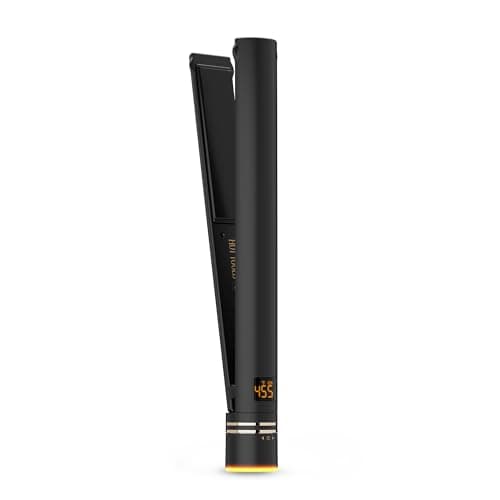
Hot Tools Black Gold Evolve Ionic Salon Flat Iron
The only flat iron here with a lifetime warranty, and one of only two whose maker publishes neither wattage nor voltage — so it cannot be costed and cannot be packed for Europe on the strength of the page.
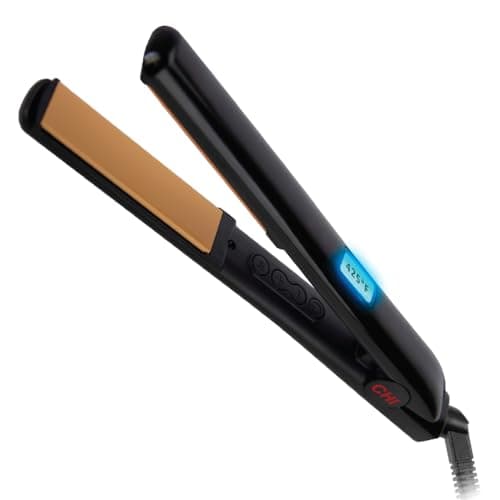
CHI 1" Original Ceramic Hairstyling Iron (GF1001)
The longest published cord on this site at 11 ft, and the only iron here with no temperature control at all — one preset, 392°F, take it or leave it.
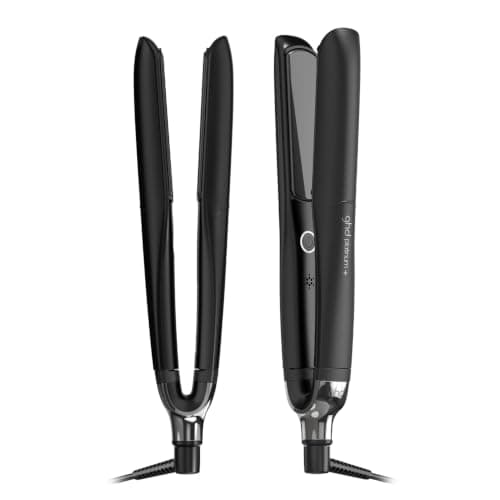
ghd Platinum+ flat iron (1 inch plate)
One temperature, 365°F, no dial to get wrong — the strongest heat-discipline argument in the category, and the longest iron warranty here at three years.
Questions people actually ask
Is Hot Tools or CHI better for a flat iron?
It depends on one thing: whether you want a dial. Hot Tools publishes variable heat up to 455 degrees and a lifetime limited warranty but no weight, wattage or voltage. CHI publishes a single fixed 392 degrees, 1.4 lb, an 11 ft cord and dual voltage, with two years of cover.
How hot does each one get?
Hot Tools publishes variable heat up to 455 degrees Fahrenheit, with no published floor and no step count. The CHI 1 inch Original publishes one fixed preset at 392 degrees Fahrenheit with no adjustment at all.
Which one can I take abroad?
The CHI. It publishes dual voltage, so it runs on a 230 V supply with a plug adapter. Hot Tools publishes no voltage for the Black Gold Evolve, and an unstated voltage has to be treated as single voltage.
Which one has the better warranty?
Hot Tools, by a wide margin on paper: a lifetime limited warranty against CHI's two years. It is the only tool of any kind in this registry with lifetime cover. Note that defect warranties typically exclude the cord wear that actually kills heated tools.
Which is better for damaged or color-treated hair?
Neither. A fixed 392 degrees is above where the temperature guidance puts processed hair, and a 455 degree ceiling with no published floor is not a substitute for a temperature you can set and repeat. The ghd Platinum+ fixes at 365 degrees and the L'ange Le Duo publishes a 280 degree floor.