Guides
Hot Comb vs Flat Iron: Which Straightens With Less Risk
Two tools that do the same job by different mechanisms. One of them has a medical literature attached to it, and it is worth reading before you choose.
Updated October 2026 · Sawyer V.
For almost everyone, a flat iron. Plates clamp the hair between two heated surfaces, which is how an iron straightens in a single pass, and every flat iron in this registry publishes a temperature you can check — from the L’ange Le Duo’s 280°F floor to Hot Tools’ 455°F ceiling. A stove-heated hot comb publishes nothing and has no thermostat at all. The comb’s one real advantage is reach: roots and edges a plate cannot close on.

We earn a commission if you buy through the links on this page, at no extra cost to you. It never changes which tool we pick or which one we tell you to skip. How this site is funded.
First, what this page does and does not recommend
There is no hot comb in this registry. We have not found one whose maker publishes the specifications this site requires — a temperature, a wattage, a weight, a voltage and a warranty — so there is no hot comb we can rank, and we are not going to put a product card on one to complete the symmetry of a comparison page.
That means this page recommends flat irons, and the buy links above are flat irons. It is still worth writing, because the question is a real one, the answer is not obvious, and the mechanism difference changes what each tool can and cannot do to hair.
The mechanism, which is the whole difference
A flat iron closes two heated plates onto a section and you draw it along. Contact is on both faces, pressure is applied, and the hair is held flat while its hydrogen bonds let go and reform — which is why one pass is usually enough.
A hot comb has heated teeth that pass through the hair. There is no clamp and no pressure; the straightening comes from the teeth dragging heat along each strand while tension comes from your other hand. Three consequences follow, and they are the whole comparison.
- A comb can go where plates cannot. Teeth get to the root, to the hairline and to edges that an inch-wide plate physically cannot close on without touching the scalp. On tightly coiled hair this is the comb’s genuine advantage and the reason it is still used.
- A comb usually needs more passes. No clamp means less heat transferred per pass, so sections get worked repeatedly — and total heat exposure is the sum of passes, not the temperature of one. This is where the comb loses most of what the mechanism gains it.
- A comb puts heat closer to the scalp, by design. That is the point of it, and it is also the reason the next section exists.
What the dermatology literature actually says
This is the part most comparisons leave out, and it deserves stating carefully — neither alarmed nor dismissive.
In 1968, LoPresti, Papa and Kligman described a pattern of hair loss at the vertex in 51 Black women who straightened their hair with a hot comb and petrolatum, and named it “hot comb alopecia.” Their proposed mechanism was that heated petrolatum tracked down the hair shaft to the follicle and caused chronic inflammation and eventual scarring. The condition was later renamed follicular degeneration syndrome, and since the early 2000s has been classified as central centrifugal cicatricial alopecia — now recognized as the most common scarring alopecia among Black women Herskovitz and Miteva, Clinical, Cosmetic and Investigational Dermatology.
The honest current reading, from that same review: hot combing is associated with the condition, but the studies do not establish it as the sole cause, and the name was changed precisely because the original single-cause explanation did not hold up. Genetics, other traction practices and chemical relaxers all appear in the literature.
So what should you take from it? Not that a hot comb is dangerous and an iron is safe. Two narrower things. First, the thing under suspicion was never heat alone — it was heat plus a product at the scalp, which is a combination worth avoiding whichever tool you use. Second, the scalp-proximity question is specific to the comb, because reaching the scalp is what a comb is for. If you use one, keep product off the scalp and keep the teeth off the skin.
Separately on the iron side, a clinical note worth having: ceramic flat irons reach temperatures up to about 210°C (410°F), which damages most hair and causes significant damage to hair that is fragile or chemically relaxed, and ironing is known to break and reform hydrogen bonds in the shaft, with cuticle damage, breakage and trichorrhexis nodosa as the failure mode dermatology commentary, MDedge. Neither tool gets a clean bill of health; the fiber does not repair itself Evans and Park, Journal of Cosmetic Science.
The row that actually decides it
Thermostats. This is where the comparison stops being close.
A stove-heated hot comb — the traditional kind, heated on a burner — has no temperature control of any kind. Its temperature is whatever the burner and the time gave it, and there is no way to know what that is. Electric hot combs do have a control, but makers vary enormously in whether they publish a figure for it, which is exactly why none has met this site’s sourcing bar.
Every flat iron in this registry publishes something.
Published temperature on every flat iron in this registry
| Iron | What it publishes | Plates |
|---|---|---|
| L'ange Le Duo | 5 settings, 280-430°F - the lowest published floor here | Floating titanium, 3.5 x 1 in |
| T3 SinglePass StyleMax | 9 heat settings (steps, no degrees published) | CeraGloss ceramic, 1 in |
| ghd Platinum+ | One fixed temperature - 365°F | Precision-milled floating, 1 in |
| ghd Chronos | One fixed temperature - 365°F | Floating ceramic, 1 in and wide |
| Dyson Corrale | 3 heat settings; Dyson's stated starting point is 365°F | Flexing manganese-copper alloy |
| CHI Original 1 in | One preset - 392°F (202°C) | Ceramic floating, 1 in |
| Hot Tools Black Gold Evolve | Variable, up to 455°F | Ceramic-titanium floating, 1 and 1.25 in |
| Traditional hot comb | Nothing - no thermostat on a stove-heated comb | Heated teeth; no clamped surface |
Quoted from each maker's own product page. ghdhair.com, dyson.com and chi.com figures are the readings already on file with their source URLs; ghd and Dyson both returned HTTP 403 to an automated fetch on 2026-10-17. The hot comb row is a statement about the tool class, not about any specific product.
That is the argument in one table. The iron you can set to 280°F and leave there is a fundamentally different proposition from a tool whose temperature is unknown, and on hair that has been relaxed, colored or heat-damaged already, the difference between 280°F and “whatever the stove gave it” is the whole decision — what temperature is actually safe has the guidance by hair type.
When the comb is the right tool anyway
Two cases, honestly.
- Roots and edges, as a finisher. A 1 in plate cannot close on hair at the hairline without the plates meeting skin. Heated teeth can. Plenty of people use an iron for the lengths and a comb only for the first inch, which keeps the number of comb passes very low — and passes, not tools, are what accumulate.
- Press-and-curl traditions where it is the correct instrument. A comb is part of a documented technique with its own sequence, and swapping in an iron changes the result. We are not in a position to tell anyone their own method is wrong; the useful thing we can add is the temperature point above and the product-at-the-scalp point.
For the full silk-press sequence with the tools this site does rank, see the silk press, with a flat iron and the dryer stage of a silk press. The damage question for that style specifically is at silk presses and heat damage.
Which iron, if you go that way
- The L’ange Le Duo, if your hair is fragile. A published 280°F floor is the lowest starting temperature on any iron here, it publishes 36 W and 0.8 lb, and it has a fan so it dries and smooths in the same pass — the Le Duo review.
- The T3 SinglePass StyleMax, if you want range. Nine heat settings is the most adjustment of any iron here, 11.1 oz is the lightest, and it publishes 100–240 V dual voltage — the StyleMax review.
- The ghd Platinum+, if the dial is the problem. One fixed 365°F, no setting to get wrong, universal voltage and a three-year warranty — the longest iron cover here — the Platinum+ review.
- Not a 455°F iron, for this job. The ceiling is not the feature. Coarse, resistant hair may need the upper half of a range, but nothing needs the top of that one — flat irons for 4C and coily hair ranks on the floor and the plate, not the maximum.
Whichever you use: a wide-tooth comb to detangle first, because dry detangling with a brush is abrasion and abrasion lifts cuticle — wide-tooth combs has the evidence, which is unusually good for this category. Then a heat protectant, and let it dry before any heat touches it — heat protectant. Then how to use a flat iron properly for the pass count, which is the figure that matters.
Which to use
- A flat iron, for the lengths, for almost everybody. One pass, a published temperature, and a clamp that does the work your second hand would otherwise be doing.
- A comb only at the root or the hairline, if at all. That is the one job a plate genuinely cannot do, and it keeps comb passes to a minimum.
- Never a stove-heated comb on relaxed, colored or heat-damaged hair. No thermostat plus no margin is the one combination with nothing to recommend it — how to tell if hair is heat damaged and repairing heat damage on 4C hair.
- Keep product off the scalp with either tool. The mechanism originally proposed for hot comb alopecia was heated product tracking to the follicle, and that is cheap advice to follow whichever instrument you hold.
- Neither, as often as you currently do. The strongest finding in the literature is that heat is cumulative and the fiber does not recover, so frequency is the lever with the most leverage — how often you can safely heat-style.
What we could not compare
Every specification of every hot comb, because no maker we could source publishes the full set this site requires — so there is no spec column for the comb side of this page and we will not invent one. Temperature at the hair rather than at the plate, on every iron here, on which no maker publishes a figure. Pass counts, because they depend on the hair and nobody measures them. The size of the risk difference between the two tools: the literature establishes an association for hot combing and a damage mechanism for ironing, and neither supports a numerical comparison. And we hold no first-party testing of either tool — how we research sets out exactly what that means.
The tools on this page
Prices come from the live price layer. Where none is available the button says so rather than showing a number we cannot stand behind.
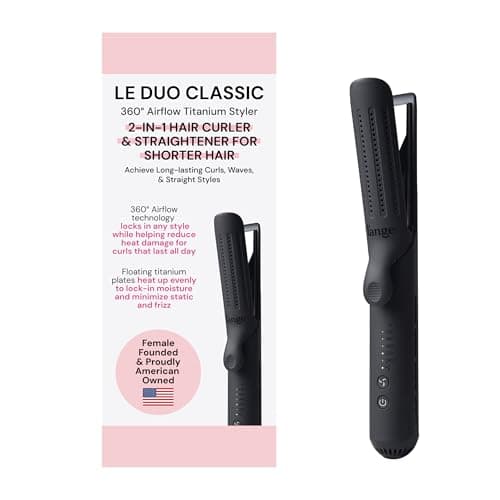
L'ange Le Duo 360° Airflow Styler (Standard)
36 W is the lowest published draw of any styling tool in this registry, by a factor of roughly fifty — and L'ange publishes it plainly rather than hiding behind a hair-dryer-sized number.
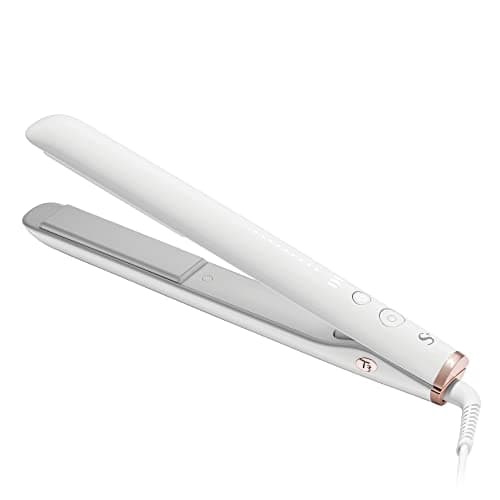
T3 SinglePass StyleMax 1 inch flat iron
Nine heat settings and genuine 100–240 V dual voltage: the most adjustable iron here and the only one you can pack for Europe without a thought.
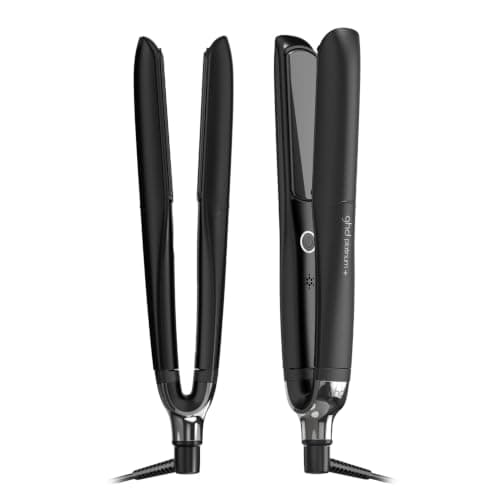
ghd Platinum+ flat iron (1 inch plate)
One temperature, 365°F, no dial to get wrong — the strongest heat-discipline argument in the category, and the longest iron warranty here at three years.
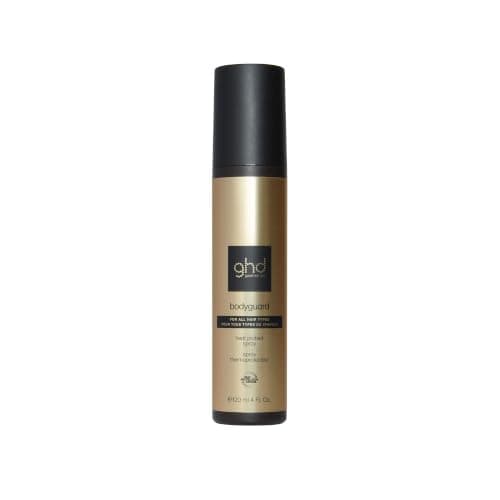
ghd Bodyguard heat protect spray
The heat protectant from a brand that fixes every tool it makes at 365°F — the same company arguing for restraint, selling the thing that buys you some.
Questions people actually ask
Is a hot comb or a flat iron better?
A flat iron, for almost everyone. Plates clamp the hair, which is how an iron straightens in one pass, and every flat iron in this registry publishes a temperature you can check — from a 280 degree Fahrenheit floor to a 455 degree ceiling. A stove-heated hot comb has no thermostat at all.
Is a hot comb more damaging than a flat iron?
The published evidence does not support a numerical comparison. What it does support: a stove-heated comb has no temperature control, and a comb usually needs more passes than a clamped iron, and total heat exposure is the sum of passes. The comb's real advantage is reaching roots and edges a plate cannot.
What is hot comb alopecia?
A pattern of scarring hair loss at the vertex, described in 1968 by LoPresti, Papa and Kligman in 51 Black women who straightened with a hot comb and petrolatum. It was later renamed follicular degeneration syndrome and is now classified as central centrifugal cicatricial alopecia. Current reviews treat hot combing as associated with it rather than established as the sole cause.
Can a hot comb reach places a flat iron cannot?
Yes, and this is its genuine advantage. Heated teeth pass through hair at the root and along the hairline, where an inch-wide plate cannot close without the plates meeting skin. Many people use an iron for the lengths and a comb only for the first inch, which keeps comb passes low.
What temperature should I straighten relaxed or 4C hair at?
The lowest setting that works, found once and then left alone. The L'ange Le Duo publishes a 280 degree Fahrenheit floor, the lowest published starting temperature of any iron in this registry, and ghd fixes its irons at 365. A 455 degree ceiling is not a feature for this hair.
Which flat iron is best for a silk press?
On published data, an iron with a low floor and floating plates: the L'ange Le Duo at 280 to 430 degrees Fahrenheit, or the T3 SinglePass StyleMax with nine settings. ghd's fixed 365 is the other reasonable position, because it removes the dial you could get wrong.
Sources
- Herskovitz and Miteva — Central centrifugal cicatricial alopecia: challenges and solutions (reviews the 1968 hot comb alopecia report and the current causal picture)
- MDedge dermatology commentary — ceramic flat iron temperatures and the damage mechanism
- Evans and Park - thermal cycling and mechanical properties
- Dyer et al. - bleaching and the hair fiber
- L'ange — Le Duo 360° Airflow Styler product page, re-read 2026-10-17
- T3 Micro — SinglePass StyleMax 1 inch flat iron product page
- ghd — Platinum+ flat iron product page (HTTP 403 to an automated fetch on 2026-10-17; figures are the reading on file)