Is It Worth It?
Is the Dyson Airwrap Worth It? By Hair Type
The answer genuinely changes with your hair, and the published specifications say which way. On two hair types it is the best buy in the category; on three it is the worst.
Updated October 2026 · Sawyer V.
Worth it for fine, fragile or previously damaged hair, and for curls and coils that an iron has already cost. Not worth it for thick or dense hair, where its 1,300 W — the lowest mains figure in this registry — is slow; not for short hair, where the barrels are too long; not for straight hair you only dry; and not if you travel, because Dyson publishes 120 V only.
We earn a commission if you buy through the links on this page, at no extra cost to you. It never changes which tool we pick or which one we tell you to skip. How this site is funded.
The answer, by hair type
Our verdict on the Dyson Airwrap Complete Long, by hair type, on published specs
| Your hair | Worth it? | Why, and what to buy instead |
|---|---|---|
| Fine or thin | Yes — the strongest case | 1,300 W is the lowest mains draw here, and three heat with three speed settings is the most complete published control in the category. No clamped plate at all |
| Previously damaged or bleached | Yes | No contact heat is the whole argument. The Calista EliteAir publishes a 195°F ceiling for less, if you can accept a 12-month warranty |
| Curly or coily | Qualified yes | Shaping without plate contact is right for the hair; the Complete Long barrels suit the length. Needs damp hair, which is a real constraint on a wash day |
| Wavy | Yes, if you want shape rather than speed | This is the hair the tool was designed around. If you only want frizz control, a dryer and a concentrator is far cheaper |
| Thick or dense | No | 1,300 W is the lowest mains figure in this registry. The Shark SpeedStyle Pro publishes 1,750 W for a fraction of the price |
| Short | No | This is the Complete Long configuration — long barrels on a short cut is the wrong geometry. See the short-hair pages instead |
| Straight, and you only dry it | No | You are paying for curling hardware you will not use. Buy a dryer |
| Any hair, if you travel | No | Dyson publishes 120 V. The T3 Aire 360 is the only dual-voltage air styler here |
Our reading of the published specifications, not a manufacturer claim. We have not tested any of these tools.
What the money actually buys
Dyson publishes 1,300 W, three heat settings, three speed settings, 1.4 lb, an 8.5 ft cable, 120 V and a two-year limited warranty, with curling barrels, smoothing brushes, a round volumizing brush and a drying nozzle. Read that sheet cold and it does not look like the most expensive tool in the category.
That is the interesting part, and it has a real answer. Three things are genuinely bought here and one of them is unusual.
- No clamped heat plate, at all. The Airwrap shapes with curved airflow — the Coanda effect — rather than pressing a hot surface against the fiber. This is the specification that matters and it is the reason the verdict above splits by hair condition rather than by budget.
- The lowest published power in the registry. 1,300 W is below every other mains tool here, including the Shark FlexStyle at 1,600 W and the Revlon SmoothStay at 1,875 W. On a premium tool that is a deliberate choice, and it is also exactly why it is slow on dense hair.
- The most complete published control in the category. Three heat and three speed settings, both published as counts. Shark publishes neither for the FlexStyle or the SpeedStyle Pro. That is nine combinations you can select deliberately against two tools where you cannot even count the positions.
What is not bought: a longer warranty (two years, the same as Shark and T3, and half what Revlon gives on a brush), a published temperature (Dyson publishes settings counts, not degrees), a published noise figure (nobody in this category publishes one), or dual voltage. The brand-wide version of this argument is at why Dyson is so expensive.
Why fine and fragile hair is the yes
Because the alternative is a plate, and the evidence on plates is specific. A curling iron applied to wet hair produced markedly more damage than the same treatment on dry hair Ruetsch and Kamath, Journal of Cosmetic Science, and repeated thermal cycling degrades the fiber’s mechanical properties measurably whatever the hair started as Evans and Park, Journal of Cosmetic Science. Hair that has been bleached or chemically processed starts with less margin to spend on either Dyer et al., International Journal of Cosmetic Science.
An airflow tool removes the contact-heat mechanism rather than reducing it. That is a categorical difference, not an incremental one, and it is worth paying for if your hair is in the condition where incremental improvements have stopped helping. It is not a claim that the Airwrap is heat-free — it is not, and the tools that put the least heat on your hair ranks the whole registry honestly.
Why thick hair is the no
1,300 W. It is the lowest mains figure on this site, and on dense hair that converts directly into minutes.
The arithmetic runs against the tool twice. A longer session is more total heat exposure, which undoes part of the gentleness argument. And a longer session with a 1.4 lb tool held mid-body with a barrel loaded is a different physical proposition from a twelve-minute one. If your hair is dense, the Shark SpeedStyle Pro publishes 1,750 W, the Hot Tools Pro Artist publishes 1,875 W, and both cost a fraction of this — see hair dryers for thick hair and air stylers for thick hair.
The arithmetic, with our assumptions stated
Electricity is a rounding error here and we will not pretend otherwise. At 65 hours a year and the U.S. average residential rate of 18.34 cents per kilowatt-hour, 1,300 W costs about $15.50 a year to run — less than the 1,875 W dryers at about $22.35, which is the clearest illustration on this site that running cost is not where a premium tool wins or loses. Running costs has the formula.
The decision is price divided by uses, so here is the ladder rather than a worked example for one price we would have to retype every week.
Price per use, at 5 uses a week over 5 years
| What you pay | Cost per use | Cost per year |
|---|---|---|
| $30 | $0.02 | $6.00 |
| $60 | $0.05 | $12.00 |
| $100 | $0.08 | $20.00 |
| $150 | $0.12 | $30.00 |
| $200 | $0.15 | $40.00 |
| $300 | $0.23 | $60.00 |
| $400 | $0.31 | $80.00 |
| $500 | $0.38 | $100.00 |
5 uses a week for 5 years is 1300 uses. Both figures are stated assumptions, not measurements — halve the life and every cost per use doubles. We publish the ladder rather than a worked example for one specific product because a price we typed into a sentence would be wrong within a week.
Read your own purchase price off that table and then ask the only question that matters: is the gap between the Airwrap’s row and the FlexStyle’s row worth it to you per styling session? For a lot of people the honest answer is no, and for fine damaged hair styled three times a week it is often yes. Neither answer is a moral position.
The three cheaper tools, and what each gives up
The Airwrap against the alternatives in this registry, as published
| Tool | Published watts | Published control | Dual voltage | Warranty |
|---|---|---|---|---|
| Dyson Airwrap Complete Long | 1,300 W | 3 heat, 3 speed | No — 120 V | 2-year limited |
| Shark FlexStyle | 1,600 W (peak) | Not published | No — 120 V | 2-year limited |
| Calista EliteAir Gen 2 | 1,200 W | 6 settings, 85–195°F all published | No — 125 V | 12-month limited |
| T3 Aire 360 | 1,200–1,400 W | 3 heat, 3 speed | Yes | 2-year |
Quoted from each maker's own product page.
- Shark FlexStyle gives up the published heat and speed counts entirely, and its attachment set is configurable rather than fixed — so confirm the auto-wrap barrels are in the box. It gains 300 W and converts into a standalone dryer. The head-to-head.
- Calista EliteAir Gen 2 is the only air styler here that publishes an actual temperature for every setting, topping out at 195°F — lower than any other multi-styler on this site. It gives up two-thirds of the warranty period and publishes no weight. The review.
- T3 Aire 360 is the only dual-voltage air styler in this registry, with the same published 3-and-3 control. It gives up a published weight. The head-to-head.
The full dupe picture, including which tools we would not buy, is at the best Airwrap dupes.
The constraint nobody mentions until you own one
It needs damp hair. Coanda tools dry hair into a shape, which means the starting condition is towel-dried and roughly 80 percent wet rather than dry. You cannot pick this up on day-two hair and put a curl in, the way you can with a curling iron or a rotating barrel.
That is the most common reason an Airwrap ends up in a cupboard, and it is not a defect — it is the mechanism. If what you actually wanted was to refresh dry hair, a curling iron or the T3 CurlWrap’s rotating barrel is the tool, and the automatic curlers compares the two mechanisms directly. What each attachment actually does is the page to read before choosing a configuration.
Who should not buy it, plainly
- Anyone with thick or dense hair who wants it dry quickly. 1,300 W is the lowest figure here.
- Anyone with short hair looking at the Complete Long. Wrong barrel length — start at air stylers for short hair.
- Anyone whose routine is dry-and-go. You would be buying curling hardware to use as a nozzle.
- Anyone who travels with their tools. 120 V, published plainly.
- Anyone who needs a stated temperature rather than a settings count. The Calista EliteAir publishes degrees; Dyson does not.
- Anyone buying it because the spec sheet looks premium. It does not. The argument is the absent heat plate, and if that does not matter for your hair then neither does the price.
If you are weighing this against the Dyson dryer rather than the stylers, that arithmetic is at are expensive hair dryers worth it, and the brand comparison is at Shark vs Dyson.
The tools on this page
Prices come from the live price layer. Where none is available the button says so rather than showing a number we cannot stand behind.
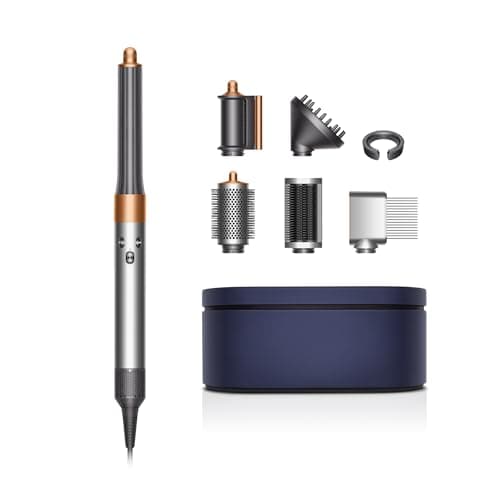
Dyson Airwrap multi-styler (Complete Long)
1,300 W is the lowest published wattage of any mains tool in this registry. That is the design argument, and it is also why it is slow on thick hair.
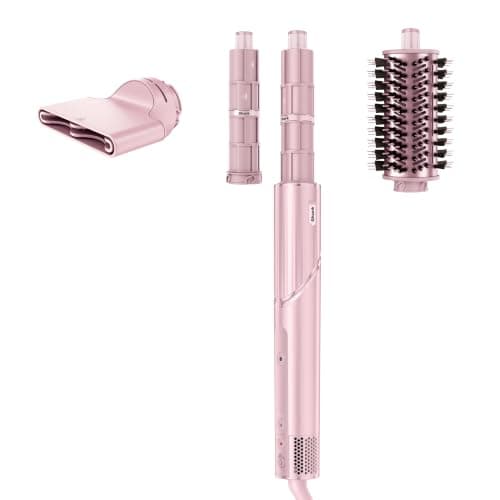
Shark FlexStyle air styling and drying system
Exactly the same published wattage as the Dyson Supersonic, in a tool that also converts to a dryer — the single strongest number in the dupe argument.
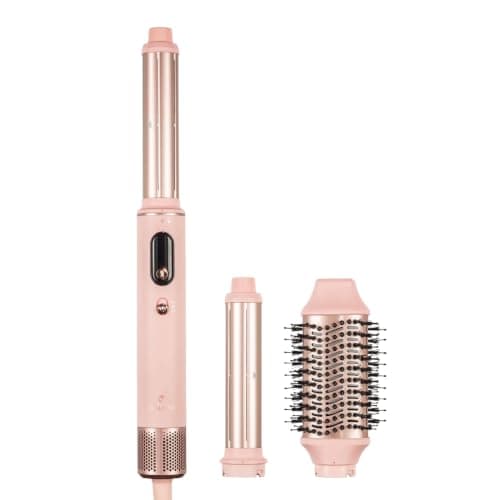
Calista EliteAir Multi-Style Dryer Gen 2
An air styler that publishes a temperature for all six settings and tops out at 195°F — lower than any other multi-styler here, and the whole argument for buying it.
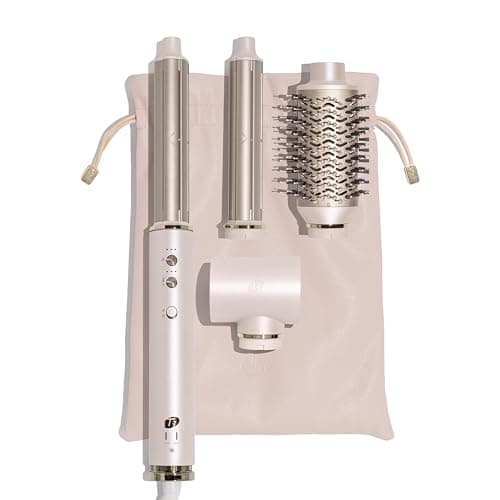
T3 Aire 360 dual voltage ceramic air styler
The only dual-voltage air styler in this registry, and T3's one product that publishes a wattage — 1,200–1,400 W, above the Airwrap.
Questions people actually ask
Is the Dyson Airwrap worth it?
For fine, fragile or previously damaged hair, yes — it shapes with airflow rather than a clamped heat plate, which is a categorical difference rather than an incremental one. For thick, short or straight hair, no: its published 1,300 W is the lowest mains figure in this registry, and on those hair types cheaper tools do the job better.
Is the Dyson Airwrap worth it for thick hair?
No. Dyson publishes 1,300 W, the lowest mains draw of any tool on this site, which converts directly into a longer session on dense hair — and a longer session is more total heat exposure. The Shark SpeedStyle Pro publishes 1,750 W for a fraction of the price.
Is the Dyson Airwrap worth it for fine or thin hair?
This is the strongest case for it. There is no heated plate in contact with the fiber at all, it draws the lowest published wattage here, and it publishes three heat and three speed settings — the most complete published control in the category.
Is the Dyson Airwrap worth it for short hair?
Not in the Complete Long configuration — the barrels are sized for length you do not have. Shorter configurations exist, but for a short cut the geometry argument favours a dryer with a concentrator or a small-barrel tool.
Can you use a Dyson Airwrap on dry hair?
Not as designed. Coanda airflow tools dry hair into a shape, so they need hair that is towel-dried and still largely damp. If you want to refresh dry hair, a curling iron or a rotating barrel is the tool. This is the most common reason an Airwrap ends up unused.
Is the Shark FlexStyle as good as the Dyson Airwrap?
On published specs it has more power — 1,600 W against 1,300 W — and it converts into a standalone dryer. What it gives up is information: Shark publishes no heat or speed count for it at all, and its attachment set is configurable rather than fixed.
Is the Dyson Airwrap dual voltage?
No. Dyson publishes 120 V, so it cannot be used abroad on a plug adapter. The T3 Aire 360 is the only dual-voltage air styler in this registry.
Sources
- Dyson — Airwrap Complete Long product page
- SharkNinja — Shark FlexStyle (HD400SN) product page
- Calista — EliteAir Multi-Style Dryer Gen 2 product page
- T3 Micro — Aire 360 Dual Voltage product page
- Ruetsch and Kamath - heated tools on wet versus dry hair
- Evans and Park - thermal cycling and mechanical properties
- Dyer et al. - bleaching and the hair fiber
- U.S. Energy Information Administration — Electric Power Monthly, Table 5.3 (average residential price, June 2026)