Curling Irons & Wands
ghd Curve Thin vs T3 SinglePass Curl X: Barrel, Not Brand
People shop these two against each other because of the brands. The published specifications say the brands are nearly the least important thing here.
Updated October 2026 · Sawyer V.
Choose on barrel size, not brand. ghd publishes a 0.5 in barrel at a fixed 365°F with a 30-second heat-up, universal voltage and a cool tip. T3 publishes a 6.5 in-long barrel in 1 in, 1¼ in and 1½ in, nine heat settings, 78 W, a weight for every size and 100–240 V. Short hair and tight defined curls want the ghd. Long hair and loose curls want the T3. Neither publishes a temperature you can set below 365°F.
We earn a commission if you buy through the links on this page, at no extra cost to you. It never changes which tool we pick or which one we tell you to skip. How this site is funded.
Side by side, published only
ghd Curve Thin 0.5 in wand vs T3 SinglePass Curl X, as published
| Row | ghd Curve Thin | T3 SinglePass Curl X |
|---|---|---|
| Heat control | One fixed temperature — 365°F | 9 settings, no degrees stated |
| Barrel diameter | 0.5 in | 1 in, 1¼ in or 1½ in |
| Barrel length | Not published | 6.5 in |
| Wattage | Not published | 78 W |
| Weight | Not published | 10.6 oz (1 in), 13.2 oz (1¼ in), 15.1 oz (1½ in) — cord excluded |
| Heat-up time | 30 seconds | Not published |
| Cord | 8.8 ft, 360-degree swivel | 8 ft, 360-degree swivel |
| Auto shut-off | Sleep mode after 60 minutes | 1-hour auto off |
| In the box | Cool tip, built-in safety stand, styling glove | None supplied |
| Dual voltage | Yes — universal | Yes — 100–240 V auto world voltage |
| Warranty | 2 years | 2 years |
| Barrel surface | Self-regulating ceramic | CeraGloss ceramic |
Quoted from each maker's own product page, both re-read 2026-10-12.
Five rows tie or nearly tie — cord length, auto shut-off, voltage, warranty and surface material are a wash. The rows that differ, differ enormously, and the first one in the table is the one almost nobody weighs properly.
They are barely competitors
This has to come first, because the spec rows can make the two look more comparable than they are.
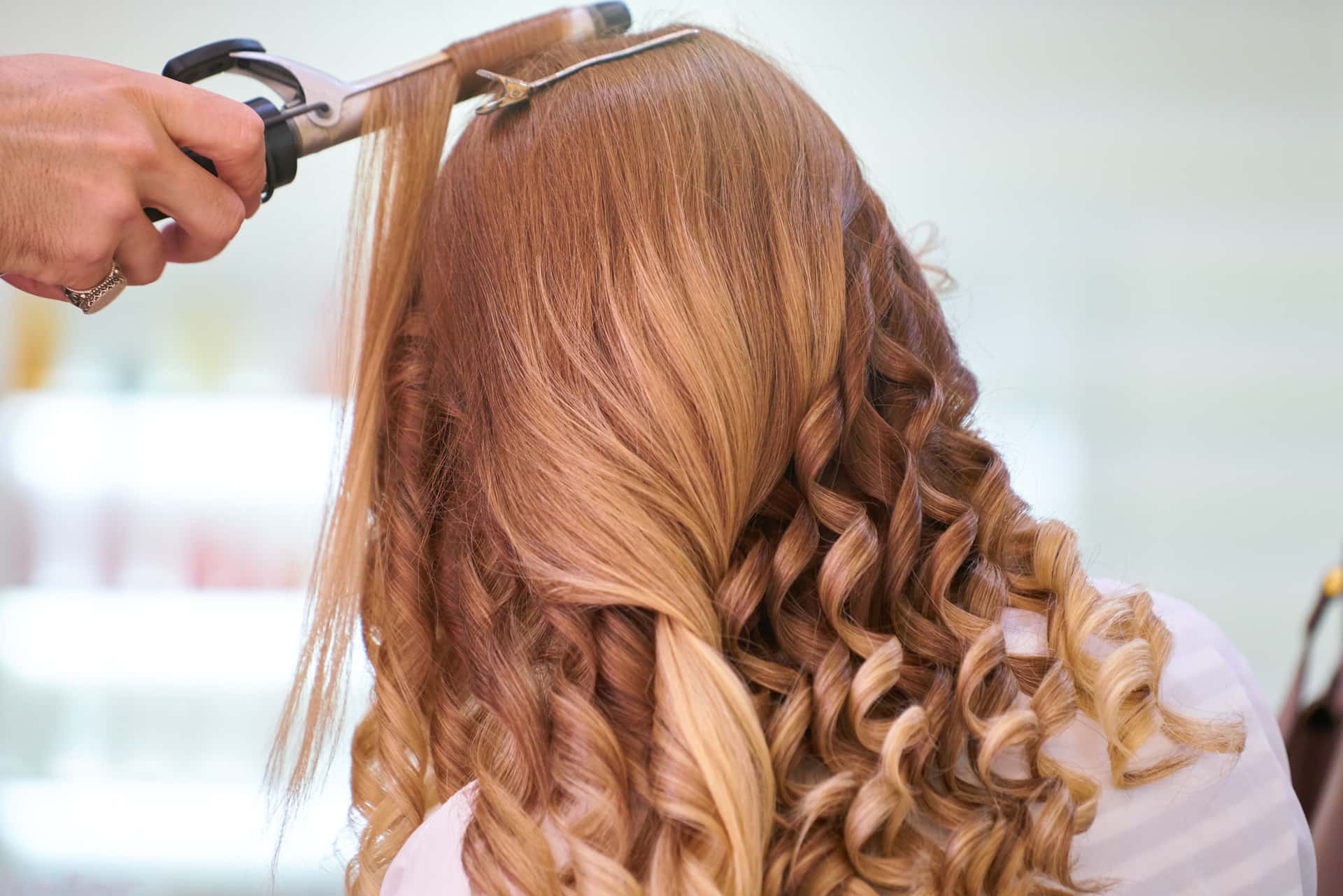
A 0.5 in barrel and a 1½ in barrel do not produce two versions of the same curl. They produce different hairstyles. Barrel diameter sets the curl diameter, so the ghd makes a tight, defined spiral and the widest T3 makes a loose bend that reads as a wave. Neither can do the other’s job: you cannot open up a half-inch curl by holding it less, and you cannot tighten a 1½ in curl by holding it longer.
So the honest framing is not “which wand is better.” It is: what curl do you want, and how much hair do you have to put through the tool? Answer those and the brand follows. The full reasoning on diameter is at what barrel size to buy, and the clipped-versus-clipless question — the ghd is a wand, the T3 has a clamp — is at wand vs clamp.
The row nobody talks about: barrel length
T3 publishes 6.5 in of usable barrel. ghd publishes no length figure for the thin wand at all, and that omission matters more than it sounds.
Diameter decides the shape of the curl; length decides how much hair you can load per pass. On long or dense hair a short barrel forces you to split every section in two, which doubles the number of heat exposures to style the same head. That is the mechanism by which a barrel-length figure turns into a damage figure: repeated thermal cycling measurably degrades the fiber’s mechanical properties Evans and Park, Journal of Cosmetic Science, and twice the passes is twice the cost.
It is also the row that makes the T3 the more sensible tool for most people with hair past the shoulder, independent of anything else on this page. If your hair is short, the opposite is true and the length is wasted.
One temperature or nine positions
ghd fixes the barrel at 365°F and publishes a reason: its page states that the self-regulating ceramic barrel “maintains the safer-for-hair temperature of 365°F across the entire barrel to ensure consistent heat at all times.” That is a design position, not a missing feature. The dial is what people reach for when a curl does not take, and on this tool there is nothing to reach for; what is left is the fixes that actually work — smaller sections, drier hair, holding for the stated time.
T3 publishes nine heat settings, which is the most adjustment of any curling tool in this registry alongside its own CurlWrap. Every ghd curling tool is fixed at 365°F, and the Hot Tools Black Gold publishes a 455°F ceiling with no floor and no step count.
And here is the limitation that keeps this from being a one-sided row: T3 publishes a step count, not temperatures. Not a range, not a floor, no figure for any of the nine positions. So you can select a lower setting but you cannot check it against the guidance for your hair, and you cannot repeat it in any absolute sense — only as “position three.”
The practical consequence is blunt: neither of these tools gives you a verifiable temperature below 365°F. If your hair is bleached, colored or already heat-damaged and you want a number you can set and trust, neither of these is the answer and no amount of brand preference changes that. Start at curling irons for damaged hair and curling irons for color-treated hair; the guidance by hair type is at what temperature is actually safe, and what unlabelled dial positions mean at what the numbers on a dial mean.
Who tells you more, and where each one stops
Both makers publish a reasonable sheet by this category’s standards, and they are strong on opposite rows.
What each maker publishes that the other does not
| Only ghd publishes | Only T3 publishes |
|---|---|
| A heat-up time — 30 seconds | A wattage — 78 W |
| A stated temperature — a fixed 365°F | A weight, separately for all three barrel sizes |
| A reason for its fixed temperature | A barrel length — 6.5 in |
| An in-box accessory list — cool tip, safety stand, styling glove | A voltage range — 100–240 V, rather than the word "universal" |
Our reading of the two product pages, not a manufacturer claim.
The 30-second heat-up is worth singling out: it is the only published heat-up figure on any curling tool in this registry. It is the row that decides whether a tool gets used for a two-section touch-up, because a wand that takes four minutes to come up is a wand you will not switch on before leaving the house.
The 78 W is new. T3 did not state a wattage for this tool when we first compiled its sheet; the page does now, and it makes this the second curling tool in the registry whose maker publishes one, after T3’s own CurlWrap at 77 W. No ghd or Hot Tools curling tool publishes a wattage at all. We have corrected the counts on our other pages to match.
Running cost follows, and it is trivial: at 65 hours a year and the U.S. average residential rate of 18.34 cents per kilowatt-hour, 78 W costs about 93 cents a year. A curling iron holds a small mass of ceramic at temperature and draws in short bursts, so this was always going to be a small number — the point of publishing it is that you can check it, and on four of the six curling tools here you cannot. Running costs has the formula.
One discrepancy to flag, because we would want to know: ghd’s page gives the cord as “8.8 foot swivel cord” in its specification block and “Professional length 9 ft cord” in its marketing copy. We publish 8.8 ft, the specification figure. The difference does not change a purchase, but a maker contradicting itself on the same page is worth noticing.
Weight, where only one of them answers
T3 publishes a weight for each barrel size: 10.6 oz at 1 in, 13.2 oz at 1¼ in and 15.1 oz at 1½ in, cord excluded. ghd publishes none for the thin wand, describing it only as “lightweight.”
Publishing a figure per variant is unusually good disclosure — most makers in this category publish one diameter and stop — and it surfaces something useful: the widest Curl X is roughly 42 percent heavier than the narrowest. You hold a curling tool at head height with your wrist rotated, once per section, so on a long head of hair that spread is the difference between the last sections being done properly and being rushed.
Across the whole category these two T3 tools are the only curling tools in this registry that publish a weight at all. ghd publishes none for the Curve Thin, the Chronos Curve Classic or the Wave, and Hot Tools publishes none for the Black Gold. On a tool whose entire job is held in one raised hand, that is a poor showing by everyone except T3.
The five rows that tie
- Warranty. Two years each. Both are beaten by the Hot Tools Black Gold’s lifetime limited cover, which is also the cheapest curling tool here — see what a warranty is worth and the budget curling irons.
- Dual voltage. Both travel. ghd says “universal voltage”; T3 states 100–240 V and adds that a plug adaptor is required. T3’s phrasing is the more useful one, because the adapter-versus-converter confusion is what actually destroys tools — adapter vs converter.
- Cord. 8.8 ft against 8 ft, both 360-degree swivel. Not a decision.
- Auto shut-off. ghd publishes a 60-minute sleep mode, T3 a 1-hour auto off. The same hour, different words.
- Surface. “Self-regulating ceramic” against “CeraGloss ceramic.” Neither is a measurement, and we do not treat coating vocabulary as comparable — ceramic vs titaniumsets out why.
Which one to buy
- Buy the ghd if your hair is short, or if you want a tight defined curl. A 0.5 in barrel is the smallest in this registry and the only one here that will hold a curl in a short cut — curling irons for short hair.
- Buy the ghd for touch-ups. 30 seconds to heat is the only published figure of its kind in the category, and it is the difference between a tool you use before going out and one you do not.
- Buy the ghd if you do not trust your own hand on a dial. One temperature, no decision to get wrong, and a published reason for the number it is fixed at.
- Buy the T3 if your hair is past your shoulders. A 6.5 in barrel loads twice the hair per pass, and fewer passes is the only free damage reduction available — curling irons for long hair.
- Buy the T3 if you want loose curls or waves. 1¼ in and 1½ in are wave diameters; half an inch is not. Also curling irons for beach waves.
- Buy the T3 if you want to know what you are holding. A wattage, a barrel length and a weight for every size, against three blanks.
- Neither, if you need a verifiable low temperature. ghd fixes at 365°F and T3 publishes positions without degrees, so processed hair gets no number it can check from either.
- Neither, if the wrapping motion is the problem. If curls come out uneven because the wrap defeats you, the answer is a rotating barrel rather than a different diameter — the T3 CurlWrap review and the automatic curlers.
The other two edges of this triangle are at ghd Curve vs Hot Tools and Hot Tools vs T3. Brand pages: ghd and T3.
What we could not compare
Temperature on the T3, which is the row this comparison would most like to settle — nine positions with no degrees attached cannot be set against ghd’s stated 365°F. Heat-up time on the T3, and wattage and weight on the ghd, so each tool wins a row the other simply does not fill. Barrel length on the ghd. Curl longevity on both: ghd claims “up to 24hr curl definition” with an asterisk pointing at its own technical test, T3 claims nothing comparable, and there is no standard test for it — so nothing on this page is ranked on hold claims. And noise, which is not applicable on a curling tool.
The tools on this page
Prices come from the live price layer. Where none is available the button says so rather than showing a number we cannot stand behind.
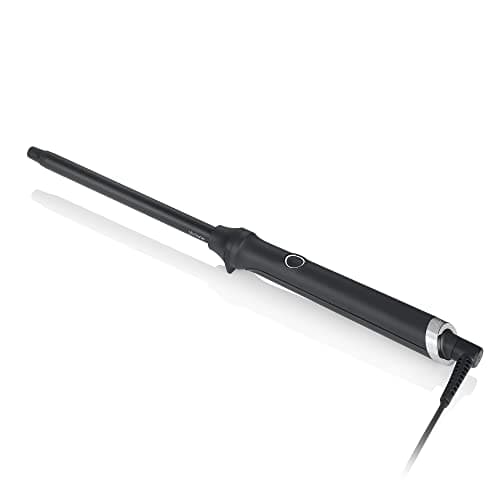
ghd Curve Thin curling wand (0.5 inch barrel)
A 0.5 inch barrel is the smallest in this registry and the one that holds a curl on short hair, with a 30-second heat-up and universal voltage.
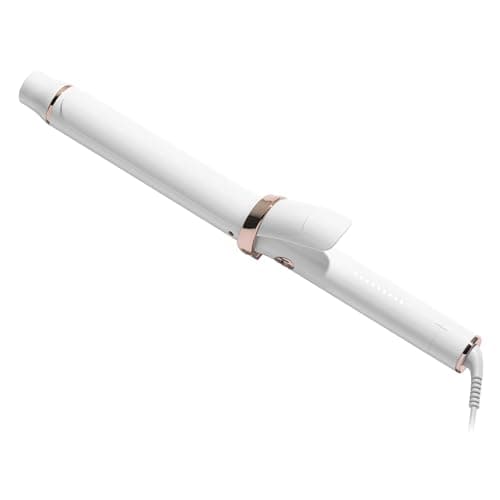
T3 SinglePass Curl X extra-long barrel curling iron
A 6.5-inch barrel and a separate published weight for every barrel size — unusual disclosure in a category where most makers publish a diameter and stop.
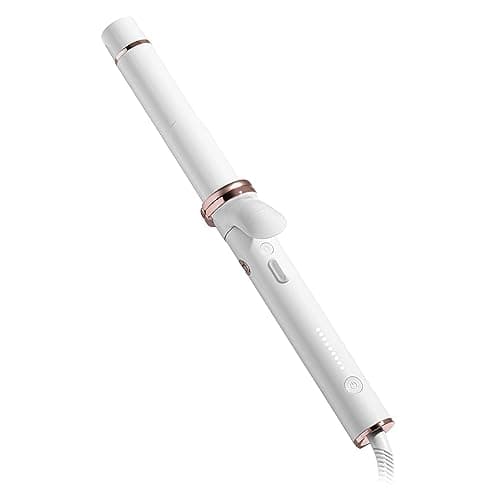
T3 CurlWrap automatic rotating curling iron
The barrel turns itself, which removes the wrist technique entirely — nine heat settings and genuine dual voltage alongside it.
Questions people actually ask
ghd Curve Thin or T3 SinglePass Curl X?
Decide on barrel size. The ghd is a 0.5 inch wand for short hair and tight defined curls; the T3 comes in 1, 1.25 and 1.5 inch with a 6.5 inch barrel length, for longer hair and looser curls. A half-inch barrel and a 1.5 inch barrel produce different hairstyles, not two versions of the same one.
How many watts is the T3 SinglePass Curl X?
78 W, published by T3. It is one of only two curling tools in this registry whose maker publishes a wattage at all, after T3's own CurlWrap at 77 W. At 65 hours a year and the U.S. average residential rate that is about 93 cents a year to run. No ghd or Hot Tools curling tool publishes a wattage.
What temperature does the ghd Curve Thin reach?
A fixed 365 degrees Fahrenheit. ghd's page states that the self-regulating ceramic barrel maintains that temperature across the entire barrel for consistent heat, and there is no adjustment. Every ghd curling tool in this registry is fixed at the same number.
Is either one safe for bleached or color-treated hair?
Neither gives you a verifiable temperature below 365 degrees Fahrenheit. ghd is fixed there, and T3 publishes nine positions with no degrees attached to any of them — so you can turn it down but cannot check or repeat the setting. For processed hair, look for a tool that publishes a floor temperature.
Which one heats up faster?
The ghd, and it is the only curling tool in this registry whose maker publishes a heat-up figure at all: 30 seconds. T3 publishes no heat-up time for the Curl X, so the two cannot be compared on this row beyond noting who answered.
How much does the T3 SinglePass Curl X weigh?
T3 publishes a figure for each barrel size, cord excluded: 10.6 oz at 1 inch, 13.2 oz at 1.25 inch and 15.1 oz at 1.5 inch. ghd publishes no weight for the Curve Thin. These two T3 tools are the only curling tools in this registry that publish a weight at all.
Can I take either one abroad?
Both. ghd publishes universal voltage and T3 publishes 100 to 240 V auto world voltage, noting that a plug adaptor is required. Four of the six curling tools here publish a usable voltage; ghd publishes none for the Chronos Curve Classic or the Wave.
Sources
- ghd — Thin Wand 0.5 inch curling wand product page (re-read 2026-10-12)
- T3 Micro — SinglePass Curl X extra-long barrel curling iron product page (re-read 2026-10-12)
- T3 Micro — CurlWrap automatic rotating curling iron product page
- Evans and Park - thermal cycling and mechanical properties
- U.S. Energy Information Administration — Electric Power Monthly, Table 5.3 (average residential price, June 2026)