Flat Irons & Straighteners
The Best Flat Irons for Frizzy Hair in 2026
The instinct frizz triggers is to turn the dial up. Every published specification that actually helps points the other way.
Updated October 2026 · Sawyer V.
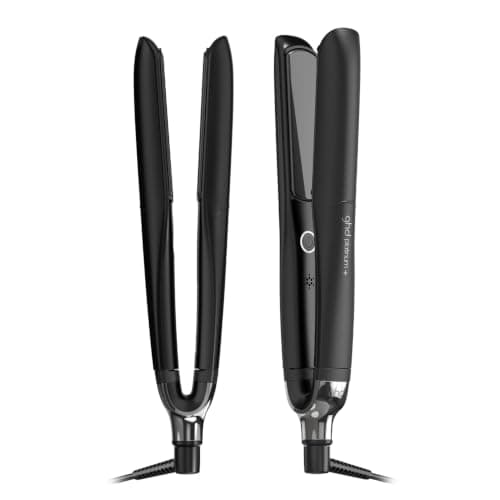
Buy the ghd Platinum+. Frizz is lifted cuticle, and every extra pass with an iron lifts more of it, so the specification that matters is whatever gets a section done in one pass at the lowest temperature that works — floating plates and a controlled temperature, not a high ceiling. ghd publishes precision-milled floating plates at a fixed 365°F, the lowest fixed setting in this registry, with a three-year warranty.
We earn a commission if you buy through the links on this page, at no extra cost to you. It never changes which tool we pick or which one we tell you to skip. How this site is funded.
Quick picks
Tap any row to jump to the full write-up. Prices come from the live price layer; where none is available the button says so rather than showing a number we cannot stand behind.
| # | Product | Best for | Price |
|---|---|---|---|
| 1 | ghd Platinum+ flat iron (1 inch plate) Precision-milled floating plates at a fixed 365°F - the lowest fixed setting in this registry - and the longest iron warranty here at three years. | One pass at the lowest fixed temperature here | |
| 2 | 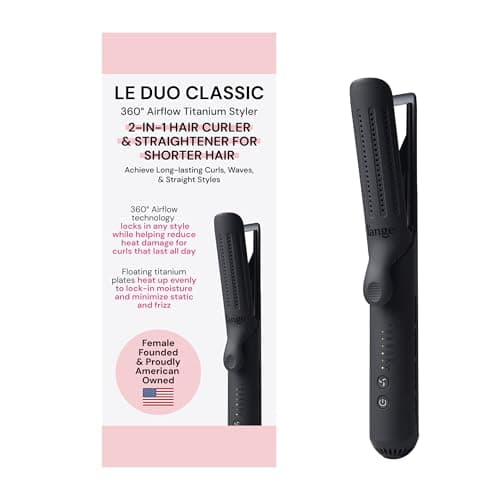 L'ange Le Duo 360° Airflow Styler (Standard) Titanium floating plates with rounded edges plus 360-degree airflow, and a published 280-430°F range - the only iron here with a stated floor. | Setting the cuticle down as the plates leave it | |
| 3 | 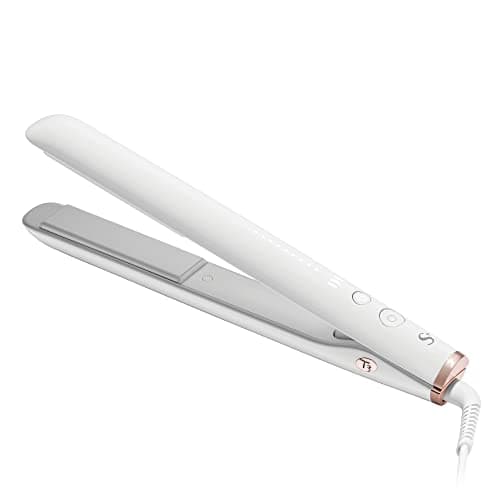 T3 SinglePass StyleMax 1 inch flat iron Nine heat settings, 11.1 oz - the lightest iron in this registry - and genuine 100-240 V dual voltage. | Finding the lowest setting that still works in one pass | |
| — | 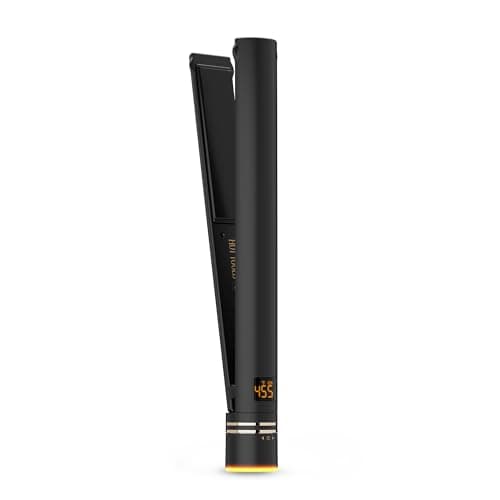 Hot Tools Black Gold Evolve Ionic Salon Flat Iron The only iron here that publishes a ceiling and no floor, which is exactly the wrong instrument for a problem whose fix is lower heat and fewer passes. We’d skip this | Coarse, resistant, untreated hair - not frizz |
1. Best for frizz
ghd Platinum+ flat iron (1 inch plate)
Best for: One pass at the lowest fixed temperature here
Precision-milled floating plates at a fixed 365°F - the lowest fixed setting in this registry - and the longest iron warranty here at three years.
Two published rows win this. The plates are precision-milled, floating and high-gloss, and the temperature is fixed at 365°F. Both of those are frizz specifications even though neither is sold as one.
Floating plates pivot to stay flat against a section that is not uniform, which is every real section of frizz-prone hair. A fixed plate pinches at one edge, which means part of the section gets pressed and part does not, which means you go back over it. Going back over it is the frizz. The milled surface is the same argument at a smaller scale: a smoother plate drags less on a raised cuticle.
The fixed 365°F is the other half. It is the lowest fixed temperature published by any iron here — CHI’s presets sit at 392°F and 395°F — and more usefully it removes the decision. The dial is what people reach for when a pass does not work, and on frizzy hair the fix is almost never more heat. There is nothing to reach for.
A 9 ft cable, universal voltage and three years of cover complete a sheet with only two blanks. See the full published sheet.
What’s wrong with it
You cannot go below 365°F, which fine or bleached hair may want, and ghd publishes neither a weight nor a wattage for it - so it cannot be costed and you cannot check what you are holding before you buy.
Published specifications — ghd Platinum+ flat iron (1 inch plate)
| Wattage | Not published |
|---|---|
| Heat settings | One fixed temperature — 365°F |
| Speed settings | Not applicable |
| Weight | Not published |
| Cord length | 9 ft power cable |
| Noise (dB) | Not applicable |
| Attachments | None supplied |
| Plate / barrel | Precision-milled floating high-gloss plates, 1 in |
| Dual voltage | Yes — universal voltage |
| Warranty | 3-year warranty |
Every figure above is taken from ghd — Platinum+ flat iron (1 inch plate) product page. “Not published” means the figure does not appear on that page — it is not an estimate withheld, it is a number the manufacturer does not state. How we compile these.
What it costs to run for a year
ghd does not publish a wattage for this tool, so there is nothing honest to compute. The formula is watts ÷ 1,000 × hours a year × your rate per kWh; if you find a rating plate on the handle, 65 hours a year and 18.34 cents per kilowatt-hour will get you the rest of the way.
2. Best airflow finish
L'ange Le Duo 360° Airflow Styler (Standard)
Best for: Setting the cuticle down as the plates leave it
Titanium floating plates with rounded edges plus 360-degree airflow, and a published 280-430°F range - the only iron here with a stated floor.
This is a different mechanism and on frizz it is the interesting one. L’ange states that the Le Duo moves air through the barrel as it styles, so the section is dried and cooled into shape in the same motion the plates finish it.
That matters because of why frizz comes back. A cuticle smoothed by heat sets as it cools; if it cools loose, it lifts again. Airflow at the exit of the plates is the closest thing in this category to the cool shot a dryer uses for the same purpose — and no other iron here has one.
It also publishes the only temperature floor in the category: five settings spanning a stated 280–430°F. That range contains every other iron’s fixed point and extends 85 degrees below the ghd. For frizz-prone hair that is also porous or colored, being able to set 280°F and check it is worth more than any coating claim.
Published 3.5 in × 1 in titanium floating plates with rounded edges, 0.8 lb, 36 W, an 8.2 ft cord and 100–240 V. The full sheet is at the L’ange Le Duo review.
What’s wrong with it
A one-year warranty, the shortest of any iron here and a third of ghd's. It is also a multi-purpose tool rather than a dedicated straightener, so if you only ever straighten you are carrying airflow hardware you do not need.
Published specifications — L'ange Le Duo 360° Airflow Styler (Standard)
| Wattage | 36 W (Standard); 50 W (Grande) |
|---|---|
| Heat settings | 5 settings, 280–430°F |
| Speed settings | Not published |
| Weight | 0.8 lb / 358 g (Standard); 0.9 lb / 400 g (Grande) |
| Cord length | 8.2 ft (2.5 m) |
| Noise (dB) | Not published |
| Attachments | Not published |
| Plate / barrel | Titanium floating plates with rounded edges, 3.5 in × 1 in |
| Dual voltage | Yes — 100–240 V, 50/60 Hz |
| Warranty | 1-year warranty |
Every figure above is taken from L'ange — Le Duo 360° Airflow Styler product page. “Not published” means the figure does not appear on that page — it is not an estimate withheld, it is a number the manufacturer does not state. How we compile these.
What it costs to run for a year
$0.43 a year
36 W (Standard); 50 W (Grande) × 65 hours a year = 2.3 kWh, at 18.34 cents per kilowatt-hour. The hours assume 15 minutes a session, 5 days a week — that is an assumption, not a measurement, so swap in your own if it is wrong.
3. Most adjustable
T3 SinglePass StyleMax 1 inch flat iron
Best for: Finding the lowest setting that still works in one pass
Nine heat settings, 11.1 oz - the lightest iron in this registry - and genuine 100-240 V dual voltage.
Nine settings is the most adjustment published by any iron here, and on frizz the point of adjustment is to go down rather than up. The practical method is to start low and raise one step at a time until a single pass holds; whatever that step turns out to be is your setting, and nine positions means you can land close to it instead of overshooting.
At 11.1 oz without the cord it is also the lightest iron in this registry, by a wide margin — roughly a third of the CHI Lava. That is a frizz specification too, for an unglamorous reason: the last sections of a long head of hair are where passes get rushed, and a light iron is the one you are still holding properly twenty minutes in.
CeraGloss ceramic plates at 1 in, 100–240 V auto world voltage and a two-year warranty. See the full sheet.
What’s wrong with it
Nine settings is a step count, not a set of temperatures - T3 publishes no degrees for any position, so you cannot check a setting against the guidance for your hair. T3 also publishes no wattage and no cord length.
Published specifications — T3 SinglePass StyleMax 1 inch flat iron
| Wattage | Not published |
|---|---|
| Heat settings | 9 heat settings |
| Speed settings | Not applicable |
| Weight | 11.1 oz (cord not included) |
| Cord length | 360-degree swivel cord — length not published |
| Noise (dB) | Not applicable |
| Attachments | None supplied |
| Plate / barrel | CeraGloss ceramic plates, 1 in |
| Dual voltage | Yes — auto world voltage, 100–240 V |
| Warranty | 2-year warranty |
Every figure above is taken from T3 Micro — SinglePass StyleMax 1 inch flat iron product page. “Not published” means the figure does not appear on that page — it is not an estimate withheld, it is a number the manufacturer does not state. How we compile these.
What it costs to run for a year
T3 does not publish a wattage for this tool, so there is nothing honest to compute. The formula is watts ÷ 1,000 × hours a year × your rate per kWh; if you find a rating plate on the handle, 65 hours a year and 18.34 cents per kilowatt-hour will get you the rest of the way.
The one we'd skip
Hot Tools Black Gold Evolve Ionic Salon Flat Iron
Best for: Coarse, resistant, untreated hair - not frizz
The only iron here that publishes a ceiling and no floor, which is exactly the wrong instrument for a problem whose fix is lower heat and fewer passes.
Nothing here is a criticism of the iron. Hot Tools publishes floating ceramic-titanium plates in two widths, a 9 ft swivel cord with a hanging ring, and the only lifetime limited warranty on this site. On coarse, resistant, chemically untreated hair it is our pick, and the review says so. It is the match to frizz that fails.
One published row is the problem: “variable heat settings up to 455°F.” That states a ceiling and nothing else. There is no published floor, no step count and no list of temperatures the dial lands on — so you cannot set a low number, and you cannot repeat whatever you did last week.
On frizzy hair that combination is the worst case. Frizz-prone hair is usually porous hair, the temptation when a pass does not hold is to go hotter, and 455°F is 90 degrees above the ghd. A dial with an unmarked low end and a very high top end invites the one move that makes frizz worse next week.
The second row is the blank weight. On a page about passes, the specification that decides whether your last sections get rushed is not published at all.
What’s wrong with it
No published floor temperature, no published step count, no published weight, no published wattage and no published voltage. Five of the eight rows that would let you match it to frizzy hair are absent.
Published specifications — Hot Tools Black Gold Evolve Ionic Salon Flat Iron
| Wattage | Not published |
|---|---|
| Heat settings | Variable, up to 455°F |
| Speed settings | Not applicable |
| Weight | Not published |
| Cord length | 9 ft professional swivel cord with a hanging ring |
| Noise (dB) | Not applicable |
| Attachments | Not published |
| Plate / barrel | Black Gold ceramic-titanium floating plates, 1 in and 1¼ in |
| Dual voltage | Not published |
| Warranty | Lifetime limited warranty |
Every figure above is taken from Hot Tools — Black Gold Evolve Ionic Salon Flat Iron product page. “Not published” means the figure does not appear on that page — it is not an estimate withheld, it is a number the manufacturer does not state. How we compile these.
What it costs to run for a year
Hot Tools does not publish a wattage for this tool, so there is nothing honest to compute. The formula is watts ÷ 1,000 × hours a year × your rate per kWh; if you find a rating plate on the handle, 65 hours a year and 18.34 cents per kilowatt-hour will get you the rest of the way.
What frizz actually is, and why it decides the spec
Frizz is not a texture, it is a surface condition. Each strand is wrapped in overlapping cuticle scales; when those lie flat the strand reflects light and sits against its neighbours, and when they lift the strand catches on everything around it and stands away from the mass. Frizz is lifted cuticle, plus water moving in and out of the fiber underneath it.
Two things follow, and they are the whole reason this page ranks irons differently from the general roundups.
- Mechanical passes matter more than temperature. Every time a plate drags over a raised cuticle it lifts more of it. The iron that leaves hair smoothest is therefore the one that finishes a section in the fewest passes, which is a plate-geometry question, not a heat question.
- Water is the other half, and heat on wet hair is the worst case. Hair takes up moisture readily and gives it back slowly Breakspear et al., International Journal of Cosmetic Science, and a heated tool applied to wet hair produced markedly more damage than the same treatment on dry hair Ruetsch and Kamath, Journal of Cosmetic Science. Ironing frizz out of damp hair is the single most common version of this mistake — what heat does to wet hair has the mechanism.
Which published rows actually help
How much each published row matters on frizzy hair
| Published row | Why it matters here | Who publishes it |
|---|---|---|
| Floating plates | Stays flat on an uneven section, so one pass does the job | ghd (both irons), CHI (both), L'ange, Hot Tools |
| Published floor temperature | Lets you set the lowest setting that works and repeat it | L'ange only — a stated 280°F |
| Lowest fixed temperature | Removes the dial you would otherwise turn up | ghd — 365°F on both irons |
| Weight | Light irons are the ones you still hold properly on the last sections | T3 (11.1 oz), CHI (1.4 lb / 2.08 lb), Dyson (1.23 lb) |
| Rounded plate edges | Less drag at the point the plate leaves the section | L'ange only |
| Maximum temperature | Almost nothing. A higher ceiling does not flatten a cuticle better | Hot Tools (455°F) is the highest here |
Our reading of the published rows, not a manufacturer claim.
The last row is the one worth arguing with, because it is the opposite of how these tools are sold. A hotter plate does not lie the cuticle down flatter; it sets the shape faster and it costs more fiber doing it. Repeated thermal cycling measurably degrades hair’s mechanical properties Evans and Park, Journal of Cosmetic Science, and damaged hair is frizzier hair, so the hot-iron route to smoothness compounds the problem it is treating.
The method, which matters more than the tool
No iron on this page will beat technique, and three steps do most of the work.
- Dry first, completely. Not nearly. The damp-hair failure above is the one that costs the most, and it is also the one that produces frizz the same day rather than next month.
- Section smaller than feels necessary. A section thin enough to go through in one pass is the entire mechanism this page is about. How to section properly has the sizes.
- Find your lowest working temperature once, then stop experimenting. Start low, raise one step at a time until a single slow pass holds, and write it down. What the dial numbers mean and the temperature guidance by hair type are the two pages to read first.
A heat protectant belongs in that sequence too, and where it goes is counter-intuitive — see whether you should use a heat protectant.
Why it comes back, and what no iron can fix
A smoothed cuticle is not a permanent state. The fiber takes moisture back out of the air, and the rate it does so is a property of the hair rather than of the tool Breakspear et al., 2025. On a humid day frizz returns on hair that was perfectly flat an hour earlier, and nothing in a specification sheet prevents that.
That is worth saying plainly on a page that sells irons: a better iron reduces how much cuticle you lift while styling. It does not change the weather. Styling for humidity covers what actually helps, and if your frizz is accompanied by breakage and rough ends rather than just lift, the question is damage rather than styling — the signs of heat damage is the page to read.
When the answer is not a flat iron at all
For a lot of frizzy hair it is not. A plate is the only tool in this category that clamps the fiber, and if your goal is smooth rather than poker-straight, an airflow tool does it with no contact heat at all.
- A dryer with a concentrator smooths with direction and tension rather than pressure — the best hair dryers for frizzy hair.
- A paddle blow-dry brush flattens down the length in one motion — blow-dry brushes for frizzy hair.
- The technique with no extra tool is the cheapest fix and often the best one — how to blow-dry without frizz.
What we could not compare
Heat-up time and recovery time, on all four. No maker here publishes how long a plate takes to return to temperature after a pass, which is the figure that would actually tell you whether an iron can do a thick section in one go. Plate smoothness, on all four: “precision milled,” “ultra-gloss” and “CeraGloss” are descriptions, not measurements, and we do not treat them as comparable — see ceramic vs titanium. And weight on one of the four: Hot Tools publishes none.
Questions people actually ask
What is the best flat iron for frizzy hair?
The ghd Platinum+, on published specifications. Precision-milled floating plates get a section done in one pass, and the fixed 365 degrees Fahrenheit is the lowest fixed temperature published by any iron in this registry. Fewest passes at the lowest workable temperature is what frizz needs.
Should I use a higher temperature on frizzy hair?
No. A hotter plate does not lie the cuticle down flatter; it sets the shape faster and costs more fiber doing it. Frizz responds to fewer passes at the lowest temperature that works in one pass, which is a plate-geometry question rather than a heat one.
Can I flat iron frizzy hair while it is still damp?
No, and this is the single most damaging version of the mistake. A heated tool applied to wet hair produced markedly more damage than the same treatment on dry hair in published work, and damaged hair is frizzier hair. Dry completely first.
Which flat iron has the lowest temperature setting?
The L'ange Le Duo, with a published range of 280 to 430 degrees Fahrenheit. It is the only iron in this registry whose maker publishes a floor temperature at all; every other iron here publishes either a fixed preset or a ceiling.
Why is the Hot Tools Black Gold Evolve the skip on this page?
Because the match to frizzy hair fails, not because the iron is bad. It publishes a ceiling of 455 degrees with no floor, no step count and no weight, so you cannot set a low temperature and repeat it. On coarse, resistant, untreated hair it is our pick elsewhere.
Will a flat iron stop frizz coming back in humidity?
No. Hair takes moisture back out of the air at a rate that is a property of the hair rather than the tool, so frizz returns on a humid day regardless of which iron you used. A better iron reduces how much cuticle you lift while styling; it does not change the weather.
Sources
- ghd — Platinum+ flat iron (1 inch plate) product page
- L'ange — Le Duo 360° Airflow Styler product page
- T3 Micro — SinglePass StyleMax 1 inch flat iron product page
- Hot Tools — Black Gold Evolve Ionic Salon Flat Iron product page (re-fetched 2026-10-06)
- Breakspear et al. - moisture sorption in keratin
- Breakspear et al., 2025 - cuticle versus cortex sorption
- Ruetsch and Kamath - heated tools on wet versus dry hair
- Evans and Park - thermal cycling and mechanical properties