Multi-Stylers & Dupes
Air Styler vs Hot Air Brush: Is the Premium Real?
These two classes get shopped against each other constantly, and the price gap between the ends of the shelf is about fifteen times. Here is what the published figures say you are actually buying.
Updated October 2026 · Sawyer V.
Buy a hot air brush unless you specifically want defined curls from the same tool that dries your hair. On published figures the premium class buys shape range — swappable barrels and brushes — and loses on almost everything else: the Dyson Airwrap’s 1,300 W is the lowest published draw of any mains tool in this registry, the longest warranty on the shelf belongs to the cheapest brush at four years, and the only tool in either class publishing an actual temperature is a sub-$50 brush.
We earn a commission if you buy through the links on this page, at no extra cost to you. It never changes which tool we pick or which one we tell you to skip. How this site is funded.
What each class actually is
They look adjacent on a shelf and they are not the same kind of object.
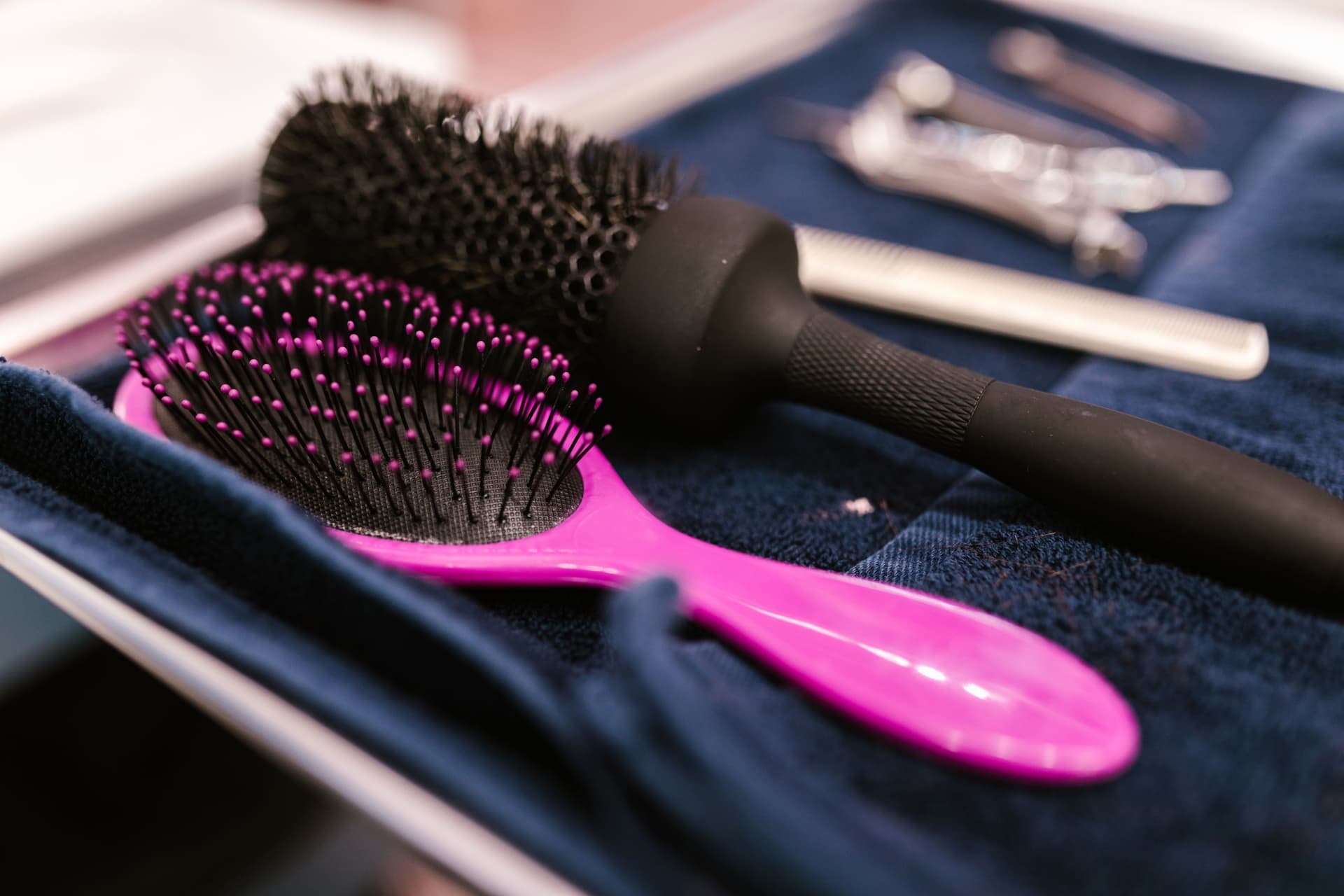
A hot air brush is one fixed brush head with a fan behind it. Air comes out through the bristles, the barrel is part of the tool, and you draw it through damp hair. It dries and smooths in one pass. What it cannot do is change shape: the head you bought is the only head there is.
An air styler is a handle with interchangeable attachments. The same motor drives a curling barrel, a smoothing brush, a round volumizing brush or a drying nozzle depending on what you clip on. On the Dyson and the Shark the barrels use the Coanda effect — airflow shaped so it pulls hair onto the barrel and holds it there without a clamp — which is how they make a curl without pressing the hair between two hot surfaces.
So the honest framing is not “better or worse.” It is one shape or several, and whether several is worth the money.
The two classes, side by side
Air styler class against hot air brush class, on published figures only
| Row | Air styler class | Hot air brush class |
|---|---|---|
| Shape range | Several - curling barrels, smoothing brushes, round brush, nozzle, swapped on one handle | One - the head is the tool |
| Published wattage range | 1,300 W (Airwrap) to 1,600 W (Shark FlexStyle); T3 Aire 360 states 1,200-1,400 W | 1,000 W (Le Volume) to 1,200 W (T3 AireBrush Round); neither Revlon publishes one |
| Lowest published draw in this registry | The Airwrap, at 1,300 W - the lowest of any mains tool here | Not applicable - the brushes that publish are lower still |
| Published temperature in degrees | None of the buyable stylers publishes one | One does - L'ange Le Volume, at a stated 95.4°F / 178.9°F / 225.7°F |
| Heat settings published | 3 on the Airwrap and the Aire 360; not published at all on the Shark FlexStyle | 4 on the Revlon One-Step Plus (including cool); 3 on both T3 brushes; 3 on the Le Volume |
| Weight | 1.4 lb (Airwrap), 1.5 lb (FlexStyle); not published on the Aire 360 | 16 oz on both T3 brushes, 1.1 lb on the Le Volume; not published on either Revlon |
| Cord | 8.5 ft (Airwrap), 8 ft (FlexStyle), 9 ft (Aire 360) | 8 ft on both T3 brushes, 6.6 ft on the Le Volume; not published on either Revlon |
| Dual voltage | One - the T3 Aire 360 | None that is currently buyable |
| Longest warranty in the class | 2 years (all three) | 4 years - both Revlon One-Step brushes |
| Doubles as a plain dryer | The Shark FlexStyle converts, at a published 1,600 W | No - the head does not come off to leave a nozzle |
Quoted from each maker's own product pages. revlonhairtools.com has returned HTTP 403 to every automated fetch since 2026-10-06, so the Revlon rows are the readings on file with their source URLs. Both Calista products are currently unavailable on Amazon and are deliberately excluded from every row above.
The premium is not buying power
This is the row most buyers assume runs with price, and on this shelf it runs slightly against it.
The Dyson Airwrap publishes 1,300 W. That is the lowest published draw of any mains-powered tool in this entire registry — lower than the Shark FlexStyle’s 1,600 W at a third of the price, and only 100 W above the T3 AireBrush Round, a hot air brush. The T3 Aire 360 publishes 1,200–1,400 W.
Dyson says the figure openly and its argument is airflow engineering rather than wattage, which is a fair position — wattage bounds how much heat an element can make, not how well a tool works, and what wattage actually tells you goes through why. The point here is narrower and worth stating plainly: whatever the premium is buying, the published power figure is not it.
Running cost, with assumptions stated: at 65 hours a year and the U.S. average residential rate of 18.34 cents per kilowatt-hour U.S. Energy Information Administration, Electric Power Monthly, 1,300 W runs about $15.50 a year and 1,000 W about $11.92. Four dollars. Nothing on this page should be decided on running cost — running costs has the formula.
The cheap class wins the row that protects your hair
Across both classes there is exactly one buyable tool whose maker publishes what temperature it reaches, and it is a brush: the L’ange Le Volume states cool 95.4°F, low 178.9°F and high 225.7°F.
Not one of the buyable air stylers publishes a degree figure. Dyson publishes three heat settings, T3 publishes three, and Shark publishes neither a heat count nor a speed count for the FlexStyle at all. So on the single row that lets you check a tool against guidance for your own hair, the sub-$50 brush is the only one that answers.
That matters because heat is cumulative and the fiber does not recover: repeated thermal cycling measurably degrades hair’s mechanical properties Evans and Park, Journal of Cosmetic Science, and hair that has been bleached or chemically processed starts with measurably less margin to spend Dyer et al., International Journal of Cosmetic Science. A published 225.7°F ceiling is more than 135 degrees below every flat iron in this registry — what temperature is actually safe has the guidance, and the Le Volume review is the full sheet.
One honest caveat on both classes: a published setting temperature is not the temperature at your hair, which depends on distance, dwell and airflow. Nobody in this category publishes that figure.
And it wins the warranty row outright
Both Revlon One-Step brushes publish a four-year limited warranty. Every air styler here publishes two years. The L’ange Le Volume publishes one.
So the longest fixed-term cover on this shelf sits on the cheapest tool, at twice the term of anything in the premium class. Nobody in this category publishes an expected lifespan, which makes warranty length the only durability promise anyone makes in writing — and across this whole registry it runs backwards to price. What a hair tool warranty is actually worth puts every figure side by side, including what “limited” tends to exclude.
So what does the premium buy?
One thing, and it is a real thing: shape range.
Dyson publishes four attachment families on the Complete Long configuration — curling barrels, smoothing brushes, a round volumizing brush and a drying nozzle. The T3 Aire 360 publishes two extra-long curling attachments and an oval brush. The Shark FlexStyle is sold as a configuration you assemble. A hot air brush publishes one head and that is the end of it.
If what you want is a defined curl and a smooth blow-out from the same handle, the brush class cannot do it and no amount of warranty changes that. A brush makes a bend, body and a smooth finish; it does not make a ringlet. That is the purchase.
Two honest qualifications. First, the attachment count is also a learning curve, and the consistent finding on this site is that most people end up using two of them — air styler attachments explained is the page for working out which two you would reach for before you pay for four. Second, the clamp-free mechanism is a genuine advantage for fragile hair regardless of price: nothing presses the cuticle flat and releases it, so there is no crease and no clamped contact — which is why is the Dyson Airwrap worth it, by hair type comes out yes for fine and fragile hair and no for thick or short hair.
One row where a styler genuinely replaces two tools
The Shark FlexStyle converts into a conventional dryer, at a published 1,600 W — more power than either class’s brushes publish and more than the Airwrap. That makes it the one tool on this page that can honestly claim to be a dryer and a styler rather than a styler you also point at wet hair.
A hot air brush does something related but not the same: it replaces a dryer-and-round-brush pair for the blow-out job, because the brush and the airflow are the same object. What it does not do is give you bare airflow for anything else — no diffusing, no concentrator, no drying a child’s hair quickly. Hot air brush vs hair dryer is that decision, and FlexStyle vs SpeedStyle Pro is the same question inside Shark’s own range.
Travel, where both classes mostly fail
Exactly one buyable tool across both classes publishes dual voltage: the T3 Aire 360, at a stated dual voltage with a 9 ft cord. The Airwrap and the FlexStyle both publish 120 V. Both T3 brushes and the L’ange publish 125 V, and neither Revlon publishes a voltage figure at all, which has to be read as single voltage rather than assumed universal.
So if the tool has to work on a 230 V supply, the answer is the one styler rather than anything in the cheap class — that is a second, narrower thing the premium end genuinely buys. Travel air stylers, the travel brush list and adapter vs converter cover what the others would need.
Which class to buy
- A hot air brush, if you want a blow-out. Smooth, body, a soft bend at the ends, from damp, in one pass. This is what most people actually want most mornings, and the cheapest tool here does it with four heat settings including cool and a four-year warranty — the Revlon One-Step Volumizer Plus review.
- A hot air brush, if your hair is fragile and you want a number you can read. The Le Volume publishes all three of its temperatures and tops out at 225.7°F, lower than anything else on this page states.
- A hot air brush, if the warranty is part of the purchase. Four years against two, on the cheapest tool here.
- An air styler, if you want curls and smoothing from one handle. This is the premium’s real argument and the brush class has no answer to it — the Dyson Airwrap review.
- An air styler, if your hair is fine or fragile and you want curl without a clamp. Coanda airflow sets a curl with no pressed contact at all, which no brush and no iron can match.
- An air styler, if you travel. The T3 Aire 360 is the only buyable dual-voltage tool on this page — the Aire 360 review.
- The Shark FlexStyle, if you want one purchase to cover drying and styling. 1,600 W published, and it converts — the FlexStyle review. It is also the cheapest way into the styler class, which is the whole dupe argument — the Airwrap dupe field.
- Not an air styler on thick or dense hair expecting speed. 1,300 W is modest and the session runs long, which means more total heat even at a lower setting — air stylers for thick hair.
- Not an air styler because it looks like better value than it is. If you will only ever use the smoothing brush attachment, you have bought a hot air brush at several times the price — how many hair tools you actually need and what a dupe actually copies.
What each band buys
We do not print prices in copy, because any number we typed would be stale within a week — the live figure and the date it was checked sit inside every buy button above. The shape of the shelf is this.
- The bottom band buys a hot air brush with four heat settings including cool and a four-year warranty. It is not a compromise on the blow-out job — the best hair tools under $50.
- The low-middle band buys a brush that publishes its wattage, its weight and its cord, or one that publishes its actual temperatures — budget blow-dry brushes and under $100.
- The middle band is the entry to the styler class and the best value in it, because a dupe-class styler publishes more power than the flagship does.
- The top band buys attachment breadth and airflow engineering, a two-year warranty and no published temperature. Only buy here if the shape range is the point — are expensive hair tools worth it.
What we could not compare
Heat and speed setting counts on the Shark FlexStyle, which publishes neither. Any temperature in degrees on all three buyable stylers. Wattage on both Revlon brushes, which also means neither can be costed to run. Weight and cord on both Revlons, and weight on the T3 Aire 360. Noise, on all six and on every tool in this registry — no maker publishes a decibel figure, which is why dryer noise explains the absence rather than ranking it. Airflow volume on all six, which is the figure that would actually explain the difference between the two classes. Styling time, which is what buyers most want and which no maker measures. And both Calista tools, the styler and the heated brush, because both came back unavailable when we checked on 2026-10-26 and this site does not rank products you cannot buy. We hold no first-party testing of any of these — how we research sets out exactly what that means.
The tools on this page
Prices come from the live price layer. Where none is available the button says so rather than showing a number we cannot stand behind.
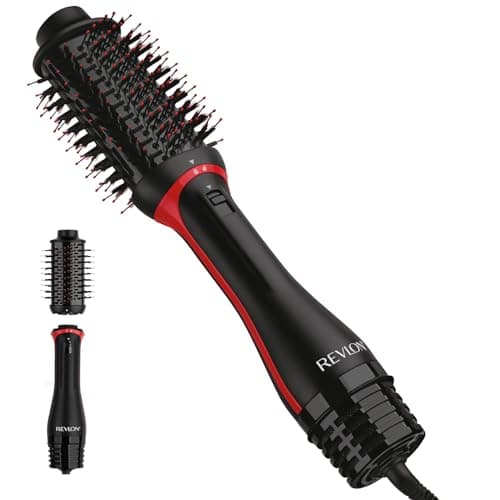
Revlon One-Step Volumizer Plus hair dryer and hot air brush
A 4-year limited warranty, the longest in this registry, on the cheapest kind of tool in it. Worth noticing before paying six times more elsewhere.
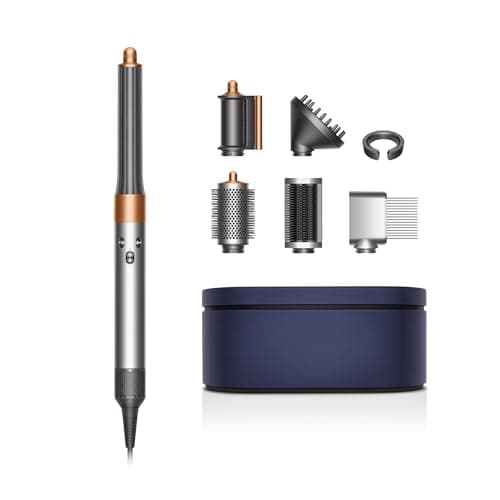
Dyson Airwrap multi-styler (Complete Long)
1,300 W is the lowest published wattage of any mains tool in this registry. That is the design argument, and it is also why it is slow on thick hair.
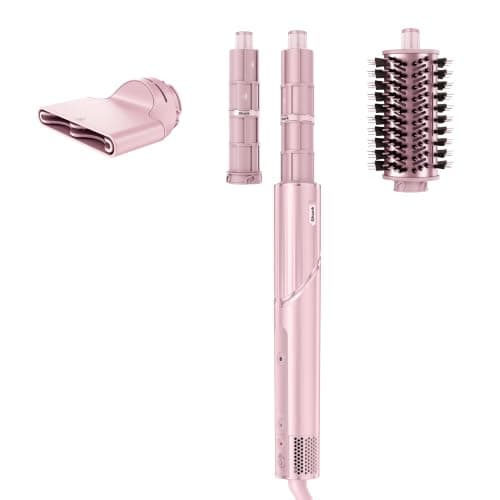
Shark FlexStyle air styling and drying system
Exactly the same published wattage as the Dyson Supersonic, in a tool that also converts to a dryer — the single strongest number in the dupe argument.
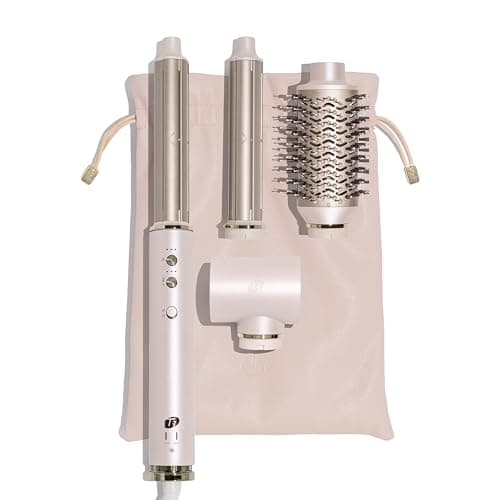
T3 Aire 360 dual voltage ceramic air styler
The only dual-voltage air styler in this registry, and T3's one product that publishes a wattage — 1,200–1,400 W, above the Airwrap.
Questions people actually ask
Is an air styler better than a hot air brush?
Only for shape range. An air styler swaps curling barrels, smoothing brushes and a nozzle onto one handle, so it can make a defined curl a brush cannot. On published figures the brush class wins wattage per dollar, warranty — four years against two — and it holds the only tool in either class that publishes an actual temperature.
Do I need a Dyson Airwrap or will a hot air brush do?
A hot air brush will do if what you want is a smooth blow-out with body, which is what most people want most days. Buy the Airwrap only if you want defined curls from the same tool, or if your hair is fine and fragile and you want curl set by airflow with no clamped contact at all.
How many watts is the Dyson Airwrap compared with a hot air brush?
1,300 W, which is the lowest published draw of any mains tool in this registry. The Shark FlexStyle publishes 1,600 W, the T3 Aire 360 publishes 1,200 to 1,400 W, and the T3 AireBrush Round — a hot air brush — publishes 1,200 W. Published power does not track price on this shelf.
Which has the longer warranty, an air styler or a hot air brush?
The brush. Both Revlon One-Step brushes publish a four-year limited warranty, where every air styler here publishes two years. Since nobody in this category publishes an expected lifespan, warranty length is the only durability promise in writing — and it runs backwards to price.
Can a hot air brush curl hair?
It makes a bend, body and a soft turn at the ends, not a defined curl. The head is fixed, so there is no barrel to wrap a section around. If a ringlet is what you want from the same tool that dries your hair, that is the one thing the air styler class genuinely buys you.
Can an air styler replace my hair dryer?
The Shark FlexStyle converts into a conventional dryer at a published 1,600 W, so yes in that one case. The Airwrap and the T3 Aire 360 publish a drying nozzle or brush attachment rather than converting. A hot air brush replaces a dryer-and-round-brush pair for the blow-out job but gives you no bare airflow for anything else.
Are any of these dual voltage for travel?
One buyable tool across both classes: the T3 Aire 360. The Dyson Airwrap and the Shark FlexStyle publish 120 V, both T3 brushes and the L'ange Le Volume publish 125 V, and neither Revlon publishes a voltage figure at all — which has to be read as single voltage rather than assumed universal.
Sources
- Dyson — Airwrap Complete Long product page (dyson.com has returned HTTP 403 to every automated fetch since 2026-10-17; figures are the reading on file)
- SharkNinja — Shark FlexStyle product page
- T3 Micro — Aire 360 Dual Voltage product page
- Revlon Hair Tools — One-Step Volumizer Plus (HTTP 403 to every automated fetch since 2026-10-06; figures are the reading on file)
- L'ange — Le Volume Brush Dryer product page
- Evans and Park - thermal cycling and mechanical properties
- Dyer et al. - bleaching and the hair fiber
- U.S. Energy Information Administration — Electric Power Monthly, Table 5.3 (average residential price)