Curling Irons & Wands
The Best Curling Irons for Frizzy Hair in 2026
Every frizz fix comes down to one idea: fewer passes, less clamping, lower heat. That ranks these tools in an order the price does not.
Updated October 2026 · Sawyer V.
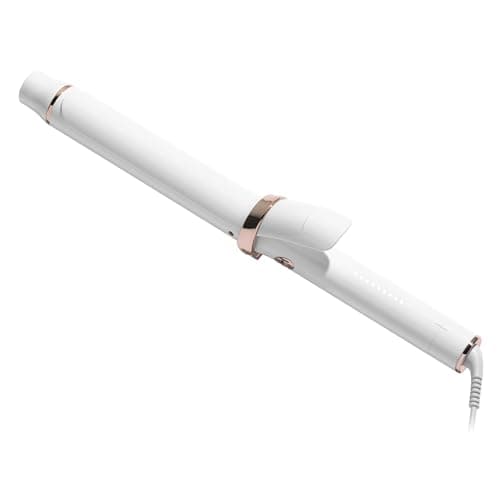
Buy the T3 SinglePass Curl X. Frizz is a cuticle that is standing up rather than lying flat, so the tools that make it worse are the ones that clamp hardest, run hottest and need the most passes. T3 publishes a 6.5 in barrel — the longest here, so each section needs one wrap instead of two — nine heat settings so you can run it low, a ceramic surface and 78 W. That combination is the shortest heat exposure per curl available in this registry.
We earn a commission if you buy through the links on this page, at no extra cost to you. It never changes which tool we pick or which one we tell you to skip. How this site is funded.
Quick picks
Tap any row to jump to the full write-up. Prices come from the live price layer; where none is available the button says so rather than showing a number we cannot stand behind.
| # | Product | Best for | Price |
|---|---|---|---|
| 1 | T3 SinglePass Curl X extra-long barrel curling iron A published 6.5 in barrel and nine heat settings on a ceramic surface at 78 W - one wrap per section, set as low as your hair allows. | Frizz-prone hair of any length, and the fewest wraps | |
| 2 | 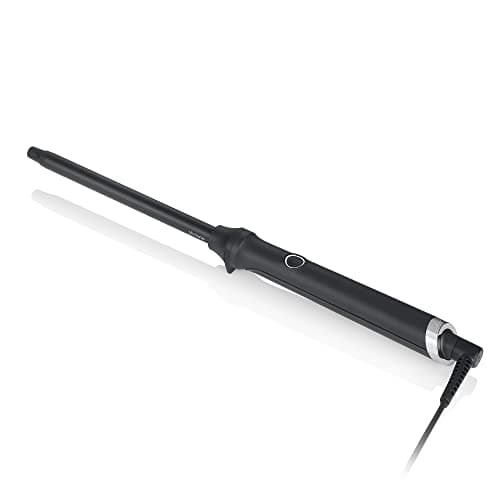 ghd Curve Thin curling wand (0.5 inch barrel) Clipless, so nothing presses the cuticle flat and then releases it, at a fixed 365 degrees F with a cool tip and a safety stand. | Short or fine frizz-prone hair, and anyone who gets clamp marks | |
| 3 | 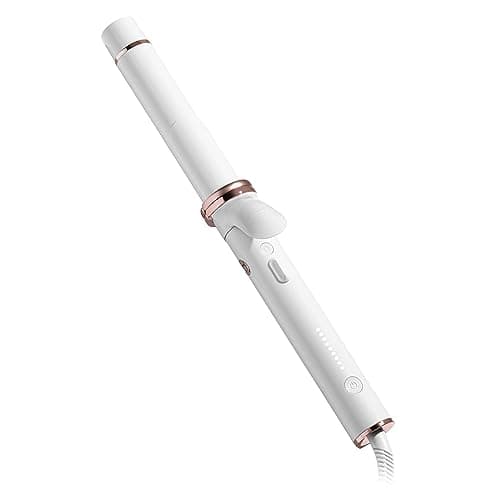 T3 CurlWrap automatic rotating curling iron The barrel rotates itself, so every section gets the same tension and the same dwell time - 77 W, nine settings, dual voltage. | Anyone whose frizz comes from fighting the wrap | |
| 4 | 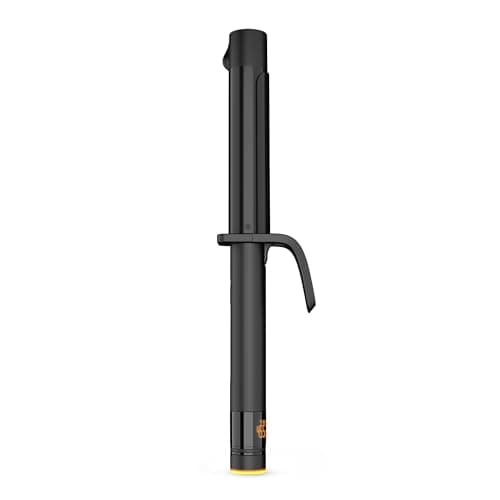 Hot Tools Black Gold 1¼" Digital Salon Curling Iron Four published diameters from 0.75 to 1.5 in, universal dual voltage and a lifetime limited warranty - with a 455 degree F ceiling you must ignore. | Matching barrel size to your hair rather than the reverse | |
| — | 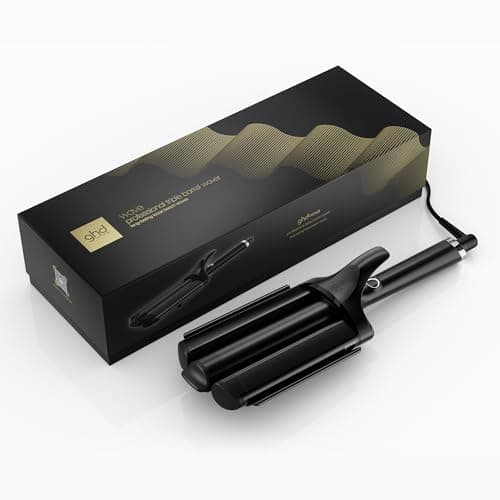 ghd Wave triple barrel hair waver Three barrels clamping at once is three times the contact area on hair whose problem is that it has been pressed and released too often. We’d skip this | Nobody whose main complaint is frizz |
1. Fewest passes per curl
T3 SinglePass Curl X extra-long barrel curling iron
Best for: Frizz-prone hair of any length, and the fewest wraps
A published 6.5 in barrel and nine heat settings on a ceramic surface at 78 W - one wrap per section, set as low as your hair allows.
The deciding figure is the barrel length, which almost nobody in this category publishes. T3 states 6.5 in. That means a full section sits on the barrel in a single wrap rather than being wound round twice, and a pass you do not make is heat you never apply. On frizz-prone hair, total heat exposure is the whole game.
Nine heat settings is the most adjustment of any curling tool here. Frizz lives on hair whose cuticle is already compromised — dry, colored, bleached or simply coarse — and that hair needs the bottom of a range, not the middle of one. A fixed-temperature iron makes that choice for you permanently, and two of the six curling tools in this registry are fixed.
The surface is CeraGloss ceramic, which radiates heat more evenly than a thin plated coating, and T3 publishes 78 W — a figure it only added to this page recently and one of only two published wattages in the whole category. It also publishes a separate weight for every barrel size (10.6 oz at 1 in, 13.2 oz at 1.25 in, 15.1 oz at 1.5 in) and genuine 100–240 V dual voltage, which is unusual disclosure. Full sheet at the T3 SinglePass Curl X review.
What’s wrong with it
The nine settings are steps, not temperatures - T3 publishes no degrees for any position, so you cannot check a setting against guidance for your hair, only find the lowest one that works. It is also a clamped iron, so the clamp discipline below applies, and the 1.5 in version at 15.1 oz is the heaviest curling tool here.
Published specifications — T3 SinglePass Curl X extra-long barrel curling iron
| Wattage | 78 W |
|---|---|
| Heat settings | 9 heat settings |
| Speed settings | Not applicable |
| Weight | 10.6 oz (1 in), 13.2 oz (1.25 in), 15.1 oz (1.5 in) — cord not included |
| Cord length | 8 ft, 360-degree swivel cord |
| Noise (dB) | Not applicable |
| Attachments | None supplied |
| Plate / barrel | CeraGloss ceramic barrel, 6.5 in long |
| Dual voltage | Yes — auto world voltage, 100–240 V |
| Warranty | 2-year warranty |
Every figure above is taken from T3 Micro — SinglePass Curl X product page. “Not published” means the figure does not appear on that page — it is not an estimate withheld, it is a number the manufacturer does not state. How we compile these.
What it costs to run for a year
$0.93 a year
78 W × 65 hours a year = 5.1 kWh, at 18.34 cents per kilowatt-hour. The hours assume 15 minutes a session, 5 days a week — that is an assumption, not a measurement, so swap in your own if it is wrong.
2. The one that cannot clamp
ghd Curve Thin curling wand (0.5 inch barrel)
Best for: Short or fine frizz-prone hair, and anyone who gets clamp marks
Clipless, so nothing presses the cuticle flat and then releases it, at a fixed 365 degrees F with a cool tip and a safety stand.
This is the pick that attacks frizz mechanically rather than thermally. There is no clamp, so nothing squeezes a section and then lets go — and that squeeze-and-release is exactly what lifts cuticle scales on hair that is already rough. A clipless wand also cannot leave a crease, which on frizzy hair reads as a frizzy patch rather than a line.
The fixed 365°F is the second argument and it is a better one than it sounds. ghd makes the heat decision for you, in the safe direction, and the commonest frizz mistake is turning a dial up because the curl did not hold — which it did not hold because the section was too thick. A tool with no dial removes that failure mode entirely.
The barrel is 0.5 in, the smallest in this registry, with an 8.8 ft swivel cord, a cool tip, a built-in safety stand and universal voltage. The sheet is at the ghd Curve Thin review, and it is matched against T3 at ghd Curve vs T3 Curl X.
What’s wrong with it
365 degrees F is fixed, so if your hair is bleached or fragile you cannot go lower - and 365 is not a low number. A 0.5 in barrel also makes a tight curl only, which on long hair means more sections and therefore more total passes, undoing some of the clamp advantage. ghd publishes no weight and no wattage for it.
Published specifications — ghd Curve Thin curling wand (0.5 inch barrel)
| Wattage | Not published |
|---|---|
| Heat settings | One fixed temperature — 365°F |
| Speed settings | Not applicable |
| Weight | Not published |
| Cord length | 8.8 ft, 360-degree swivel cord |
| Noise (dB) | Not applicable |
| Attachments | Cool tip, built-in safety stand |
| Plate / barrel | 0.5 in thin barrel, clipless |
| Dual voltage | Yes — universal voltage |
| Warranty | 2-year warranty |
Every figure above is taken from ghd — Curve Thin curling wand product page. “Not published” means the figure does not appear on that page — it is not an estimate withheld, it is a number the manufacturer does not state. How we compile these.
What it costs to run for a year
ghd does not publish a wattage for this tool, so there is nothing honest to compute. The formula is watts ÷ 1,000 × hours a year × your rate per kWh; if you find a rating plate on the handle, 65 hours a year and 18.34 cents per kilowatt-hour will get you the rest of the way.
3. Most consistent tension
T3 CurlWrap automatic rotating curling iron
Best for: Anyone whose frizz comes from fighting the wrap
The barrel rotates itself, so every section gets the same tension and the same dwell time - 77 W, nine settings, dual voltage.
Inconsistent tension is an underrated frizz source. Hair wound loosely in one section and tightly in the next comes out with a different cuticle finish in each, and the loose ones read as frizz. A rotating barrel applies the same tension every time because your wrist is not involved.
It also shortens the session for anyone who is slow with a wand, and a shorter session is less heat. T3 publishes 77 W — the lowest published draw of any heated styling tool here apart from the L’ange Le Duo’s 36 W — nine heat settings, two rotation speeds, 13.4 oz without the cord, an 8 ft swivel cord and 100–240 V dual voltage.
Barrel options are 1 in and 1.25 in in Korean CeraGloss ceramic. Full sheet at the CurlWrap review, and the category argument is at automatic curling irons.
What’s wrong with it
It is a clamped tool with a motor, so it is the most mechanically complex thing on this page and there is more to go wrong - on a two-year warranty. T3 publishes no temperatures for its nine settings. And at 13.4 oz it is heavy enough to notice on a long session.
Published specifications — T3 CurlWrap automatic rotating curling iron
| Wattage | 77 W |
|---|---|
| Heat settings | 9 heat settings |
| Speed settings | Two barrel rotation speeds |
| Weight | 13.4 oz (cord not included) |
| Cord length | 8 ft, 360-degree swivel cord |
| Noise (dB) | Not published |
| Attachments | None supplied |
| Plate / barrel | Korean CeraGloss ceramic self-rotating long barrel, 1 in and 1¼ in |
| Dual voltage | Yes — auto world voltage, 100–240 V |
| Warranty | 2-year warranty |
Every figure above is taken from T3 Micro — CurlWrap automatic rotating curling iron product page. “Not published” means the figure does not appear on that page — it is not an estimate withheld, it is a number the manufacturer does not state. How we compile these.
What it costs to run for a year
$0.92 a year
77 W × 65 hours a year = 5.0 kWh, at 18.34 cents per kilowatt-hour. The hours assume 15 minutes a session, 5 days a week — that is an assumption, not a measurement, so swap in your own if it is wrong.
4. The widest choice of diameters
Hot Tools Black Gold 1¼" Digital Salon Curling Iron
Best for: Matching barrel size to your hair rather than the reverse
Four published diameters from 0.75 to 1.5 in, universal dual voltage and a lifetime limited warranty - with a 455 degree F ceiling you must ignore.
Barrel diameter matters for frizz because the wrong size needs more passes. Too small for your length and you are curling the same head in twice as many sections; too large and the curl does not take, so you go back over it. Hot Tools publishes four diameters — 0.75, 1, 1.25 and 1.5 in — which is the widest published range in this registry, and barrel size explains how to pick.
The warranty is the other reason it is here. Hot Tools publishes a lifetime limited warranty, the only non-expiring cover on this site, on the cheapest curling tool in the registry. It also publishes universal dual voltage and a 9 ft professional swivel cord, and the barrel is a Black Gold ceramic-titanium surface. The sheet is at the Hot Tools Black Gold review.
What’s wrong with it
The published ceiling is 455 degrees F, the highest of any tool on this site, and on frizz-prone hair that number is a liability rather than a feature - it only works here if you treat the top half of the dial as not existing. Hot Tools also publishes no wattage and no weight, so it cannot be costed or weighed.
Published specifications — Hot Tools Black Gold 1¼" Digital Salon Curling Iron
| Wattage | Not published |
|---|---|
| Heat settings | Variable, up to 455°F |
| Speed settings | Not applicable |
| Weight | Not published |
| Cord length | 9 ft professional swivel cord |
| Noise (dB) | Not applicable |
| Attachments | None published beyond the iron and its cord |
| Plate / barrel | Black Gold ceramic-titanium barrel; ¾, 1, 1¼ and 1½ in |
| Dual voltage | Yes — universal dual voltage |
| Warranty | Lifetime limited warranty |
Every figure above is taken from Hot Tools — Black Gold 1¼" Digital Salon Curling Iron product page. “Not published” means the figure does not appear on that page — it is not an estimate withheld, it is a number the manufacturer does not state. How we compile these.
What it costs to run for a year
Hot Tools does not publish a wattage for this tool, so there is nothing honest to compute. The formula is watts ÷ 1,000 × hours a year × your rate per kWh; if you find a rating plate on the handle, 65 hours a year and 18.34 cents per kilowatt-hour will get you the rest of the way.
The one we'd skip
ghd Wave triple barrel hair waver
Best for: Nobody whose main complaint is frizz
Three barrels clamping at once is three times the contact area on hair whose problem is that it has been pressed and released too often.
We like this tool and recommend it elsewhere for the specific look it makes. On frizz-prone hair it is the wrong instrument, for one structural reason: a triple-barrel waver closes three heated surfaces onto a section simultaneously, so a single press delivers roughly three times the contact of a single-barrel iron.
Frizz is a cuticle that has stopped lying flat, and clamped contact is what lifts it. Multiply the contact area by three, fix the temperature at 365°F with no option to go lower, and you have a tool whose every design choice runs against this hair type. ghd also publishes no voltage and no weight for it.
If a wave is the look you want on frizz-prone hair, do it with a single barrel and thinner sections instead — beach waves has the technique, and the ghd Wave review is the sheet if your hair is smooth and you want one.
What’s wrong with it
Three clamped barrels at once is the highest contact area of any tool in this registry, the temperature is fixed at 365 degrees F with no lower option, and ghd publishes neither a weight nor a voltage for it. Every one of those three rows points the wrong way for frizzy hair.
Published specifications — ghd Wave triple barrel hair waver
| Wattage | Not published |
|---|---|
| Heat settings | One fixed temperature — 365°F |
| Speed settings | Not applicable |
| Weight | Not published |
| Cord length | Not published |
| Noise (dB) | Not applicable |
| Attachments | None supplied |
| Plate / barrel | Three ergonomic barrels, dual temperature sensors |
| Dual voltage | Not published |
| Warranty | 2-year warranty |
Every figure above is taken from ghd — Wave triple barrel hair waver product page. “Not published” means the figure does not appear on that page — it is not an estimate withheld, it is a number the manufacturer does not state. How we compile these.
What it costs to run for a year
ghd does not publish a wattage for this tool, so there is nothing honest to compute. The formula is watts ÷ 1,000 × hours a year × your rate per kWh; if you find a rating plate on the handle, 65 hours a year and 18.34 cents per kilowatt-hour will get you the rest of the way.
What frizz actually is, in one paragraph
Hair is covered in overlapping cuticle scales. When they lie flat the hair is smooth and reflects light; when they lift, each strand catches on its neighbors and the whole head looks rough. Frizz is lifted cuticle. Everything that lifts it — mechanical pressure, abrasion, heat, moisture swinging in and out of the fiber — makes frizz worse, and the fiber does not repair itself Evans and Park, Journal of Cosmetic Science.
That gives a ranking rule rather than a product claim. A curling tool is better for frizz-prone hair when it clamps less, needs fewer passes, and lets you run it cooler. No coating claim on any product page here changes that order, which is why this page is ranked on those three rows and not on marketing language.
Why this is a winter page as much as a summer one
Frizz is usually described as a humidity problem, and in summer it is: dry hair pulls moisture out of damp air, swells unevenly and lifts. Styling for humidity is that case.
Winter does the opposite and arrives at the same place. Heated indoor air is very dry, so moisture leaves the fiber instead of entering it, the cuticle dries and lifts, and charge builds up as hair rubs against wool and dry air — which is why static and frizz show up together in the heating season. How to stop static and flyaway hair is the no-heat half of the answer. This page is the half about the tool you are putting on top of it.
Every curling tool here, on the three rows
The six curling tools in this registry, ranked on what decides frizz
| Tool | Clamps? | Heat you can lower | Barrel length / diameter |
|---|---|---|---|
| T3 SinglePass Curl X | Yes, clipped | 9 steps | 6.5 in long; 1 / 1.25 / 1.5 in |
| T3 CurlWrap | Yes, clipped, self-rotating | 9 steps | Long barrel; 1 / 1.25 in |
| Hot Tools Black Gold | Yes, clipped | Variable to 455°F | Not published; 0.75 / 1 / 1.25 / 1.5 in |
| ghd Curve Thin | No - clipless | No - fixed 365°F | Not published; 0.5 in |
| ghd Chronos Curve Classic | Yes, clipped | No - fixed 365°F | Not published; 1 in |
| ghd Wave | Yes - three barrels at once | No - fixed 365°F | Three barrels |
Quoted from each maker's own product page. ghdhair.com returned HTTP 403 to an automated fetch on 2026-10-17, so the ghd rows are the readings on file with their source URLs.
The finding worth taking away: no tool here wins all three rows. The clipless one is fixed hot; the adjustable ones all clamp. So the pick depends on which of your two problems is worse — if you get clamp marks and creases, go clipless and accept 365°F; if your hair is fragile and needs a low setting, take the clamp and run it cool.
The technique matters more than the tool
Honestly stated, because it is true: on frizz-prone hair, four free habits beat any upgrade on this page.
- Curl bone-dry hair only. Any residual damp becomes steam inside the cuticle, which lifts it from the inside — why you never iron wet hair.
- Thinner sections, not a higher setting. Thick sections do not heat through, so the curl drops, so you go back over it. Two passes at a low setting is more heat than one pass at the same setting, and everybody forgets that.
- Comb each section once, with a wide-tooth comb, before it goes on the barrel. Brushing dry frizzy hair is abrasion, and abrasion is cuticle lift — wide-tooth combs has the evidence, which is better than for most things in this category.
- Finish cold and do not touch it. Let every curl cool coiled, then separate with fingers rather than a brush — how to use a curling iron properly.
And use a heat protectant. It is the one consumable on this site we recommend without qualification, and on lifted cuticle it is doing more work than on smooth hair — heat protectant.
If the curl is not the problem
Frizz is rarely created by one tool, so it is worth checking the rest of the routine before buying anything.
- The dryer stage. Most frizz is set before the iron ever appears — how to blow-dry without frizz and dryers for frizzy hair.
- The towel. Rubbing hair dry with terry cloth is pure abrasion — microfiber towels is the cheapest fix on this site.
- The plates, if you straighten too. flat irons for frizzy hair ranks on passes rather than ceiling temperature.
- Everything at once. every tool for frizzy hair is the cross-category router.
What we could not compare
Barrel surface temperature at the point of contact, on all six — nobody publishes it, and a setting temperature is not the same figure. Weight, on four of the six. Wattage, on four of the six. Barrel length, on five of the six: T3 is the only maker here that publishes one, which is why it wins the row by default rather than by a margin we can quantify. Heat-up time, on five. And any frizz claim at all: coatings and ionic technologies are claims rather than published measurements, and we do not rank on them — what ionic actually means explains why.
Questions people actually ask
What is the best curling iron for frizzy hair?
The T3 SinglePass Curl X, on published specifications. Its 6.5 inch barrel is the only published barrel length in this registry, so each section needs one wrap instead of two, and nine heat settings let you run it as low as your hair allows. Fewer passes at a lower setting is the whole frizz argument.
Does a curling iron make frizz worse?
It can. Frizz is lifted cuticle, and the three things that lift it further are clamped pressure, repeated passes and high heat. A tool that clamps less, needs fewer wraps per section and lets you set a lower temperature makes it worse more slowly than one that does the opposite.
Is a clipless wand better for frizzy hair?
On the clamping row, yes — nothing presses the cuticle flat and then releases it, and it cannot leave a crease. The trade on the ghd Curve Thin is that its 365 degree Fahrenheit temperature is fixed, so fragile hair cannot be run cooler, and a 0.5 inch barrel means more sections on long hair.
What temperature should I curl frizzy hair at?
The lowest setting that holds a curl, found once and then left alone. Frizz-prone hair usually has a compromised cuticle already, so it wants the bottom of a range rather than the middle. Two of the six curling tools in this registry are fixed at 365 degrees Fahrenheit and cannot be lowered at all.
Why is my hair frizzier in winter?
Heated indoor air is very dry, so moisture leaves the fiber rather than entering it, the cuticle dries and lifts, and charge builds as hair rubs against wool and dry air. That is why static and frizz appear together in the heating season — the mechanism is the opposite of summer humidity frizz, with the same result.
Sources
- T3 Micro — SinglePass Curl X product page
- T3 Micro — CurlWrap automatic rotating curling iron product page
- Hot Tools — Black Gold 1¼" Digital Salon Curling Iron product page
- ghd — Curve Thin curling wand product page (HTTP 403 on 2026-10-17; figures are the reading on file)
- ghd — Wave triple barrel hair waver product page (HTTP 403 on 2026-10-17; figures are the reading on file)
- Evans and Park - thermal cycling and mechanical properties