Multi-Stylers & Dupes
The Best Air Stylers for Frizzy Hair in 2026
The usual frizz question is how hard a tool clamps. Nothing here clamps at all, so the ranking had to be built on different rows entirely.
Updated October 2026 · Sawyer V.
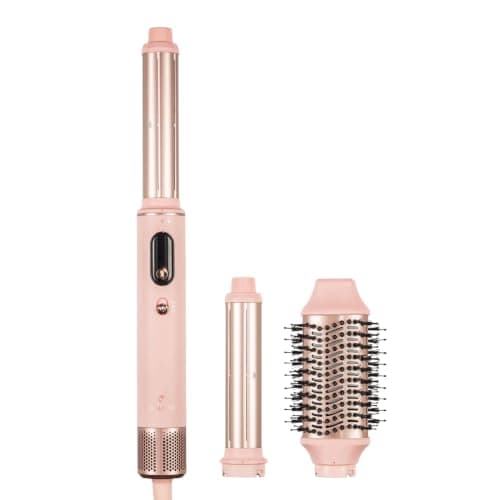
Buy the Calista EliteAir Gen 2. Frizz is lifted cuticle, and the figure that matters most is how hot the tool is allowed to get — Calista is the only air styler in this registry that publishes one, at 85–195°F across two speeds. A 195°F ceiling is 170 degrees below the gentlest flat iron here. It also publishes a blow-dryer base and an oval brush, so the dry and the smoothing happen in one session rather than two.
We earn a commission if you buy through the links on this page, at no extra cost to you. It never changes which tool we pick or which one we tell you to skip. How this site is funded.
Quick picks
Tap any row to jump to the full write-up. Prices come from the live price layer; where none is available the button says so rather than showing a number we cannot stand behind.
| # | Product | Best for | Price |
|---|---|---|---|
| 1 | Calista EliteAir Multi-Style Dryer Gen 2 The only air styler here that publishes an actual temperature - 85 to 195 degrees F across two speeds - with a dryer base and a smoothing brush in the box. | Frizz-prone hair of any texture, and anyone who wants a number | |
| 2 | 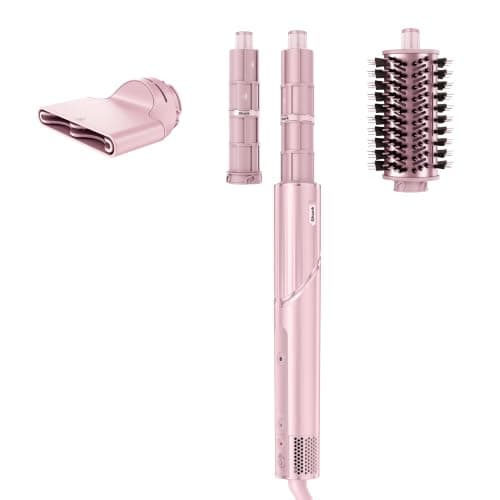 Shark FlexStyle air styling and drying system 1,600 W published - the most here - and it converts into a plain dryer, so wet-to-smooth never breaks into two sessions. | Dense or long frizz-prone hair that needs real airflow first | |
| 3 | 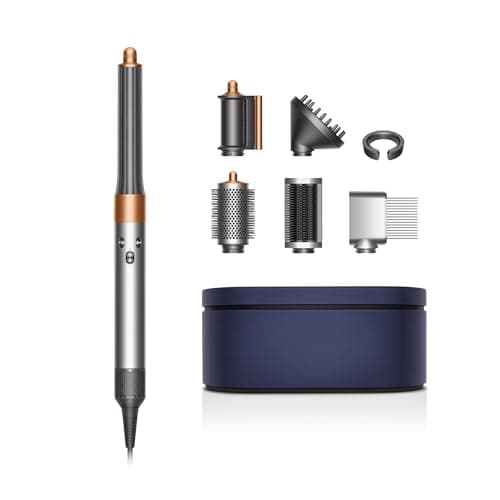 Dyson Airwrap multi-styler (Complete Long) Four published attachment families including dedicated smoothing brushes and a drying nozzle, at 1.4 lb with an 8.5 ft cord. | Fine or fragile frizz-prone hair, and the widest shape range | |
| 4 | 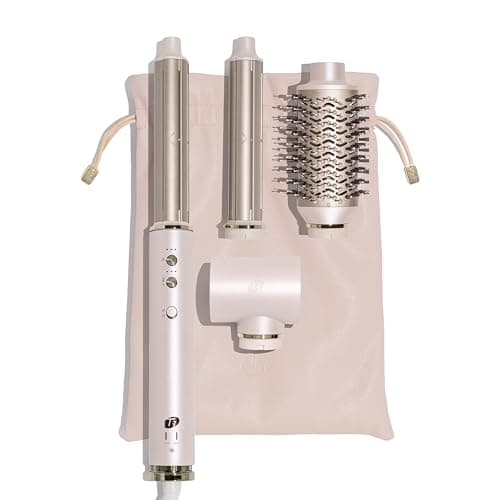 T3 Aire 360 dual voltage ceramic air styler Three heat settings and three speeds published - nine combinations - with a 9 ft cord, the longest here, and genuine dual voltage. | Someone who wants adjustment on paper, and the only one that travels | |
| — | 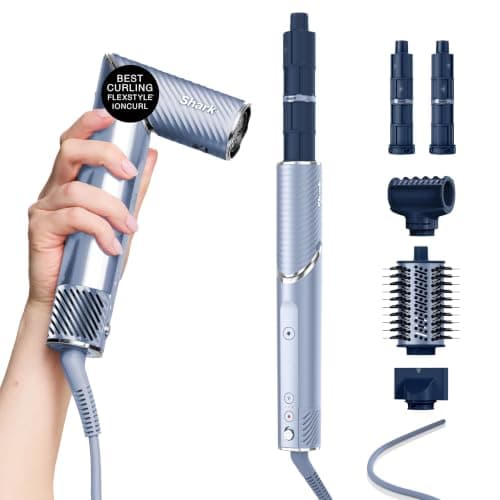 Shark FlexStyle IonCurl hair styler The highest published draw on this page at 1,700 W, with no heat count, no speed count and no attachment list published at all. We’d skip this | Nobody whose main complaint is frizz |
1. A ceiling you can look up
Calista EliteAir Multi-Style Dryer Gen 2
Best for: Frizz-prone hair of any texture, and anyone who wants a number
The only air styler here that publishes an actual temperature - 85 to 195 degrees F across two speeds - with a dryer base and a smoothing brush in the box.
On frizz-prone hair the single most useful thing a maker can tell you is how hot the tool gets, because frizz is cuticle that has stopped lying flat and heat is what lifts it further. Calista is the only air styler in this registry that answers: 85, 120 and 175°F on low speed, 85, 130 and 195°F on high, read from Calista’s own product page. It words that grid as “5 total temperature settings,” counting the shared 85°F once.
A 195°F ceiling is the lowest published figure of any heated styling tool on this site. Every flat iron here sits at 365°F or above, so this tool caps itself 170 degrees below the gentlest of them. That matters because heat is cumulative and the fiber does not recover: repeated thermal cycling measurably degrades hair’s mechanical properties Evans and Park, Journal of Cosmetic Science. On hair that is already rough, a ceiling you can read and choose is worth more than any coating claim.
It also wins the second criterion. Calista publishes three attachments — a blow-dryer base, an oval brush and two easy-wrap wands — which means the drying and the smoothing happen with one tool in one sitting. The oval brush is the frizz attachment; the wands are for shape. A digital temperature screen and a removable filter cover round it out, and the filter matters for lifespan because an air styler clogs itself with the hair it is styling. Full sheet at the Calista EliteAir review.
What’s wrong with it
The 6 ft cord is the shortest of the five and you move a styler around your own head, so it binds. Calista publishes no weight at all, only outside dimensions, so you cannot know what you will be holding. The warranty is not printed on the product page - the 12-month figure lives on a separate warranty page, which is worth less than a number next to the price. And it publishes 125 V, so it does not travel.
Published specifications — Calista EliteAir Multi-Style Dryer Gen 2
| Wattage | 1,200 W |
|---|---|
| Heat settings | 6 — low 85/120/175°F and high 85/130/195°F, all published |
| Speed settings | 2 airflow speeds |
| Weight | Not published |
| Cord length | 6 ft swivel cord |
| Noise (dB) | Not published |
| Attachments | 3 — blow-dryer base, oval brush and two easy-wrap wands |
| Plate / barrel | Not published |
| Dual voltage | No — 125 V |
| Warranty | 12-month limited warranty (on Calista's warranty page, not the product page) |
Every figure above is taken from Calista — EliteAir Multi-Style Dryer Gen 2 product page. “Not published” means the figure does not appear on that page — it is not an estimate withheld, it is a number the manufacturer does not state. How we compile these.
What it costs to run for a year
$14.31 a year
1,200 W × 65 hours a year = 78.0 kWh, at 18.34 cents per kilowatt-hour. The hours assume 15 minutes a session, 5 days a week — that is an assumption, not a measurement, so swap in your own if it is wrong.
2. Best for finishing the dry in one go
Shark FlexStyle air styling and drying system
Best for: Dense or long frizz-prone hair that needs real airflow first
1,600 W published - the most here - and it converts into a plain dryer, so wet-to-smooth never breaks into two sessions.
This is the pick for the second criterion rather than the first, and on dense hair it is the one that matters. Frizz is largely decided while hair dries: if you dry with one tool, stop, and come back with a styler, the hair cools and the cuticle lifts in between. A tool that goes from wet to finished without a handover avoids that entirely.
Shark publishes 1,600 W, the highest figure of the five, and the FlexStyle converts into a conventional dryer rather than merely offering a nozzle. It also publishes 1.5 lb, an 8 ft cord and a two-year limited warranty, and its configurable attachment set includes a paddle brush and a concentrator — the two shapes that flatten cuticle rather than curl it. Pointing concentrated air down the length of the hair is the whole technique, and how to blow-dry without frizz has the method.
Worth being straight about something: this tool is the skip on air stylers for color-treated hair, because that page ranks on published temperature and Shark publishes none. Both rankings are correct, because the deciding row differs. Colored hair needs a number it can check; dense frizzy hair needs enough airflow to finish the job in one pass. The sheet is at the Shark FlexStyle review.
What’s wrong with it
Shark publishes no heat-setting count and no speed count at all, which on a frizz page is the row you most want and the reason it is the skip on the color-treated page. It is 120 V only. And which attachments arrive depends on the configuration you buy - check the in-the-box list on the exact listing, because the paddle brush is the reason to choose it here.
Published specifications — Shark FlexStyle air styling and drying system
| Wattage | 1,600 W (peak 1,600 W) |
|---|---|
| Heat settings | Not published |
| Speed settings | Not published |
| Weight | 1.5 lb |
| Cord length | 8 ft |
| Noise (dB) | Not published |
| Attachments | Configurable — auto-wrap curlers, oval brush, paddle brush, concentrator, diffuser |
| Plate / barrel | Coanda airflow barrels; no clamped heat plate |
| Dual voltage | No — 120 V |
| Warranty | 2-year limited warranty |
Every figure above is taken from SharkNinja — Shark FlexStyle (HD400SN) product page. “Not published” means the figure does not appear on that page — it is not an estimate withheld, it is a number the manufacturer does not state. How we compile these.
What it costs to run for a year
$19.07 a year
1,600 W (peak 1,600 W) × 65 hours a year = 104.0 kWh, at 18.34 cents per kilowatt-hour. The hours assume 15 minutes a session, 5 days a week — that is an assumption, not a measurement, so swap in your own if it is wrong.
3. Best smoothing without a clamp
Dyson Airwrap multi-styler (Complete Long)
Best for: Fine or fragile frizz-prone hair, and the widest shape range
Four published attachment families including dedicated smoothing brushes and a drying nozzle, at 1.4 lb with an 8.5 ft cord.
The Airwrap earns its place here on attachment breadth and on mechanism. Dyson publishes curling barrels, smoothing brushes, a round volumizing brush and a drying nozzle on the Complete Long configuration — the widest published set of any styler here, and crucially it includes brushes whose job is specifically to lay the cuticle flat rather than wrap it.
The mechanism argument is real and it is the reason this whole hub suits frizz-prone hair: Coanda airflow pulls hair onto the barrel and holds it there with moving air rather than pressure, so nothing presses the cuticle and releases it. On fine or already-compromised hair that is a genuine advantage over any clamped tool, and it is why is the Dyson Airwrap worth it, by hair type comes out yes for fine and fragile hair.
It publishes 1,300 W, 1.4 lb, an 8.5 ft cord, three heat settings, three speeds and a two-year limited warranty. Full sheet at the Dyson Airwrap review, and the price question is at air styler vs hot air brush.
What’s wrong with it
No published temperature, on the most expensive tool on this page - so the row that protects frizz-prone hair is the row Dyson leaves blank. Its 1,300 W is the lowest published mains draw in this registry, which means a longer session on dense hair, and a longer session is more total heat even at a gentler setting. 120 V only, and the four attachment families are also four things to learn.
Published specifications — Dyson Airwrap multi-styler (Complete Long)
| Wattage | 1,300 W |
|---|---|
| Heat settings | 3 heat settings |
| Speed settings | 3 speed settings |
| Weight | 1.4 lb |
| Cord length | 8.5 ft |
| Noise (dB) | Not published |
| Attachments | Curling barrels, smoothing brushes, round volumizing brush, drying nozzle |
| Plate / barrel | Coanda airflow barrels; no clamped heat plate |
| Dual voltage | No — 120 V |
| Warranty | 2-year limited warranty |
Every figure above is taken from Dyson — Airwrap Complete Long product page. “Not published” means the figure does not appear on that page — it is not an estimate withheld, it is a number the manufacturer does not state. How we compile these.
What it costs to run for a year
$15.50 a year
1,300 W × 65 hours a year = 84.5 kWh, at 18.34 cents per kilowatt-hour. The hours assume 15 minutes a session, 5 days a week — that is an assumption, not a measurement, so swap in your own if it is wrong.
4. Most airflow combinations published
T3 Aire 360 dual voltage ceramic air styler
Best for: Someone who wants adjustment on paper, and the only one that travels
Three heat settings and three speeds published - nine combinations - with a 9 ft cord, the longest here, and genuine dual voltage.
Of the four stylers that publish no degree figure, T3 publishes the most adjustment: three heat settings and three speeds, which is nine combinations to find a gentle one in. On frizz-prone hair that is worth having even without degrees attached, because the method is to find the lowest setting that works and stop moving it.
It also publishes the longest cord of the five at 9 ft with a 360-degree swivel, which matters more on a styler than on a dryer because you are moving the tool around your head rather than holding it in one place. The attachments are two extra-long curling attachments and an oval AireBrush, and the oval brush is the one you would reach for on frizz.
And it is the only air styler in this registry that publishes dual voltage, which makes it the only one that can travel — travel air stylers has the comparison. T3 publishes 1,200–1,400 W, the only wattage range rather than a single figure on this page. Sheet at the T3 Aire 360 review.
What’s wrong with it
No published temperature, so the nine combinations are steps rather than numbers you can check against guidance for your hair. T3 publishes no weight for it either, which is the other row you feel on a long session. And there is no dedicated paddle or smoothing brush in the box - the oval AireBrush is the closest thing, where Dyson and Shark both publish a flatter shape.
Published specifications — T3 Aire 360 dual voltage ceramic air styler
| Wattage | 1,200–1,400 W |
|---|---|
| Heat settings | 3 heat settings |
| Speed settings | 3 speed settings |
| Weight | Not published |
| Cord length | 9 ft, 360-degree swivel cord |
| Noise (dB) | Not published |
| Attachments | 2 extra-long curling attachments (left and right), oval AireBrush attachment |
| Plate / barrel | Korean CeraGloss ceramic |
| Dual voltage | Yes — dual voltage |
| Warranty | 2-year warranty |
Every figure above is taken from T3 Micro — Aire 360 Dual Voltage product page. “Not published” means the figure does not appear on that page — it is not an estimate withheld, it is a number the manufacturer does not state. How we compile these.
What it costs to run for a year
$16.69 a year
1,200–1,400 W × 65 hours a year = 91.0 kWh, at 18.34 cents per kilowatt-hour. The hours assume 15 minutes a session, 5 days a week — that is an assumption, not a measurement, so swap in your own if it is wrong.
The one we'd skip
Shark FlexStyle IonCurl hair styler
Best for: Nobody whose main complaint is frizz
The highest published draw on this page at 1,700 W, with no heat count, no speed count and no attachment list published at all.
We have no quarrel with this tool in general and Shark’s FlexStyle platform is good. As the pick for frizz-prone hair it is the clear skip, for one reason: it publishes the most power and the least information of anything here.
1,700 W is the highest published figure on this page — 100 W above the base FlexStyle and 400 W above the Airwrap. Against that, Shark publishes no heat-setting count, no speed count, and no attachment list for it at all. So you cannot tell how far down you can turn it, and you cannot tell whether a smoothing shape is in the box. On hair whose problem is that heat and abrasion have already lifted the cuticle, buying the most powerful tool with the thinnest sheet is the wrong trade.
If you want this platform, the base FlexStyle above publishes a weight, a cord length, a configurable attachment set and 100 W less draw, for less money. The within-brand comparison is at FlexStyle vs FlexStyle IonCurl.
What’s wrong with it
No heat count, no speed count and no attachment list published, on the highest draw here at 1,700 W. It is also 120 V only, and it is more expensive than the base FlexStyle that publishes more. Three blank rows on the one page where the blanks are the deciding rows.
Published specifications — Shark FlexStyle IonCurl hair styler
| Wattage | 1,700 W (peak 1,700 W) |
|---|---|
| Heat settings | Not published |
| Speed settings | Not published |
| Weight | 1.5 lb |
| Cord length | 8 ft |
| Noise (dB) | Not published |
| Attachments | Not published |
| Plate / barrel | Coanda airflow barrels; plastic and metal body |
| Dual voltage | No — 120 V |
| Warranty | 2-year limited warranty |
Every figure above is taken from SharkNinja — Shark FlexStyle IonCurl (HD840PK1) product page. “Not published” means the figure does not appear on that page — it is not an estimate withheld, it is a number the manufacturer does not state. How we compile these.
What it costs to run for a year
$20.27 a year
1,700 W (peak 1,700 W) × 65 hours a year = 110.5 kWh, at 18.34 cents per kilowatt-hour. The hours assume 15 minutes a session, 5 days a week — that is an assumption, not a measurement, so swap in your own if it is wrong.
Why this page is ranked differently from every other frizz page here
Frizz is lifted cuticle. Hair is covered in overlapping scales; when they lie flat it is smooth and reflects light, and when they lift, each strand catches on its neighbors. Everything that lifts them — mechanical pressure, abrasion, heat, moisture moving in and out of the fiber — makes frizz worse.
On every other tool hub on this site the dominant lever is clamping. A flat iron presses the hair between two hot plates; a curling iron closes a clamp onto a section and releases it. So flat irons for frizzy hair ranks on passes per section and curling irons for frizzy hair ranks on whether the tool clamps at all.
No air styler in this registry has a clamped heated plate. They shape with moving air on a barrel or a brush. That makes this hub structurally the gentlest option on the site for frizz-prone hair — and it also means the clamp criterion cannot separate these five tools, because none of them does it. The ranking had to be rebuilt on rows that actually differ.
The four rows this page is ranked on
- A published temperature ceiling. The lower and the more knowable, the better. One of the five publishes one. This is the first criterion because it is the only one that lets you choose a setting against guidance for your own hair rather than guessing — what temperature is actually safe.
- Finishing the dry in one uninterrupted session. Frizz is largely set as hair dries. Drying with one tool, stopping, then styling with another lets the hair cool and the cuticle lift in between. A styler that goes wet-to-finished avoids the handover.
- A smoothing shape in the box, not just barrels. A curling barrel wraps; a paddle or oval brush flattens. On frizz the flat shape is the one doing the work, and not every box contains one — air styler attachments explained.
- Enough airflow for your density. An underpowered tool on dense hair means a long session, and a long session is more total heat even at a gentle setting. This is the row that stops “lowest wattage” from being automatically best.
What this page deliberately does not rank on: ionic and tourmaline claims. Those are marketing statements rather than published measurements, and what ionic actually means explains why we will not sort tools by them.
All five, on the four rows
Every air styler in this registry, on the rows that decide frizz
| Styler | Published temperature | Dries from wet? | Smoothing shape in the box | Published wattage |
|---|---|---|---|---|
| Calista EliteAir Gen 2 | Yes - 85/120/175°F low, 85/130/195°F high | Yes - blow-dryer base | Yes - oval brush | 1,200 W |
| Shark FlexStyle | Not published | Yes - converts to a dryer | Yes - paddle brush and concentrator (configuration-dependent) | 1,600 W |
| Dyson Airwrap Complete Long | Not published | Drying nozzle, not a dryer conversion | Yes - smoothing brushes | 1,300 W |
| T3 Aire 360 | Not published; 3 heat x 3 speed published | Not published as a dryer mode | Partly - an oval AireBrush | 1,200-1,400 W |
| Shark FlexStyle IonCurl | Not published | Not published | Not published | 1,700 W |
Quoted from each maker's own product pages. calistatools.com was re-read 2026-10-22 and every figure held; dyson.com has returned HTTP 403 to every automated fetch since 2026-10-17 and t3micro.com rate-limited on 2026-10-26, so those rows are the readings on file with their source URLs.
The pattern is stark and it is the finding worth taking away: exactly one of five publishes the number that matters most for this hair, and it is the cheapest tool on the page. Four of five leave it blank, including the two most expensive.
The handover is the part people get wrong
Worth spelling out, because it is the criterion most frizz advice misses and it is where the Shark earns its place.
Hair sets its surface as it dries. If you towel-dry, then rough-dry with a dryer, then stop and pick up a styler, the hair has cooled and partially re-equilibrated with the room by the time the second tool arrives — and on frizz-prone hair that means the cuticle has already lifted before the smoothing step begins. You then apply heat to flatten something you allowed to lift.
The fix is not a product so much as a sequence: get from damp to dry without putting the tool down, finish each section completely before moving on, and stop as soon as it is dry rather than continuing to work hair that has nothing left to lose but condition. A styler that converts to a dryer, or one with a dryer base, makes that sequence possible with one object. How to use an air styler has the section order, and how to section hair is the part that makes it quick enough to be realistic.
Two different frizz problems, same page
Frizz arrives by two opposite routes and the tool advice is the same for both, which is why this page does not split them.
- Humid air. Dry hair pulls moisture out of damp air, swells unevenly and lifts. That is the summer case — styling for humidity.
- Dry indoor air. Heated rooms are very dry, so moisture leaves the fiber instead, the cuticle dries and lifts, and charge builds as hair rubs against wool. That is the winter case, and it arrives with static — how to stop static and flyaway hair.
In both cases the fiber is losing or gaining water unevenly through a cuticle that no longer sits flat, and in both cases the intervention is the same: less total heat, a known ceiling, fewer interruptions, and a flat shape rather than a barrel.
Four free habits that beat any upgrade on this page
Stated plainly because it is true, and because an air styler is an expensive way to solve a technique problem.
- Stop towel-rubbing. Rubbing dry hair with terry cloth is pure abrasion, and abrasion is cuticle lift. Squeeze, do not scrub — microfiber towels is the cheapest fix on this site.
- Aim the air down the hair, never across it. Airflow following the length lays the scales flat; airflow hitting the side of the hair lifts them. This single habit does more for frizz than any attachment.
- Detangle with a wide-tooth comb before any heat. Brushing dry frizzy hair is more abrasion — wide-tooth combs has the evidence, which is better than for most things in this category.
- Stop at dry, and finish on the coolest setting. Hair that is dry cannot get drier, only hotter. The Calista and the Airwrap both publish a cool option.
And use a heat protectant. It is the one consumable this site recommends without qualification, and on a lifted cuticle it is doing more work than on smooth hair — heat protectant.
If an air styler is not the right tool at all
- You only want a smooth blow-out, not curls. A hot air brush does that job for a fraction of the money — blow-dry brushes for frizzy hair and air styler vs hot air brush.
- The dryer stage is where it goes wrong. dryers for frizzy hair.
- Your hair is curly or coily rather than frizzy. Those need a diffuser and a different method — air stylers for curly hair and diffuser vs concentrator.
- It is damage rather than frizz. how to tell if hair is heat damaged and air stylers for damaged hair.
- You want everything in one place. every tool for frizzy hair is the cross-category router.
What we could not compare
Any temperature on four of the five, which is the row this page would most like to rank on and can only rank one tool by. Heat and speed counts on both Shark tools. The attachment list on the IonCurl. Weight on the Calista and the T3. Noise, on all five and on every tool in this registry — no maker publishes a decibel figure, which is why dryer noise explains the absence rather than ranking it. Airflow volume on all five, which is the figure that would actually settle the density question rather than leaving it to wattage. Heat-up time on all five. And any frizz claim as such: coatings and ionic technologies are claims rather than measurements, and we hold no first-party testing of any of these tools — how we research sets out exactly what that means.
Questions people actually ask
What is the best air styler for frizzy hair?
The Calista EliteAir Gen 2, on published specifications. It is the only air styler in this registry whose maker publishes an actual temperature — 85, 120 and 175 degrees Fahrenheit on low speed and 85, 130 and 195 on high — and its 195 degree ceiling is 170 degrees below the gentlest flat iron here. It also publishes a dryer base and an oval brush, so drying and smoothing happen in one session.
Are air stylers better than flat irons for frizzy hair?
Structurally, yes. No air styler in this registry has a clamped heated plate — they shape with moving air — so nothing presses the cuticle flat and then releases it, which is the mechanical action that lifts it further. That makes this the gentlest tool category on the site for frizz-prone hair, before you compare any individual model.
Does the Dyson Airwrap help with frizz?
On mechanism, yes: Coanda airflow holds hair to the barrel with air rather than pressure, and Dyson publishes dedicated smoothing brushes. The catch is that Dyson publishes no temperature figure at all, so on the row that matters most for frizz-prone hair the most expensive tool here is the one you cannot check.
How hot should a styler be for frizzy hair?
As low as will still dry and shape it, found once and left alone. Only one air styler here publishes degrees, so with the others you can only find the lowest setting that works. For reference, the Calista's published ceiling is 195 degrees Fahrenheit and every flat iron in this registry sits at 365 or above.
Why does drying and styling with separate tools make frizz worse?
Because hair sets its surface as it dries. If you dry with one tool, stop, then style with another, the hair cools and re-equilibrates with the room in between, and on frizz-prone hair the cuticle lifts before the smoothing step begins. A styler that converts to a dryer or has a dryer base lets you go from damp to finished without the handover.
Which air styler should I skip for frizzy hair?
The Shark FlexStyle IonCurl, on published data. It states the highest draw on this page at 1,700 W and then publishes no heat-setting count, no speed count and no attachment list at all — so you cannot tell how far down it turns or whether a smoothing shape is included. The base FlexStyle publishes more, draws 100 W less and costs less.
Do any air stylers work abroad?
One in this registry: the T3 Aire 360 publishes dual voltage. The Dyson Airwrap and both Shark tools publish 120 V and the Calista publishes 125 V, so all four need a converter rather than a plug adapter on a 230 V supply.
Sources
- Calista — EliteAir Multi-Style Dryer Gen 2 product page (re-read 2026-10-22; every figure held)
- SharkNinja — Shark FlexStyle product page
- SharkNinja — Shark FlexStyle IonCurl product page
- Dyson — Airwrap Complete Long product page (HTTP 403 to every automated fetch since 2026-10-17; figures are the reading on file)
- T3 Micro — Aire 360 Dual Voltage product page (t3micro.com rate-limited on 2026-10-26; figures are the reading on file)
- Evans and Park - thermal cycling and mechanical properties